
Breakneck data center growth challenges Microsoft’s sustainability goals
Microsoft's latest sustainability report, released recently, highlights the significant impact of its rapid data center expansion on the company's carbon footprint. Since 2020, Microsoft has seen a 23.4% increase in carbon emissions, primarily driven by the need to support its expanding cloud and AI services. While procuring clean energy might seem straightforward, the challenge lies in the construction of the facilities themselves, which are built from carbon-intensive materials such as steel, concrete, and semiconductor components. A spokesperson for Microsoft acknowledged these issues, stating, "We reflect the challenges the world must overcome to develop and use greener concrete, steel, fuels, and chips. These are the biggest drivers of our Scope 3 challenges." Scope 3 emissions, which encompass indirect emissions from sources not directly controlled by the company, make up over 97% of Microsoft's carbon footprint for the fiscal year 2024. This year’s report reveals that capital goods and purchased services account for a substantial portion of these emissions. The construction of data centers has been a significant factor in the rise of Microsoft's Scope 3 emissions. The steel used in these structures is produced using fossil fuel-powered blast furnaces, while the concrete utilized in foundations results in a chemical process that contributes to carbon dioxide emissions. Although some startups are innovating to reduce the carbon impact of steel and cement, significant progress could take years, despite Microsoft’s investment in these initiatives. Additionally, the manufacturing of computer chips contributes to emissions, as semiconductor production relies on chemicals with high global warming potential, such as hexafluoroethane, which has a warming impact equivalent to 9,200 tons of carbon dioxide per ton. Furthermore, sourcing green electricity has its complications; data centers are not always located near clean energy sources, complicating Microsoft’s ability to find zero-carbon electricity. A spokesperson pointed out, "Our electricity consumption has grown faster than the grids where we operate have decarbonized." Although emissions in 2024 saw a slight decline compared to 2023, indicating some progress in constructing more sustainable data centers, Microsoft still faces a daunting challenge in achieving its aim of negating more carbon than it produces by 2030. To meet this ambitious goal, the company must cut its emissions by over 50% while significantly enhancing its carbon-removal strategies. There are encouraging signs, as Microsoft has emerged as a leading investor and buyer of solar energy, now boasting a zero-carbon electricity capacity of 34 gigawatts. Additionally, it has recently entered into major agreements that promise to eliminate millions of metric tons of carbon. However, with 2030 fast approaching, the company's focus on AI and cloud computing could complicate its sustainability objectives.
Micron's Semiconductor Milestone: A New Era for India's Tech Industry
On February 28, Prime Minister Narendra Modi will officially launch Micron Technology's groundbreaking semiconductor fac...
Business Today | Feb 27, 2026, 08:45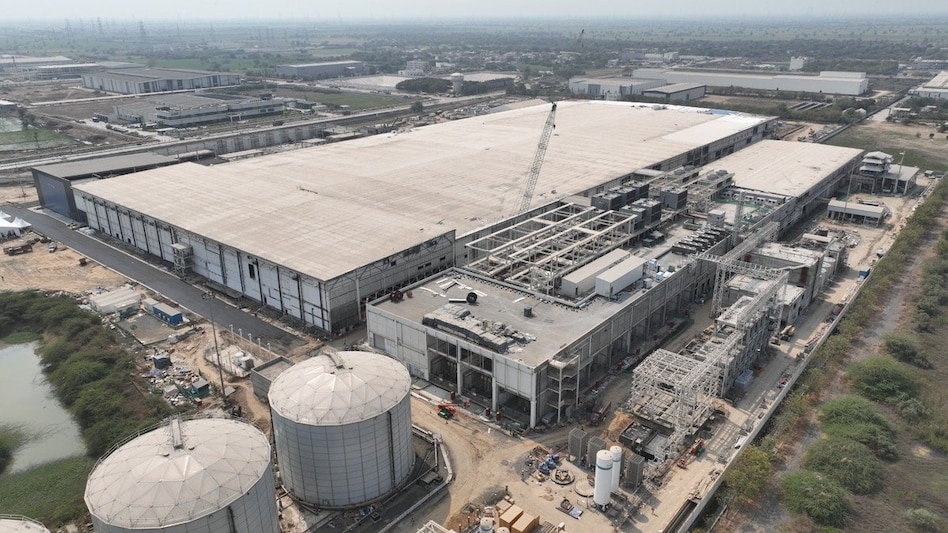
Inside OpenAI's Turbulent Week: A President's Perspective on Leadership and Chaos
In a recent episode of the Tetragrammaton podcast, OpenAI’s President, Greg Brockman, reflected on the whirlwind of even...
Business Insider | Feb 27, 2026, 10:40Google Maps Set for Major Launch in South Korea Following Conditional Approval
After a lengthy battle, Google has secured conditional permission to export high-precision geographic data from South Ko...
TechCrunch | Feb 27, 2026, 13:40
OpenAI Secures Historic $110 Billion Investment Boosting Valuation to $730 Billion
OpenAI has successfully concluded a monumental funding round, raising a staggering $110 billion—more than double the amo...
CNBC | Feb 27, 2026, 13:50
Block's Major Layoffs Signal a Shift in the Tech Landscape
In a week teeming with significant news, one story stands out as a potential harbinger of broader changes in the tech in...
CNBC | Feb 27, 2026, 11:15