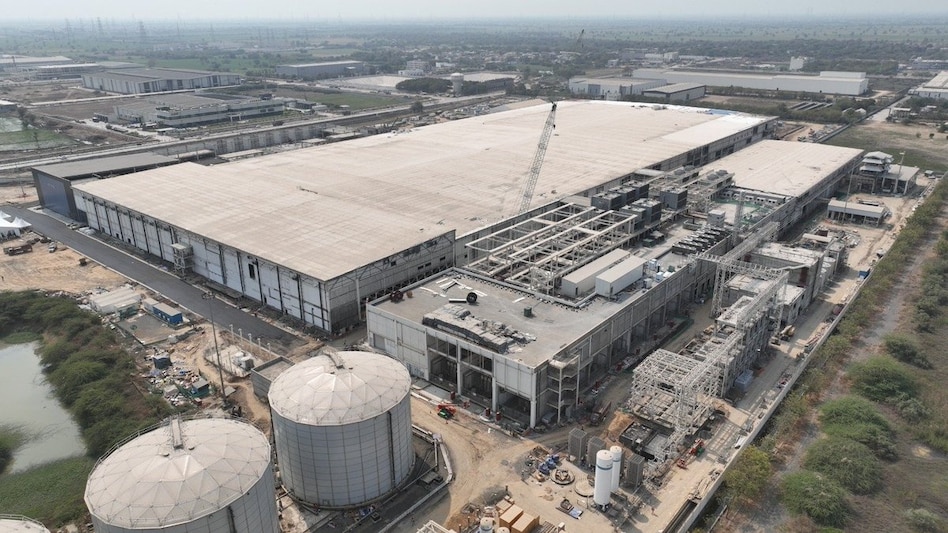
Micron’s Sanand plant puts India on the chip map, but the hard part begins now
India's journey in the semiconductor sector has been marked by both missed chances and strategic initiatives. Historical setbacks, such as a fire at the Semiconductor Complex in Mohali during the 1980s and the inability to attract Intel's manufacturing investment in the mid-2000s, have long hampered progress. However, the launch of the India Semiconductor Mission in December 2021 sparked renewed optimism, despite skepticism following the collapse of the Vedanta–Foxconn partnership. The recent announcement from Micron Technology regarding a $2.7 billion investment to establish an Assembly, Testing, Marking, and Packaging (ATMP) facility in Sanand, Gujarat, marks a significant milestone. This facility not only represents India's first large-scale commercial semiconductor packaging operation but also highlights the commitment of a prominent global player in the semiconductor industry. For industry analysts and policymakers, this development serves as a critical affirmation of India's capabilities in the semiconductor landscape. As Micron's Sanand plant transitions into commercial operations, the focus shifts from mere symbolism to tangible impact. The facility is positioned to enhance India's role within the global semiconductor ecosystem and potentially attract further investments. Micron, recognized as a leader in memory semiconductors, will conduct operations at the backend of semiconductor manufacturing, where wafers are assembled, tested, and packaged prior to distribution. Manish Bhatia, Executive Vice President of Global Operations at Micron Technology, elaborated on the significance of the Sanand facility, which spans 500,000 square feet. He noted that it houses the largest single raised-floor semiconductor assembly cleanroom globally, built to stringent Class 1,000 standards, showcasing the precision necessary for memory manufacturing. The wafers processed here will be sourced from Micron's fabrication plants worldwide before undergoing essential operations in India, including wafer thinning and assembly. The Sanand site is expected to produce DRAM and NAND products for various applications, including PCs, smartphones, and data centers, serving clients across North America, Europe, and Asia while bolstering local supply chains. Once fully operational, the facility could account for roughly 10% of Micron's global packaging and testing output, demonstrating that advanced semiconductor operations can successfully take place in India while meeting international quality standards. For analysts monitoring India's semiconductor ambitions, Micron's operational presence is a pivotal credibility boost. Arun Mampazhy, an independent semiconductor analyst, observed that the project has already spurred further interest, with seven additional OSAT projects receiving approval following Micron's announcement. However, he cautioned that future investments will hinge on the priorities set by the India Semiconductor Mission 2.0. Despite these advancements, experts suggest that Micron's initial impact may be more psychological than industrial. According to semiconductor analyst Manish Rawat, the establishment of a global memory leader in India prompts reassessment of risk among companies in key markets, although real investment will require long-term policy stability and infrastructure development. While the operational success of the Sanand plant is promising, the broader challenge of semiconductor manufacturing in India persists. Essential components such as reliable power, water, logistics, and a supporting supplier network are critical for long-term sustainability. The complexity of infrastructure needed for wafer fabrication is significantly greater than that required for ATMP facilities, which means further development is necessary to support advanced semiconductor manufacturing. As India begins its foray into backend semiconductor production, it faces competition from established Asian hubs like Malaysia, China, and Japan, which have spent decades cultivating integrated ecosystems of suppliers and skilled labor. Despite these challenges, India is making strides in talent development, with many employees at the Sanand facility being recent graduates trained in advanced manufacturing techniques abroad. The geopolitical landscape may also play a role in India's semiconductor growth. As companies globally seek to diversify their supply chains amid US-China tensions, India could find new opportunities. However, as Rawat emphasizes, real growth will depend on establishing a robust local ecosystem rather than relying solely on policy and geopolitical factors. Micron's Sanand facility has successfully crossed an important threshold for India's semiconductor credibility, but the next phase involves building a comprehensive ecosystem of suppliers, skilled talent, and infrastructure.
The Complex Journey of Jensen and Lori Huang: Love, Challenges, and Triumphs
Jensen Huang, the prominent CEO of Nvidia, and his wife Lori have navigated a journey filled with personal and professio...
Business Insider | Nov 24, 2026, 19:05Pinterest Empowers Parents with New Controls Over AI Content for Teens
This week, Pinterest unveiled an enhancement to its parental controls, introducing a feature that allows parents to regu...
TechCrunch | Nov 24, 2026, 16:25
Investing in the Future: Solar and Battery Solutions for AI Data Centers
The challenge of powering AI data centers has emerged as a pivotal issue in the current technological landscape. Over th...
TechCrunch | Nov 24, 2026, 16:25
UK Government Sounds Alarm on Surge of AI-Enhanced Cyber Threats
The United Kingdom's cybersecurity agency has reported a significant increase in cyberattacks driven by artificial intel...
TechCrunch | Nov 24, 2026, 18:30
Jensen Huang Shares Personal Journey in First All-Hands Meeting Post-Reinstatement
In a pivotal moment for Nvidia, CEO Jensen Huang addressed employees on Tuesday during his first companywide meeting sin...
Business Insider | Nov 24, 2026, 19:55