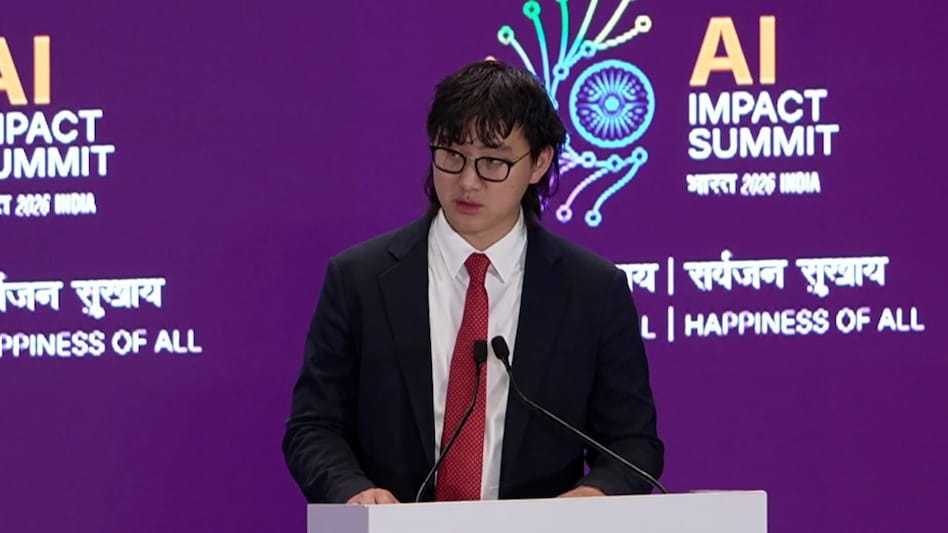
Meta’s Alexandr Wang unveils vision of ‘personal superintelligence,’ bets on AI as daily life partner
At the India AI Impact Summit held on February 19, Meta’s Chief AI Officer, Alexandr Wang, unveiled a bold vision for what he termed 'personal superintelligence'. He suggested that the next evolution of artificial intelligence would not merely serve as a tool but would instead act as a deeply personalized digital companion integrated into our daily routines. Wang, whose formative years in Los Alamos, New Mexico—a hub for scientific research—shaped his belief that 'anything is possible,' emphasized that science should benefit society. He pointed out that Meta’s extensive reach, with three and a half billion users worldwide and over half a billion in India alone, positions the company uniquely to implement advanced AI solutions on a global scale. He cited various examples of AI's current impact in India, such as creators utilizing Meta's tools to automatically translate content for viewers and small businesses employing WhatsApp bots to engage customers and create advertisements. Furthermore, he highlighted that AI is being harnessed to tackle challenges in healthcare, agriculture, and accessibility. In healthcare, for instance, AI technologies are accelerating tumor detection, reducing what typically takes hours into mere seconds. Wang also praised the adaptability of general-purpose AI models, which can serve diverse fields—from aiding healthcare professionals to assisting farmers. Language technology is a major pillar of Meta's strategy in India, with Wang noting that their speech recognition models can understand over 1,600 languages and can quickly adjust to new ones. He predicted that real-time voice translation for all spoken languages could soon become a reality, especially beneficial in multilingual nations like India. In collaboration with the Indian government, Meta is working on language datasets to foster localized AI development. Wang’s overarching message emphasized the shift towards highly personalized AI systems designed to understand users' goals and interests, thereby enhancing their daily lives. He countered concerns that technology promotes passive behavior by arguing that personal superintelligence is intended to encourage more active engagement in life and relationships. Addressing skepticism regarding the motives of large tech companies, Wang asserted that market forces would necessitate responsible AI deployment, stating that trust and safety are critical for user adoption. Looking to the future, he reiterated that leadership in AI will hinge on four key elements: talent, energy, data, and computational resources. He called for a collaborative effort between governments and the industry to ensure these resources are accessible, cautioning against fragmented regulations that could stifle innovation.
Revolutionizing Office Automation: Prentis Aims to Secure $100 Million in Funding
Prentis, a newly established AI research lab, is making waves in the tech industry as it prepares to raise $100 million ...
TechCrunch | Jul 25, 2026, 24:00
SpaceX Successfully Tests Starship Rocket, Launching New Era of Space Exploration
On Friday evening, SpaceX executed a significant milestone by launching its colossal Starship rocket from its facility i...
CNBC | Jul 25, 2026, 24:10
Finland Unveils World's Largest Sand Battery to Tackle Renewable Energy Challenges
In a groundbreaking move to address the critical issue of renewable energy intermittency, a small town in southern Finla...
CNBC | Jul 25, 2026, 05:35
The Aluminum Foil Trend: A DIY Shield Against Wireless Identity Theft
Have you noticed an unusual trend where people are wrapping their wallets in aluminum foil? This peculiar practice has e...
Business Today | Jul 25, 2026, 02:45
Volkswagen Engineers Indicted for Insider Trading Linked to Rivian Partnership
In a significant legal development, the U.S. Department of Justice has brought securities fraud charges against two engi...
TechCrunch | Jul 24, 2026, 20:30