Memories.ai is building the visual memory layer for wearables and robotics
Shawn Shen envisions a future where artificial intelligence can recall what it sees, enhancing its functionality in the physical realm. His company, Memories.ai, is leveraging cutting-edge Nvidia AI tools to develop a robust infrastructure enabling wearables and robotics to store and retrieve visual memories. This innovative venture was highlighted during a partnership announcement with Nvidia at their GTC conference on Monday. Utilizing Nvidia’s Cosmos-Reason 2, a reasoning vision language model, along with the Metropolis application for video search and summarization, Memories.ai is advancing its visual memory technology. Shen and his co-founder, Ben Zhou, derived the concept for the company while developing the AI behind Meta’s Ray-Ban glasses. This experience sparked their curiosity about how users could effectively utilize technology if they were unable to access the recorded video data. Unable to find existing solutions for visual memory in AI, they decided to leave Meta and embark on this entrepreneurial journey. "AI excels in the digital realm, but what about in physical interactions?" Shen stated. "Wearables and robotics also require memory capabilities. We are committed to making that a reality." The concept of memory in AI is relatively in its infancy. OpenAI introduced memory features to ChatGPT in 2024, with subsequent updates in 2025. Meanwhile, xAI and Google Gemini have also unveiled memory tools over the past two years, primarily focusing on text-based memory systems. Shen points out that text memory is more organized, making it easier to index, but it falls short in applications where visual interaction is paramount. Founded in 2024, Memories.ai has successfully raised $16 million, including an $8 million seed round in July 2025, led by Susa Ventures, alongside participation from Seedcamp, Fusion Fund, and Crane Venture Partners. To create its visual memory layer, the company has focused on two critical aspects: developing the necessary infrastructure to store and index video data and gathering the data essential for training its models. The launch of its large visual memory model (LVMM) in July 2025 marked a significant milestone, comparable to the recently released Gemini Embedding 2, a multimodal indexing model. For data acquisition, Memories.ai developed LUCI, a specialized hardware device used by their “data collectors” to capture video for model training. Although Shen clarified that they do not intend to become a hardware manufacturer or sell these devices, they were dissatisfied with existing video recorders that prioritized high-definition and battery consumption. The second generation of LVMM has been launched, and the company is set to partner with Qualcomm to utilize their processors later this year. While Shen remains tight-lipped about collaborations with major wearable manufacturers, he acknowledges the increasing demand and sees even greater potential for growth in wearables and robotics. "We are concentrating on our model and infrastructure for commercialization, as we believe the market for wearables and robotics will inevitably expand, but it may take some time," Shen concluded.
Tech Giants Face Market Turmoil Amid Rising AI Investment Costs
As Alphabet and Tesla kicked off the tech earnings season on Wednesday, a clear trend emerged: the intense scrutiny on A...
CNBC | Jul 23, 2026, 01:55
ServiceNow Invests $40 Million in Indian Banking Software Firm to Enhance Financial Services
ServiceNow, a prominent U.S. enterprise software provider renowned for streamlining workflows in IT and HR functions, is...
TechCrunch | Jul 23, 2026, 06:50
Tesla Adjusts Production Timeline Amid Rising Costs and Strategic Shifts
Tesla has revised its plans for achieving 'volume production' of its latest offerings—the Cybercab, Tesla Semi, and Mega...
TechCrunch | Jul 22, 2026, 21:05
U.S. Treasury Issues Stark Warning to Chinese AI Firms Amid Distillation Controversy
In a significant development, U.S. Treasury Secretary Scott Bessent reiterated his stern warnings to Chinese artificial ...
TechCrunch | Jul 22, 2026, 21:00
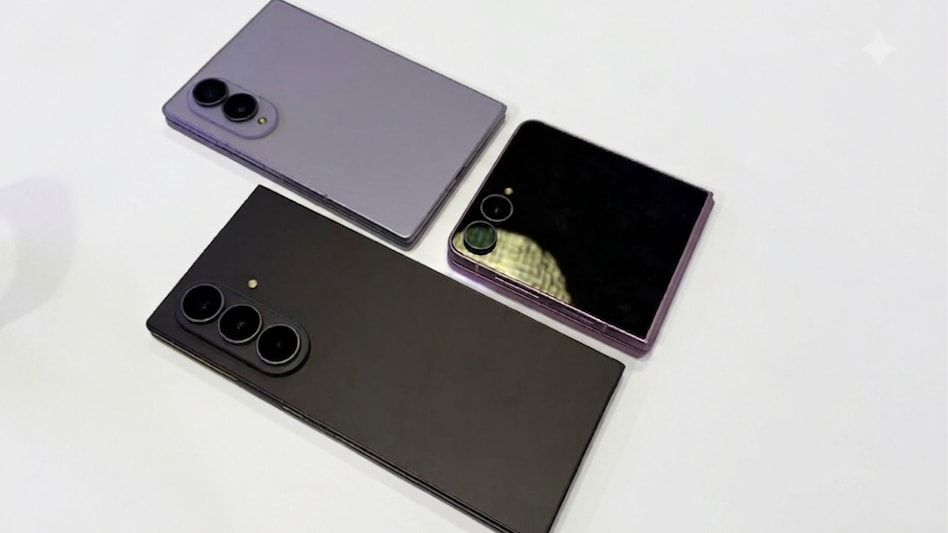
Samsung's New Foldables Hit the Market with Significant Price Increases
Samsung has unveiled its latest generation of foldable smartphones, introducing two book-style models and a clamshell de...
Business Today | Jul 23, 2026, 07:10