Mercury to gold: Marathon Fusion claims 10x CERN record, but can ‘modern alchemy’ work?
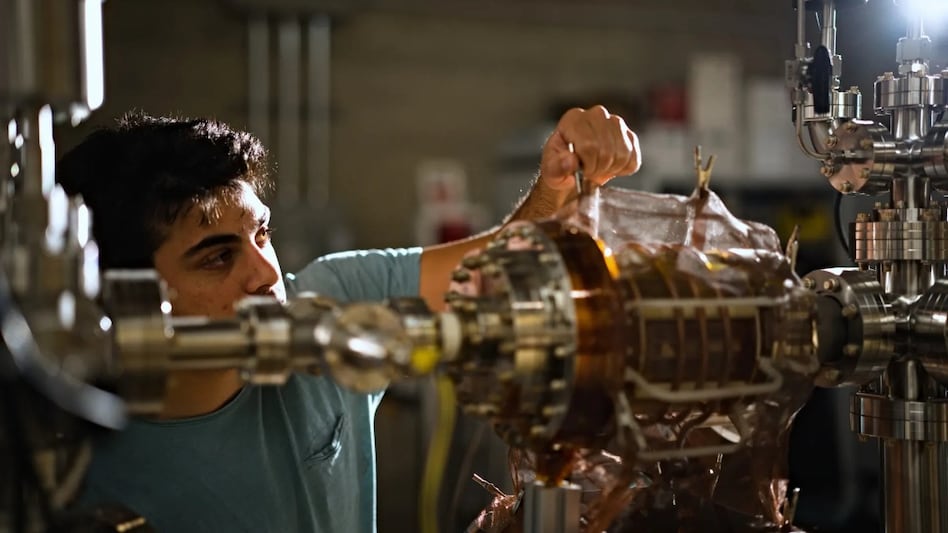
A fusion startup based in San Francisco has made a bold declaration that echoes the tales of ancient alchemy: it claims to have successfully transformed mercury into stable gold using fusion-generated neutrons. However, this ambitious assertion goes beyond mere sensationalism; the company aims to leverage this technology for producing valuable medical isotopes for cancer diagnosis and treatment, in addition to laying the groundwork for future fusion power plants. Marathon Fusion asserts that its experiments have achieved mercury-to-gold transmutation at a rate ten times higher than the previous record set by CERN in 2025. The company has also announced progress in isotope separation and has produced radioactive copper isotopes from zinc. This groundbreaking claim has piqued the interest of both tech enthusiasts and investors, raising questions about whether synthesized gold could disrupt the market for the precious metal. The process of converting mercury into gold involves nuclear transmutation, which alters the atomic nucleus to yield a different element or isotope. Marathon Fusion's method employs neutrons generated from a deuterium-tritium fusion reaction to transform mercury-198 into mercury-197, which is radioactive and can decay into gold-197, the stable form of gold. While the underlying nuclear physics is well-established, the challenge remains to produce gold in economically viable quantities. CERN's ALICE experiment, for instance, managed to create only 29 picograms of gold over four years. Marathon Fusion recently claimed to have achieved high-rate alchemy, turning mercury into real, stable gold, and has also enriched isotopes using what it describes as the world’s most powerful plasma centrifuge. Despite the excitement surrounding these claims, it's crucial to differentiate between demonstrating a nuclear reaction and achieving commercial-scale gold production. Marathon's 2025 research paper outlined a theoretical production method supported by nuclear simulations, while its latest assertions of experimental success require independent verification. In addition to its aspirations for gold production, Marathon Fusion is shifting focus to the realm of medical isotopes, which could have more immediate applications. Radioisotopes play a critical role in nuclear medicine, aiding in disease diagnosis, imaging tumors, and delivering targeted radiation to cancer cells. The company has begun producing radioactive copper isotopes by irradiating zinc with fusion neutrons, with copper-64 being used in diagnostic imaging and copper-67 in targeted radionuclide therapy. Marathon argues that fusion reactors could become a significant source of medical isotopes as demand rises. However, the realization of this potential hinges on factors such as production yields, isotope purity, regulatory approvals, and the establishment of processing facilities. The company's proposed fusion reactor in San Francisco is not solely about generating electricity; the objective is to produce neutrons at high rates for medical isotopes and possibly gold. Marathon aims for an ambitious target of directing a trillion neutrons per second at a small target continuously for years. The company intends to double its reactor's power density monthly, although this presents numerous engineering challenges. The possibility of lab-grown gold raises intriguing questions about its impact on gold prices, reminiscent of the effects lab-grown diamonds had on the diamond market. Tushar Jain, founder of Multicoin Capital, noted that if lab-grown diamonds disrupted prices, lab-grown gold could potentially do the same. However, the complexities of nuclear transmutation make this a much more challenging and energy-intensive process compared to the production of lab-grown diamonds. Marathon Fusion's projections suggest that a well-designed fusion plant could generate substantial amounts of gold annually, but these projections remain theoretical until proven commercially viable. The startup's ambitions extend beyond just gold and medical isotopes; it envisions that developing small fusion systems for specialized applications could pave the way for larger power plants and contribute to the advancement of necessary technologies.
Figma Engineer Files Lawsuit Claiming Workplace Harassment and Retaliation
A former engineer at Figma has initiated legal action against the design software firm and its CEO, Dylan Field, citing ...
TechCrunch | Nov 23, 2026, 23:15
Investing in the Future: Solar and Battery Solutions for AI Data Centers
The challenge of powering AI data centers has emerged as a pivotal issue in the current technological landscape. Over th...
TechCrunch | Nov 24, 2026, 16:25
Electric Truck Innovator Harbinger Secures Major Funding from Erebor Bank
Harbinger, an emerging player in the electric truck industry, has secured a significant financial boost from Erebor Bank...
TechCrunch | Nov 24, 2026, 18:00
Saudi Engineer Faces Legal Battle Over Alleged Espionage Using AI Tech
A Saudi engineer employed by OpenAI, Abdulrahman Alfozan, is at the center of a legal dispute as prosecutors allege he u...
Business Insider | Nov 23, 2026, 23:50Amazon's $7.5 Billion Acquisition of Decart: A Strategic Move in the AI Chip Landscape
In a significant development for the tech industry, Amazon has announced its acquisition of Decart, a startup specializi...
TechCrunch | Nov 24, 2026, 15:55