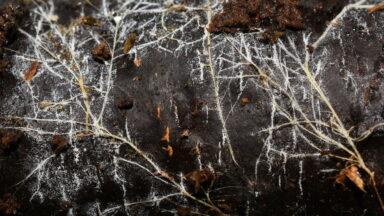
Threads of underground fungal networks are long enough to reach beyond the Solar System
Beneath the Earth's surface, a staggering 110 quadrillion kilometers of arbuscular mycorrhizal fungal networks exist—these delicate, ultra-thin threads, if laid end to end, would reach nearly a billion times the distance from Earth to the sun. This revelation comes from a groundbreaking study published in Science, which highlights the extensive reach and critical role of these fungal communities. These fungi engage in a symbiotic relationship with plant roots, supplying essential nutrients such as phosphorus and nitrogen in exchange for carbon. Remarkably, these networks sequester around one billion tons of carbon underground each year, helping to mitigate atmospheric warming. Until now, the global mapping of these networks had not been achieved. Led by the Society for the Protection of Underground Networks (SPUN), the research employed a combination of literature reviews, global soil samples, advanced machine learning techniques, and laboratory tests to estimate the distribution and density of these vital systems. "This marks a pivotal moment where we transition from knowing these networks exist to understanding their precise locations and densities," stated Toby Kiers, SPUN's executive director and co-author of the study. For years, scientists have recognized that arbuscular mycorrhizal fungi form crucial symbiotic partnerships with approximately 80 percent of the world's plant species, found in nearly all regions where plants thrive. However, the full extent of these networks, particularly in grasslands and their decline in agricultural areas, has remained largely unknown until this study. James Bever, an ecology and evolutionary biology professor at the University of Kansas, who studies plant-microbe interactions but did not participate in the research, commented, "This study illuminates the significant role these underground organisms play in the ecosystems we observe above ground."
Apple's 2027 Hardware Overhaul: New iPhones, iPads, and MacBooks on the Horizon
Apple is gearing up for a transformative year in 2027, with exciting hardware upgrades poised to entice those looking to...
Business Today | Nov 23, 2026, 04:25
Data Centers: The Controversial Heart of Tech's Environmental Crisis
In his latest book, journalist Paris Marx delves into the world of data centers and their connection to generative AI, r...
TechCrunch | Nov 22, 2026, 18:20
Sarvam AI Launches Token Factory to Challenge Global AI Giants with Competitive Pricing
A new player has emerged in India's AI infrastructure sector, aiming to take on established international competitors. S...
Business Today | Nov 23, 2026, 07:35
Can a Single Cloud Outage Trigger a Surge in Insurance Claims in India?
The recent disruption of Microsoft 365 services has underscored the vulnerability of businesses reliant on a single tech...
Business Today | Nov 23, 2026, 08:05
Record-Breaking Documentary 'You Can See Everything' Surpasses $100 Million Mark
The documentary 'You Can See Everything,' directed by Nathan Fielder and Lance Oppenheim, has achieved a remarkable mile...
TechCrunch | Nov 22, 2026, 22:00