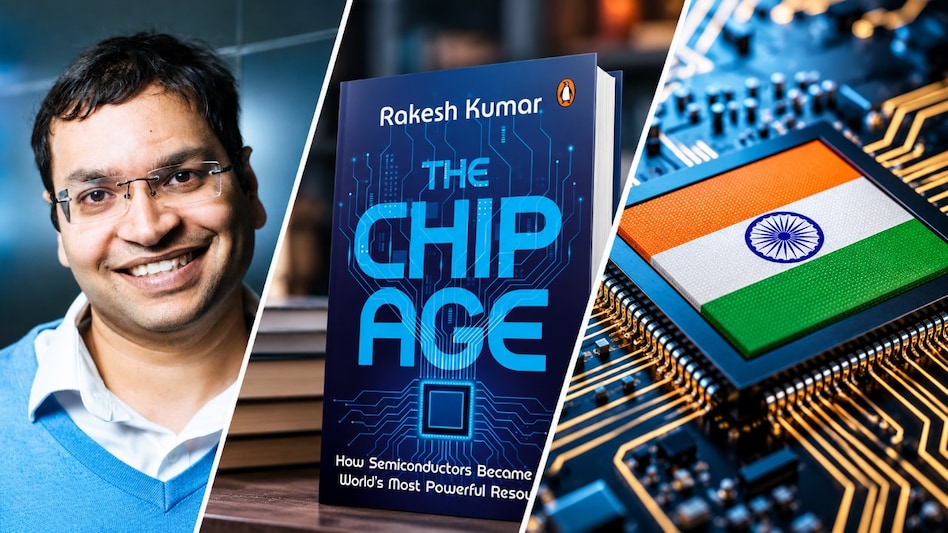
China is both a model and a warning for India's chip ambitions: US professor on what New Delhi should do
India is making strides in the semiconductor sector with its goal of establishing a domestic chip ecosystem, but insights from China’s journey provide both guidance and caution. In an interview, Professor Rakesh Kumar, author of 'The Chip Age,' highlighted that despite China's heavy investments—amounting to tens of billions of dollars—its inability to produce advanced chips underscores the complexities of this industry. "China stands as both an example and a warning," Kumar explained. "They've invested significantly, yet their reliance on foreign technology for chip-making equipment can leave them vulnerable if access is restricted by countries like the US or the Netherlands." Kumar, who teaches at the University of Illinois, advises India to adopt a more calculated approach to its investments in the semiconductor field. He emphasizes the importance of prioritizing chip design and building expertise in packaging and testing, as well as focusing on legacy chip production rather than rushing into advanced manufacturing too quickly. The term 'Chip Age' reflects the profound influence of semiconductors on various sectors, from computing to healthcare and national security. The evolution of chips since their inception in the 1950s has led to their critical role in modern technology and geopolitics. Countries dominate the chip supply chain for various reasons, often tied to historical advantages and foundational technologies. For instance, while the US excels in chip design due to its historical lead in transistor technology, manufacturing tends to flourish in regions with lower costs and state support, such as Asia. As Kumar illustrates, the intricacies of the supply chain, including the reliance on materials like neon from Ukraine and Russia, further complicate the landscape. Kumar also notes that successful semiconductor ecosystems typically require sustained government support. He cites examples of countries like South Korea and Taiwan, which have successfully developed their chip industries with strategic planning and financial backing. In contrast, he warns against the pitfalls of 'chip nationalism,' where investments are made without a long-term strategy. India's current focus on legacy chip manufacturing, while facing criticism for the perceived lack of innovation, is a pragmatic step. Kumar advises that India should align its efforts with local demands, especially in sectors such as automotive, to build a sustainable ecosystem. He also emphasizes the importance of attracting foreign foundries like TSMC and Samsung, but cautions against over-reliance on them without ensuring economic security and value addition within the country. In conclusion, India must navigate the semiconductor race with a clear strategy that balances immediate needs with long-term goals, ensuring that investments yield tangible benefits while being mindful of global dynamics in the chip industry.
Revolutionizing Cybersecurity: AI's Role in Modern Threat Detection and Defense
As businesses increasingly embrace digital transformation and artificial intelligence, the complexity of cybersecurity t...
Business Today | Nov 24, 2026, 08:30
Electric Truck Innovator Harbinger Secures Major Funding from Erebor Bank
Harbinger, an emerging player in the electric truck industry, has secured a significant financial boost from Erebor Bank...
TechCrunch | Nov 24, 2026, 18:00
Jio Unveils Exciting New Plans with Unlimited 5G Data for the New Year
Reliance Jio has rolled out its latest prepaid recharge offerings, dubbed 'Happy New Year 2.0', featuring unlimited 4G a...
Business Today | Nov 24, 2026, 10:20
Instagram Integrates AI Assistant Muse for Enhanced User Experience
In a significant move, Meta has announced the integration of its AI assistant, Muse, directly into Instagram's direct me...
TechCrunch | Nov 24, 2026, 17:25
Saudi Engineer Faces Legal Battle Over Alleged Espionage Using AI Tech
A Saudi engineer employed by OpenAI, Abdulrahman Alfozan, is at the center of a legal dispute as prosecutors allege he u...
Business Insider | Nov 23, 2026, 23:50