
Trump administration’s legal setbacks are good news for offshore wind — and the grid
This week marked a significant turn of events for offshore wind energy on the East Coast as a series of legal rulings allowed construction to resume on multiple projects. The Department of the Interior had previously halted work on five offshore wind farms, totaling 6 gigawatts of power generation capacity, due to concerns related to national security. The judicial decisions enable three key projects to continue: Revolution Wind near Rhode Island, Empire Wind off the New York coast, and Coastal Virginia Offshore Wind. These developments come after the project developers filed lawsuits against the stop-work orders imposed by the Trump administration, which had taken effect for 90 days starting in December. When announcing the halt just days before Christmas, the government raised alarms about potential interference with radar operations. This concern has been a significant point of contention throughout the siting and permitting phases, as wind farms can be strategically positioned to minimize disruption to radar systems, and existing radar technology can be upgraded to filter out noise from turbine blades. President Trump has openly criticized offshore wind projects, stating, "I’m not much of a windmill person" during a recent meeting with oil executives. However, the courts have shown skepticism towards the government's arguments. In multiple hearings in Virginia and Washington, D.C., judges expressed doubts about the administration's reasoning. U.S. District Judge Carl Nichols, appointed by Trump, noted that the government's response failed to adequately address several claims made by plaintiff Equinor, which is spearheading the Empire Wind project. He emphasized that the government's brief did not even mention the term "arbitrary," which Equinor had used to describe the stop-work order. Similarly, U.S. District Judge Jamar Walker, who presided over the case involving Dominion Energy's Coastal Virginia project, questioned the broad nature of the Interior Department's order, suggesting it may not be justified in the context of the Virginia development. Meanwhile, two additional projects remain in legal limbo as their cases progress through the courts. Ørsted, working on the Sunrise Wind project, has a hearing set for February 2, while Vineyard Wind 1's developers recently filed their lawsuit. According to a Department of Energy study projected for release in 2024, the East Coast has the capacity to generate up to 110 gigawatts of offshore wind energy by 2050. This potential could significantly benefit densely populated urban centers and data-rich regions, which are currently facing some of the highest electricity costs in the nation. Offshore wind energy, recognized as one of the most economical forms of new power generation, could help alleviate this trend, with the national potential estimated to produce 13,500 terawatt-hours of electricity annually—three times the current U.S. consumption.
Volkswagen Engineers Indicted for Insider Trading Linked to Rivian Partnership
In a significant legal development, the U.S. Department of Justice has brought securities fraud charges against two engi...
TechCrunch | Jul 24, 2026, 20:30
Elon Musk Faces Major Setbacks as Tesla and SpaceX See Significant Stock Declines
It has been a challenging week for Elon Musk, as both Tesla and SpaceX experienced substantial stock declines. Tesla sha...
CNBC | Jul 24, 2026, 20:40
Prentis: Ambitious New AI Lab Eyes $100 Million Funding with Innovative Automation Goals
Prentis, a cutting-edge AI research laboratory co-founded by Ritankar Das, Reid Hoffman, and Marc Pincus, is currently i...
TechCrunch | Jul 24, 2026, 22:45
The Aluminum Foil Trend: A DIY Shield Against Wireless Identity Theft
Have you noticed an unusual trend where people are wrapping their wallets in aluminum foil? This peculiar practice has e...
Business Today | Jul 25, 2026, 02:45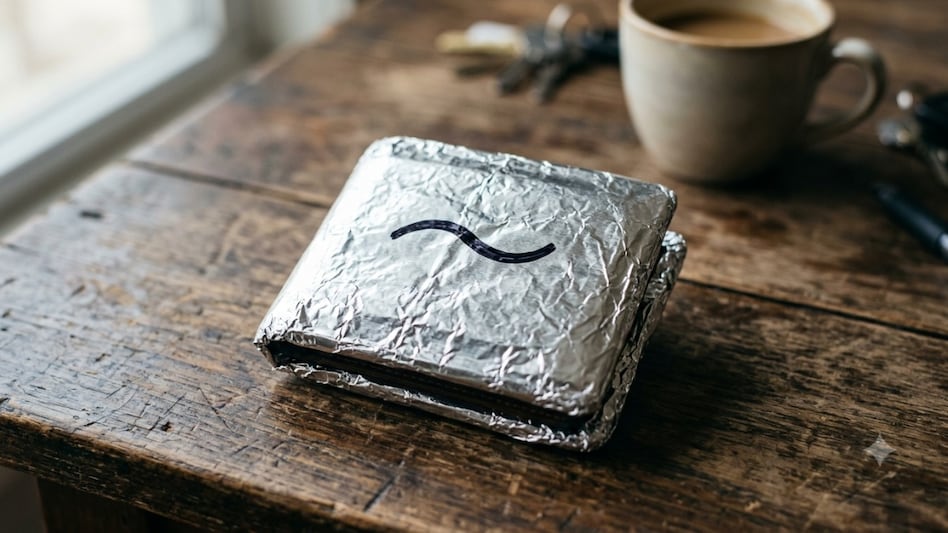
SpaceX's Latest Starlink Launch Marks Milestone Amid Booster Setbacks
On Friday, SpaceX marked a significant achievement by successfully launching its first batch of third-generation Starlin...
TechCrunch | Jul 24, 2026, 23:40