The billion-dollar rivalry over 'ChatGPT for doctors' just got nastier with dueling lawsuits
The rivalry between two major players in the healthcare AI sector is escalating as Doximity has filed a new lawsuit against OpenEvidence, intensifying a legal battle that has captured the industry's attention. OpenEvidence, a promising startup valued at $3.5 billion, originally initiated this feud in June by suing Doximity, which boasts a valuation of $13 billion, alleging that it impersonated doctors to misappropriate trade secrets. In a recent complaint lodged in a Massachusetts federal court, Doximity countered by accusing OpenEvidence of disseminating false information with the intent to damage Doximity's reputation and lure away its employees. Doximity also sought to dismiss OpenEvidence's initial lawsuit, labeling it as an attempt to hinder fair competition. The conflicts between these two companies date back even further. Earlier this year, OpenEvidence took legal action against Canadian AI startup Pathway Medical, claiming they executed 'prompt injection' attacks to exploit OpenEvidence's AI system prompts for their own training purposes. Pathway attempted to dismiss that case in June, and later, in August, Doximity acquired Pathway for $63 million. Additionally, OpenEvidence has pursued legal action against another competitor, Vera Health, under similar allegations of prompt injection attacks. The outcomes of these cases could potentially establish new legal standards regarding trade secret theft in the realm of artificial intelligence. Both Doximity and OpenEvidence are aggressively vying for dominance in the AI-driven medical assistant market. OpenEvidence recently secured $210 million in Series B funding in July, enhancing its valuation and claiming to have developed the fastest-growing application for physicians in history. The company’s latest release introduces features aimed at improving real-time clinical documentation for healthcare professionals. On the other side, Doximity, which went public in 2021, has been bolstering its AI capabilities, particularly with its Doximity GPT, designed to automate various administrative tasks for doctors. This growth in AI offerings has helped Doximity's stock regain traction after a downturn in public healthcare markets in 2022. The legal disputes hinge on distinct claims. OpenEvidence alleges that Doximity accessed its proprietary code unlawfully through deceptive practices, including impersonation. For example, OpenEvidence claims that Doximity's head of AI created an account under false pretenses and attempted to extract sensitive information from their system. Doximity, in response, has labeled these allegations as speculative and lacking factual support. Moreover, Doximity is also seeking to pivot public attention back to OpenEvidence, asserting that the startup has engaged in unethical recruitment practices and disseminated misleading advertisements. Doximity has pointed out specific claims made by OpenEvidence, such as achieving a perfect score on the U.S. Medical Licensing Examination, which Doximity disputes based on user feedback highlighting inaccuracies. This unfolding saga not only illustrates the fierce competition in the AI healthcare sector but also raises significant questions regarding the handling of sensitive information. Both companies are now under scrutiny for their treatment of physician identifiers and patient records, with claims of HIPAA compliance violations surfacing in the ongoing legal battles.
Amazon Unveils Alexa+ in India: A Revolutionary AI Voice Assistant Experience
Amazon has officially launched Alexa+ in India, introducing a generative AI-enhanced voice assistant designed to compreh...
Business Today | Sep 16, 2026, 10:05
Sam Altman Advocates for Transparency in AI Safety Amid Concerns of Potential Dangers
During his address at Salesforce's Dreamforce conference, OpenAI CEO Sam Altman emphasized the inevitability of certain ...
Business Insider | Sep 16, 2026, 12:25Oracle's Job Cuts: CFO Clarifies Intent Amid Restructuring
Oracle's recent wave of layoffs has left employees grappling with uncertainty as the company embarks on a significant re...
Business Today | Sep 16, 2026, 07:50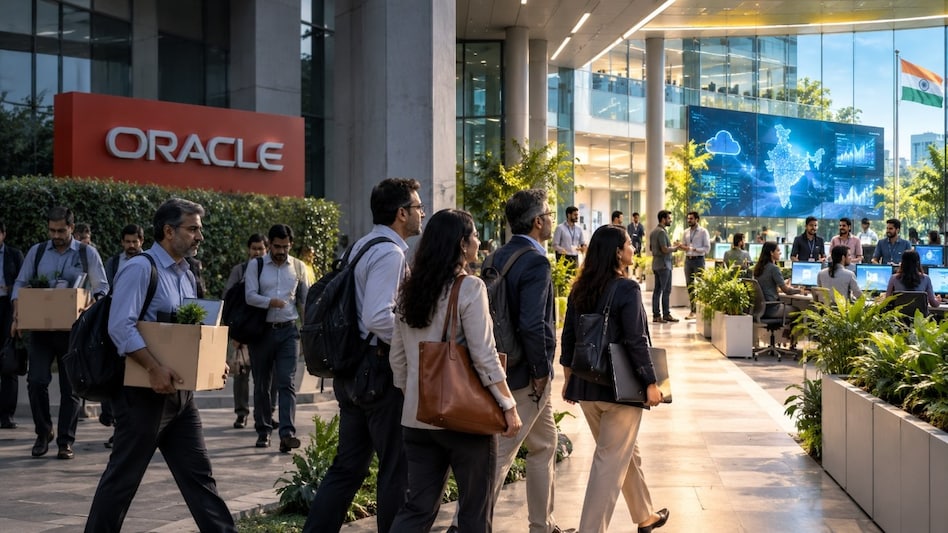
Zuckerberg Advocates for AI Progress Amid Safety Concerns
The ongoing debate surrounding the pace of artificial intelligence development has captured the attention of industry le...
Business Today | Sep 16, 2026, 09:35
MediaTek Unveils Dimensity 9600 Pro: A Game Changer for Upcoming OPPO Flagship
MediaTek has introduced the Dimensity 9600 Pro, marking a significant advancement in smartphone processing technology wi...
Business Today | Sep 16, 2026, 08:40