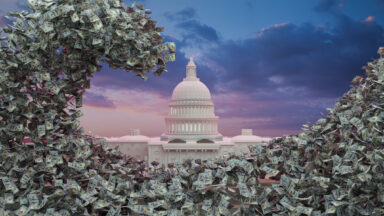
Trump’s stablecoin push “will open floodgates to massive fraud,” lawmaker warns
This week in Congress, dubbed "Crypto Week," lawmakers and experts are sounding the alarm over a piece of legislation championed by Donald Trump that could pave the way for extensive fraud. The GENIUS Act, which is nearing a vote in the House of Representatives after passing in the Senate last month, aims to establish a framework for banks and private companies to issue stablecoins. Stablecoins are often portrayed as a safer form of cryptocurrency, likened to the "cash of the blockchain" due to their potential to be pegged to the US dollar. However, critics like Delicia Hand, Consumer Reports' senior director for digital marketplaces, have raised significant concerns regarding the GENIUS Act. The legislation does not mandate that stablecoins be tied to the dollar, which opens the door for large tech companies to link their stablecoins to riskier assets, potentially destabilizing both their cryptocurrency offerings and the broader financial system. The implications for American consumers are serious. Hand highlighted that Consumer Reports has numerous reservations about the GENIUS Act, primarily concerning the lack of adequate consumer protections expected in financial transactions. Companies that issue stablecoins could include major players like Amazon, Meta, PayPal, and Shopify, raising questions about oversight and accountability. Unlike traditional banks, which are bound by regulations to provide clear dispute resolution and deposit insurance, stablecoin providers would not be held to similar standards. This gap in regulation could allow tech giants to handle sensitive financial information with little scrutiny, potentially stifling competition and creating conflicts of interest. In response to these concerns, Congressional researchers had previously suggested that any regulation of stablecoins should be limited to financial institutions. This approach could have forced major tech companies to divest parts of their operations to avoid monopolistic practices in the digital payments space. However, Republican lawmakers have yet to embrace such recommendations.
Stryker Faces Cyber Assault Amid Global Tensions: What We Know
In the wake of recent airstrikes by the US and Israel on Iran, cybersecurity experts issued warnings to organizations wo...
Ars Technica | Mar 12, 2026, 22:20
Adobe's Leadership Shake-Up: CEO Shantanu Narayen Steps Down Amidst AI Revolution
In a significant shift for the company, Adobe has announced that its long-serving CEO, Shantanu Narayen, will be steppin...
Business Today | Mar 13, 2026, 03:15
Pioneering Quantum-Ready AI: Startup QuTwo Aims to Bridge the Gap for Enterprises
Following his departure from AMD Silo AI, where he served as CEO after a significant acquisition, Finnish entrepreneur P...
TechCrunch | Mar 13, 2026, 05:20
Nvidia GTC 2026: What to Expect from Jensen Huang's Keynote and Event Highlights
Nvidia is set to launch its annual GTC developer conference next week in San Jose, California, with the highly anticipat...
TechCrunch | Mar 12, 2026, 23:45
AI Boosts U.S. Military Edge, Says Palantir CEO Amid Rising Tensions
During an interview with CNBC, Palantir's CEO Alex Karp emphasized the significant advantage that artificial intelligenc...
CNBC | Mar 12, 2026, 22:05