Congress told there needs to be “consequences” for NASA delays amid China’s rise
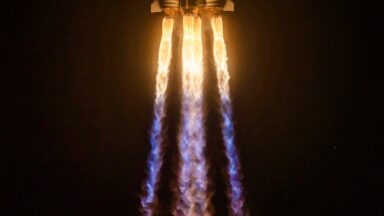
In recent months, U.S. lawmakers have come to a stark realization: without significant intervention, China may achieve human landings on the Moon before the United States can successfully return there via the Artemis Program. Despite a $10 billion boost to NASA's budget this summer, little of that funding has been allocated for the critical efforts needed to land U.S. astronauts on the lunar surface within this decade. A subcommittee of the House Committee on Space, Science, and Technology has begun scrutinizing NASA's policies, raising alarms about the growing competition posed by Chinese advancements in civil spaceflight. During a hearing held Thursday in Washington, D.C., members of the subcommittee sought insights from a panel of experts on how NASA could sustain its global leadership in space and enhance the Artemis Program to expedite lunar missions. Former NASA Administrator Mike Griffin, known for his critical stance on NASA's current strategy for lunar exploration, voiced the most severe criticisms of the Artemis Program. Griffin has long questioned the feasibility of NASA's vision for a 'sustainable' lunar return that relies heavily on reusable landers requiring numerous refueling operations in low-Earth orbit. He emphasized the uncertainties surrounding this approach, stating, "The bottom line is that an architecture which requires a high number of refueling flights in low-Earth orbit, no one really knows how many, uses a technology that has not yet ever been demonstrated in space, is very unlikely to work—unlikely to the point where I will say it cannot work." As discussions unfolded, some lawmakers highlighted that China has effectively laid out long-term strategies for space exploration and adhered to them. In contrast, NASA has faced disruptions due to shifts in leadership across both the White House and Congress, which have affected its mission objectives and priorities. Griffin remarked on the importance of consistency in planning, stating, "Sticking to a plan is important when the plan makes sense. China is sticking to a plan that makes sense. It looks a lot, in fact, like what the United States did for Apollo. Provably, that worked. Sticking to a plan that will not work for Artemis III and beyond makes no sense."
Mobileye's Visionary Leader Transitions as Company Shifts Focus to Robotics and Robotaxis
Amnon Shashua, the founder and CEO of Mobileye, has announced his intention to step down from his leadership role after ...
TechCrunch | Jul 23, 2026, 23:15
Intel Surges with Record Revenue Growth Amid AI Boom
In a remarkable turn of events, Intel has reported its strongest revenue growth in nearly 15 years, surpassing expectati...
CNBC | Jul 23, 2026, 20:15
Anthropic Enhances Claude's Voice Capabilities with New Models
In a strategic response to recent developments in the AI landscape, Anthropic has announced an update to its Claude voic...
TechCrunch | Jul 23, 2026, 19:35
Patreon Cuts Workforce by 20% Amid Market Adjustments
In a significant shift, Patreon has announced a reduction of its workforce by 20%, amounting to 93 employees, as reveale...
TechCrunch | Jul 23, 2026, 20:40
Corgi Insurance Secures Additional Funding, Boosting Valuation to $4 Billion
Corgi, a startup specializing in insurance technology and data services, is reportedly closing yet another funding round...
TechCrunch | Jul 23, 2026, 20:40