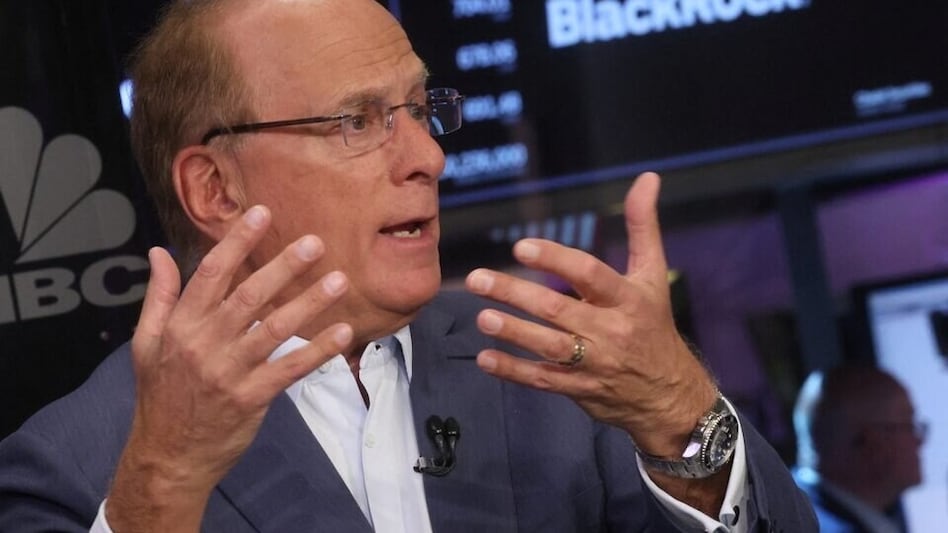
Smartphones to stocks: Why BlackRock's Larry Fink sees India leading the next investing wave
According to Larry Fink, the CEO of BlackRock, India stands on the brink of a transformative era in investment, driven by the nation’s burgeoning digital payments landscape. In his annual letter for 2026, Fink emphasized that India is poised to democratize capital markets, making investing accessible to a broader audience. Fink noted the significant economic growth India is experiencing, reflecting on the recent rally in stock markets. He shared insights from Mukesh Ambani, chairman of Reliance Industries, who described this moment as pivotal for a generation of Indians eager to improve their future. With approximately one billion Indians now utilizing smartphones as portable banking solutions, Fink sees immense potential for these devices to facilitate entry into capital markets. While smartphones are primarily employed for payments and savings today, Fink envisions a future where they serve as gateways to wealth-building opportunities. His comments come amid a surge in retail investing in India, fueled by affordable brokerage apps, the widespread adoption of UPI for financial transactions, and increased financial literacy among the populace. Notable platforms like Zerodha, Groww, and Upstox have successfully attracted millions of novice investors, particularly from less urbanized areas. Fink also pointed out the success of BlackRock's joint venture with Reliance Group, named JioBlackRock, which has already welcomed over a million investors since its inception. This initiative aims to empower more Indians to engage in investment activities, demonstrating the potential for retail investment to flourish in the country. The CEO's observations align with a global trend where asset management firms are increasingly targeting retail investors in emerging markets. For BlackRock, India represents a significant growth opportunity as conventional markets begin to plateau. Fink describes the Indian experience as not merely a matter of catching up to established financial systems but as an illustration of constructing modern financial infrastructure from the ground up. Looking ahead, Fink addressed the evolution of financial assets, particularly the concept of tokenization. He explained that this innovative approach to recording asset ownership on digital platforms can enhance efficiency, reduce costs, and accelerate transaction settlements. He stressed that while smartphones can already serve as investment tools, the range of available financial assets will expand as they become more digitally integrated. Nevertheless, the rise in retail participation also introduces certain risks. Fink acknowledged that inexperienced investors could lead to increased market volatility, highlighting existing concerns regarding derivatives trading and speculative activities among newcomers. He underlined the necessity for robust regulatory frameworks to accompany the shift towards digital and tokenized markets, advocating for protections that ensure investors can engage with the same trust they have when using conventional payment methods.
AI Trends Transforming India's IT Landscape: A Shift in Revenue Models
India's IT services sector, valued at approximately $300 billion, is on the brink of a significant transformation as art...
Business Today | Jul 23, 2026, 04:55
IBM Adjusts 2026 Revenue Outlook Amid Earnings Disappointment
On Wednesday, IBM revised its revenue forecast for 2026 downward, reporting quarterly profits that fell short of analyst...
CNBC | Jul 22, 2026, 20:25
ServiceNow's CEO Highlights AI Safety Features Amidst Industry Concerns
Bill McDermott, the CEO of ServiceNow, asserted on Wednesday that the swift integration of artificial intelligence is bo...
CNBC | Jul 22, 2026, 23:05
Tech Giants Face Market Turmoil Amid Rising AI Investment Costs
As Alphabet and Tesla kicked off the tech earnings season on Wednesday, a clear trend emerged: the intense scrutiny on A...
CNBC | Jul 23, 2026, 01:55
SoundCloud Expands Horizons with Acquisition of Nina Protocol
On Wednesday, SoundCloud revealed its acquisition of Nina Protocol, a decentralized music platform that empowered indepe...
TechCrunch | Jul 22, 2026, 19:50