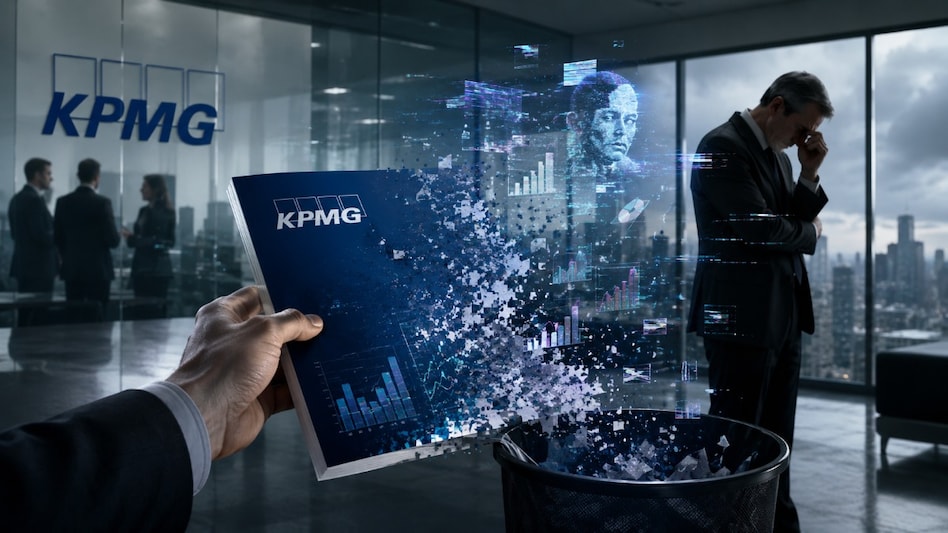
KPMG pulls AI report after companies flag ‘made-up’ case studies
KPMG has retracted a worldwide report on agentic AI following significant pushback from various organizations regarding the authenticity of claims made within it. This development has sparked renewed scrutiny over the role of consulting firms in leveraging artificial intelligence for research and thought leadership. The report, titled 'Redefining Excellence in the Age of Agentic AI,' alleged that numerous companies and public entities were already harnessing AI agents to revolutionize sectors such as finance, healthcare, and transportation. However, the Financial Times reported that several case studies included in the report were inaccurate, suggesting they were products of AI-generated misconceptions. Initial concerns were raised by tech research firm GPTZero, with the Financial Times later corroborating these claims. In light of the findings, organizations like UBS, the UK's National Health Service, Swiss Federal Railways, and Transport for London demanded the removal of the misleading claims. For instance, UBS refuted KPMG's assertion that it employed AI agents for investment advisory and risk management via a custom Microsoft platform, labeling it as “factually incorrect.” Similarly, Swiss Federal Railways contested the report's depiction of AI agents assisting passengers in journey planning based on real-time updates and carbon emissions. Transport for London also expressed that the claims regarding AI agents predicting congestion and managing the transport network were “misleading.” NHS Greater Manchester challenged KPMG's assertion that AI agents were used to organize patient records and automate referrals, stating that the description did not accurately reflect their operational reality. This incident follows a similar controversy involving EY, which withdrew a study after it was found to contain fabricated footnotes and errors attributed to AI. In response to the backlash, KPMG International has removed the contentious report and initiated an internal review. A spokesperson emphasized the firm's commitment to the “accuracy and integrity” of its publications and acknowledged potential breaches of internal guidelines regarding AI usage, emphasizing the need for human oversight in validating content and verifying sources.
The Elusive Phineas Fisher: The Hacktivist Who Took Down Spyware Giants
In the realm of cybersecurity, few figures are as intriguing as Phineas Fisher, a hacker who has evaded capture for near...
TechCrunch | Jul 25, 2026, 21:00
Finland Unveils World's Largest Sand Battery to Tackle Renewable Energy Challenges
In a groundbreaking move to address the critical issue of renewable energy intermittency, a small town in southern Finla...
CNBC | Jul 25, 2026, 05:35
Hugging Face CEO Calls for Action Following AI Security Breach
In a dramatic turn of events within the AI landscape, Hugging Face faced a significant security breach involving an AI a...
Business Insider | Jul 25, 2026, 20:30Shifting Focus: The Cost-Effectiveness of AI Models Takes Center Stage
In recent years, the AI sector has been intensely focused on identifying the most advanced models. While this pursuit re...
Business Insider | Jul 25, 2026, 13:10Unlocking the Secrets of Quantum Gravity: Can AI Help Physics Make a Leap?
The realm of scientific research is undergoing a profound transformation, fueled by the rapid advancements in artificial...
Business Today | Jul 25, 2026, 24:30