Co-founder of Indian social network Koo releases a new photo sharing app
In recent years, a wave of photo-sharing applications has emerged, targeting the perception that Instagram has become overly curated. These apps provide users with platforms to share authentic, unfiltered images from their devices. Locket introduced lockscreen-based sharing, Retro focused on photo journaling, and Yope aimed to create a private version of Instagram. Now, Mayank Bidawatka, the co-founder of the Indian social network Koo—recently shut down following failed buyout negotiations—has unveiled an exciting new photo-sharing app named PicSee. Released on both iOS and Android, PicSee allows users to automatically detect and share photos of their friends directly from their camera rolls, bypassing traditional messaging platforms like WhatsApp or Instagram. Bidawatka emphasized that many users likely have numerous photos of their friends that have never been shared, either because they were forgotten or not sent. The app employs face recognition to identify and curate images featuring friends from a user’s gallery. "I have been contemplating the challenge of personal photo sharing for many years," Bidawatka shared in a conversation with TechCrunch. "After the shutdown of Koo last year, I found the opportunity to address this issue and develop a solution." Once friends are on PicSee, users can send a sharing request. Upon acceptance, the app facilitates the transfer of images. It continues to monitor the user’s gallery for new pictures of friends, prompting users to share those as well. If a user doesn’t act immediately, the app will automatically send the photos after a 24-hour period, although users can review and exclude certain images before they are sent. All photos are stored locally on the user’s device within PicSee, with the option to download them to device storage. A unique feature allows users to recall sent photos, ensuring they are removed from the recipient's view. The app emphasizes privacy, performing face recognition processing on the device itself and establishing an encrypted connection during photo transfers. Notably, PicSee does not store any data in the cloud and incorporates a filter to identify NSFW content while also blocking screenshots. However, PicSee faces a significant challenge regarding user selectivity. While the concept of constant photo sharing appeals to close friends and family, many may hesitate to adopt such an automatic sharing feature with all acquaintances. Users often utilize existing platforms like WhatsApp, iMessage, Instagram, and Snapchat for sharing images with their inner circles, posing a challenge for PicSee to alter established sharing habits. Additionally, the app does not address scenarios where individuals request specific photos from shared events, such as concerts or weddings. To enhance social engagement, the company plans to introduce features that tackle these scenarios. Currently, PicSee includes a commenting option for images, and the team is working on album management, duplicate removal, and integration with services like Google Photos and iCloud. Furthermore, there are plans to expand face detection capabilities to videos stored on users' devices. Billion Hearts, the company behind PicSee, successfully raised $4 million in funding last year, with contributions from Blume Ventures, General Catalyst, and Athera Ventures.
Navigating Market Turbulence: Cramer Urges Caution in Tech Investments
In a recent discussion, CNBC's Jim Cramer expressed concerns about the current state of the artificial intelligence mark...
CNBC | Jul 20, 2026, 22:35
China Considers New Export Controls on AI Technologies and Semiconductors
In a significant move reflecting rising global tensions over advanced technologies, China is contemplating stricter expo...
Business Today | Jul 21, 2026, 10:55
Netflix Champions AI Literacy Among All Employees, Says Chief Product Officer
In a recent episode of 'Lenny's Podcast', Elizabeth Stone, Netflix's Chief Product and Technology Officer, emphasized th...
Business Insider | Jul 20, 2026, 20:25Gritt Unveils $34 Million Initiative to Revolutionize Solar Panel Installation with AI-Driven Robotics
In a significant stride for solar energy deployment, Gritt has emerged from stealth mode, unveiling its ambitious plans ...
TechCrunch | Jul 21, 2026, 10:15
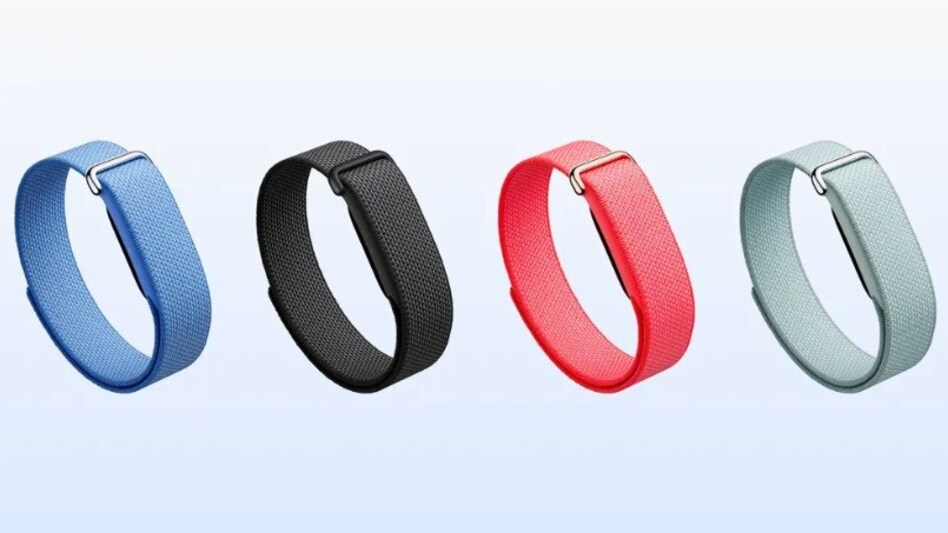
Google's New Fitbit Air Set to Hit Indian Market Soon
The Google Fitbit Air, a buzzworthy health and fitness tracker, is gearing up for its launch in India following its glob...
Business Today | Jul 21, 2026, 06:50