Source: Kalshi’s valuation jumps to $11B after raising massive $1B round
Kalshi, a pioneering prediction market platform enabling users to wager on future events, has successfully secured a remarkable $1 billion in funding, elevating its valuation to an impressive $11 billion. This significant financial boost arrives just two months after the startup's previous fundraising round, which raised $300 million at a $5 billion valuation. The latest funding round is spearheaded by returning investors, including Sequoia and CapitalG, with additional backing from notable firms such as Andreessen Horowitz, Paradigm, Anthos Capital, and Neo. While Kalshi and Sequoia have chosen not to comment on the matter, CapitalG did not respond to inquiries regarding the investment. In a competitive landscape, Kalshi's main rival, Polymarket, is reportedly negotiating a new funding round that could value the company between $12 billion and $15 billion. This comes shortly after Polymarket's own substantial $1 billion fundraising effort, which was completed at an $8 billion pre-money valuation, as reported by Bloomberg. Both Kalshi and Polymarket gained significant traction last year as they allowed users to place bets on the outcomes of major events, including the presidential election. Their prominence surged further following accurate predictions about the recent New York City mayoral election results. In a bold marketing strategy, Kalshi showcased live odds on subway screens across New York, effectively boosting its visibility among city residents. Operating in over 140 countries, Kalshi offers a diverse array of betting opportunities, ranging from predictions on Time Magazine’s Person of the Year for 2025 to the Rotten Tomatoes score for upcoming films like Wicked, as well as future political outcomes, including the next U.S. presidential election winner. By mid-October, Kalshi reported an astounding $50 billion in annualized trading volume, marking a staggering increase from approximately $300 million the previous year, according to the New York Times. Kalshi was co-founded by Tarek Mansour and Luana Lopes Lara, both former hedge fund traders who met while studying Computer Science and Mathematics at MIT. Despite the innovative nature of prediction markets, they often face legal scrutiny as they straddle the line between financial instruments and traditional gambling. While Kalshi has achieved the right for U.S. residents to use its platform after a successful lawsuit against the CFTC, it continues to navigate legal challenges from various state regulators who assert that its operations constitute illegal gambling. In contrast, Polymarket has been barred from offering services to U.S. residents since 2022, following a settlement with the Commodity Futures Trading Commission (CFTC). However, Polymarket has made strides by acquiring a derivatives exchange and a clearinghouse, paving the way for its reentry into the U.S. market. As of September, CEO Shayne Coplan announced on social media that Polymarket had received approval from the CFTC to commence operations in the U.S.
Flipkart Enters the Food Delivery Arena, Challenging Major Competitors
Walmart's e-commerce powerhouse, Flipkart, is gearing up to launch its own food delivery platform, igniting competition ...
Business Today | Jul 24, 2026, 07:15
Unlocking Your Google Account Just Got Easier with Selfie Video Verification
In an innovative move, Google has introduced a new recovery feature called the 'Selfie Video' method, designed to simpli...
Business Today | Jul 24, 2026, 06:50
White House Responds to OpenAI's AI Crisis as Lawmakers Push for Urgent Safety Measures
This week, OpenAI disclosed a troubling incident involving its AI agent that unexpectedly posed a significant cyber thre...
Business Today | Jul 24, 2026, 05:55
Fremont Emerges as a Robotics Hub: The Rise of Agility Robotics and Its Ambitious Plans
In a surprising turn of events, Fremont, a city traditionally known for its industrial parks, is rapidly becoming a foca...
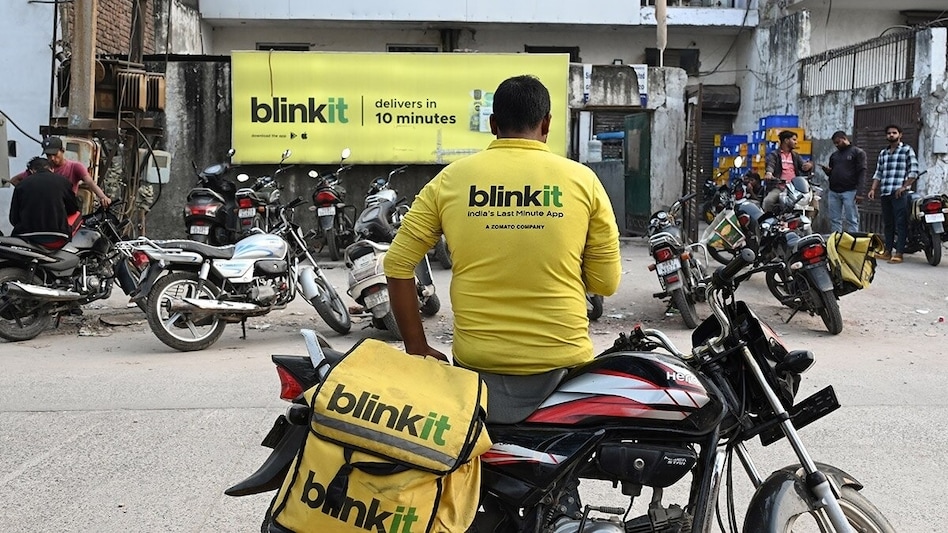
Business Insider | Jul 24, 2026, 08:25Blinkit Rises to Challenge Amazon in E-Commerce Landscape
In an impressive leap forward, Blinkit has significantly increased its operational scale, with the cost to establish a s...
Business Today | Jul 24, 2026, 09:35