
Jeff Bezos throws his hat in the ring for an orbital data center megaconstellation, too
In a bold move that echoes SpaceX's recent ambitions, Jeff Bezos, the founder of Amazon and Blue Origin, has filed a proposal with the Federal Communications Commission (FCC) to establish a megaconstellation of up to 51,600 satellites. This initiative, dubbed "Project Sunrise," aims to operate in Sun-synchronous orbits at altitudes between 500 and 1,800 kilometers, providing global data center services. Bezos' space venture, Blue Origin, highlights a growing concern within the tech industry: the limitations of terrestrial AI-driven data centers to meet soaring computing demands. The filing states, "The insatiable demand for AI workloads has led to the rapid buildout of terrestrial data centers globally." The proposed space-based data centers are envisioned as a supplementary solution, offering a new tier of computing that transcends the limitations imposed by ground-based infrastructure. Blue Origin joins a competitive landscape that includes SpaceX and a smaller player, Starcloud, which is backed by Nvidia and has submitted its own application for a massive 88,000 satellite constellation. While none of these companies are ready to deploy satellites immediately, these filings represent a significant land grab in the increasingly crowded domain of low-Earth orbit. Targeting specific polar orbits that allow for continuous sunlight exposure, Blue Origin plans to position its satellites at inclinations between 97 and 104 degrees. These orbits, known as Terminator Sun-synchronous orbits, ensure that the satellites receive almost constant sunlight throughout the year, a crucial factor for their functionality. This marks Bezos' third initiative aimed at creating a megaconstellation in space. Last year, Amazon began launching satellites for its Amazon Leo (formerly Project Kuiper) project, which is designed to rival SpaceX’s Starlink by offering global internet access from low-Earth orbit. Additionally, Blue Origin unveiled plans in January for the TeraWave constellation, intended to deliver high-speed connectivity to enterprise customers from both low and medium-Earth orbit.
Nvidia Strikes Major Deal with SK Hynix to Secure AI Memory Supply
Nvidia has successfully forged a significant partnership with South Korea's SK Hynix to secure memory supplies essential...
CNBC | Jul 25, 2026, 05:15
SpaceX Successfully Tests Starship Rocket, Launching New Era of Space Exploration
On Friday evening, SpaceX executed a significant milestone by launching its colossal Starship rocket from its facility i...
CNBC | Jul 25, 2026, 24:10
Unlocking the Secrets of Quantum Gravity: Can AI Help Physics Make a Leap?
The realm of scientific research is undergoing a profound transformation, fueled by the rapid advancements in artificial...
Business Today | Jul 25, 2026, 24:30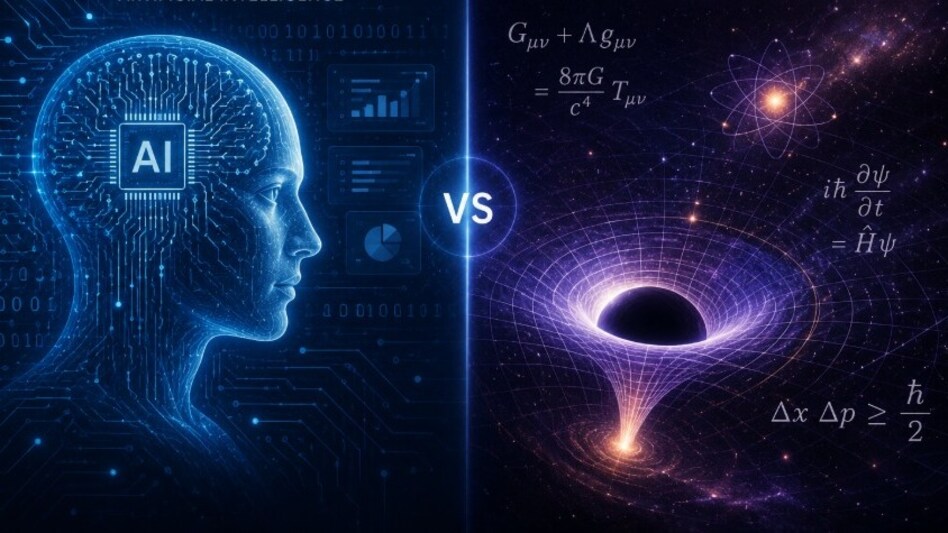
Crisis Averted: Power Line Failure Highlights Urgent Need for Data Center Resilience
A power line failure near Washington, DC, recently showcased a significant challenge faced by the electrical grid due to...
TechCrunch | Jul 25, 2026, 13:50
Revolutionizing Office Automation: Prentis Aims to Secure $100 Million in Funding
Prentis, a newly established AI research lab, is making waves in the tech industry as it prepares to raise $100 million ...
TechCrunch | Jul 25, 2026, 24:00