Is AI really making electricity bills higher? Here’s what the experts say
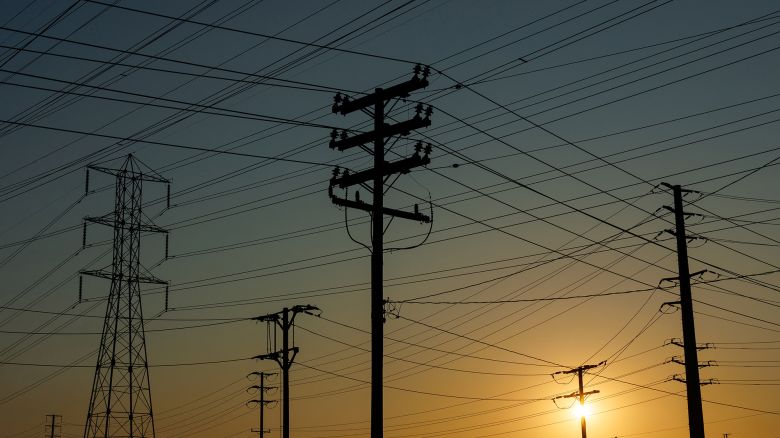
Lindsey Martin, a registered nurse from Kentucky, recently shared a shocking revelation on TikTok about her soaring electricity bills. In July, her bill soared to $314, marking the highest amount she had paid this year. By August, it climbed even further to $372, a stark contrast to the approximately $150 she used to pay two to three years ago. "I thought that was so high, I could not believe my bill was $150," Martin recounted in a conversation with CNN. "And now I wish my bill was $150." Martin's experience is not isolated. Nationwide, residential electricity prices are on the rise, with the U.S. Energy Information Administration (EIA) reporting a 13% increase since 2022. The trend shows no signs of slowing down, as retail electricity costs are anticipated to outpace inflation. Certain regions, including the Pacific, Middle Atlantic, and New England, could face even steeper hikes than the national average. Experts attribute these increases largely to the expenses involved in updating and maintaining the electrical grid and infrastructure, which have become increasingly strained due to severe weather events. Compounding this issue is the burgeoning demand for electricity driven by the AI industry. As tech giants invest billions into AI technology, electricity consumption is expected to rise significantly. Recently, OpenAI and Broadcom announced their collaboration to create 10 gigawatts of custom AI chips and systems, a capacity sufficient to power a major city. Projections indicate that data centers could account for approximately 6.7% to 12% of the U.S. electricity consumption by 2028, an increase from 4.4% in 2023, according to a Department of Energy report. A recent analysis by Bloomberg News highlighted that regions hosting data centers have experienced electricity cost spikes of up to 267% compared to five years ago. Bob Johnson, a Gartner analyst, pointed out that the power industry is struggling to keep pace with this rapid growth. Major technology firms are investing heavily in data centers, with Meta reporting $17 billion in capital expenditures and Microsoft $24.2 billion in the last quarter alone. Additionally, the construction spending on data centers hit a record high of $40 billion in June, according to Bank of America Institute. To meet the growing demands of AI services, existing data centers require significant upgrades. Rich Powell, CEO of the Clean Energy Buyers Association, noted that the current surge in electricity demand is unprecedented in two decades, necessitating more investment in generation and transmission capacity. The transition to electric heating systems and the establishment of new manufacturing plants are also contributing to heightened electricity demand. Historically, there has not been enough investment in data center construction to impact consumer prices significantly, but the AI sector is witnessing a dramatic surge in demand. AI technologies are advancing rapidly, now capable of performing complex tasks, such as generating realistic videos and coding websites, which require substantial computational resources. Shaolei Ren, an associate professor at the University of California, Riverside, stated, "AI is really computationally intensive." Electricity pricing varies by location, typically encompassing the costs of generation, transmission, and delivery, along with infrastructure investments. Large-scale electricity consumers often benefit from lower rates due to simpler distribution needs. However, Johnson noted that pricing models have not adapted to reflect the recent growth in data centers. For instance, Oregon has enacted legislation requiring data centers to cover the costs they impose on the state’s electrical grid to prevent these expenses from being transferred to residential consumers. "Homeowners shouldn’t have to shoulder the costs associated with data centers, but this is not yet integrated into the pricing structure," he explained.
India's Semiconductor Revolution: Chips from Sanand Set for Global Markets
In a significant milestone for India's technology landscape, Union Electronics and IT Minister Ashwini Vaishnaw announce...
Business Today | Jul 05, 2026, 03:55
Waymo's Robotaxis Stumble Amidst July 4th Traffic Chaos in San Francisco
On Independence Day, some of Waymo's robotaxis in San Francisco faced unexpected challenges, showcasing that even advanc...
Business Insider | Jul 05, 2026, 21:45AI Startups Favor Expertise Over Entry-Level Hiring, Harvard Study Reveals
A recent study from Harvard Business School and INSEAD has uncovered a striking trend in AI-native startups: these compa...
Business Insider | Jul 05, 2026, 09:15Mid-Life Leap: Former Silicon Valley Engineer Launches AI Chip Startup at 55
After spending decades in the competitive world of Silicon Valley, Stephen Huang, a former engineer at Apple and Amazon,...
Business Insider | Jul 06, 2026, 24:05What If the Founding Fathers Had AI? Google's New Ad Sparks Debate
In a creative twist, Google has released a commercial that envisions how the Founding Fathers might have utilized modern...
TechCrunch | Jul 04, 2026, 21:15