
Can India's AI dream survive a 90x funding cap with the US?
India is emerging as a significant player in the global artificial intelligence landscape, particularly through its Global Capability Centres (GCCs). However, a glaring funding disparity compared to the United States poses a critical challenge: can India evolve into an AI innovator, or will it continue to supply talent to the global market? According to the Global Economic Outlook Report 2026 by 1 Finance, India's private AI funding amounted to only $1.2 billion in 2024, starkly contrasted with the US's $109.1 billion and China's $9.3 billion. This reveals an astonishing near 90-fold gap between India and the world's leading AI market. The funding disparity is even more pronounced over time, with cumulative private AI investments in the US reaching $470.9 billion since 2013, while India has garnered a mere $11.3 billion. As the GCC ecosystem in India flourishes, creating millions of high-paying jobs, the report highlights that these centres currently support 10.4 million jobs, including 2.1 million direct positions. Projections indicate that direct employment could surge by 40%, reaching 2.8 million jobs by 2030. The export revenues from GCCs are also expected to escalate, jumping from $65 billion in FY24 to $110 billion by FY30, potentially doubling their contribution to India’s GDP from less than 1% to 2%. Despite these promising employment figures, the report emphasizes a troubling reality: India appears to be securing salaries rather than ownership in the AI economy. Animesh Hardia, Senior Vice President of Quantitative Research at 1 Finance, states, "The GCC story is India’s strongest employment narrative right now, making the investment gap particularly concerning. We’re generating talent but not funding the ecosystem, meaning Indian professionals are earning wages, not equity in the AI economy." The adoption of AI within Indian GCCs has seen remarkable growth; the use of AI and machine learning surged from 65% to 86% between FY19 and FY24, while cybersecurity adoption leaped from 55% to 88%. Demand for advanced skills is also leading to salary increases. Entry-level Generative AI engineers can expect earnings of around ₹12 lakh annually, with seasoned professionals earning up to ₹60 lakh per year. Notably, GCCs often offer 12-20% higher salaries than traditional IT firms, with AI and data science roles enjoying salary premiums of 30-50%. However, challenges remain. India ranks 46th out of 109 countries in terms of AI readiness, as per Coursera's 2025 Global Skills Report. The pace of AI capability advancement is accelerating, with the complexity of tasks AI systems can handle doubling approximately every seven months, outpacing many educational and training programs. The stakes are high as estimates from NITI Aayog warn that AI could displace 2 million tech jobs in the next five years. Nonetheless, with targeted investments and supportive policies, India has the potential to create up to 4 million new jobs linked to AI. The pressing question is whether India can develop the necessary capital, infrastructure, and innovation ecosystem to not just nurture AI talent, but to establish itself as a leader in technological innovation.
Investigation Launched into iPhone 18 Pro Data Breach Linked to Tata Electronics
In the wake of a significant data breach at Tata Electronics, sensitive details regarding Apple's forthcoming iPhone 18 ...
Business Today | Jul 03, 2026, 11:30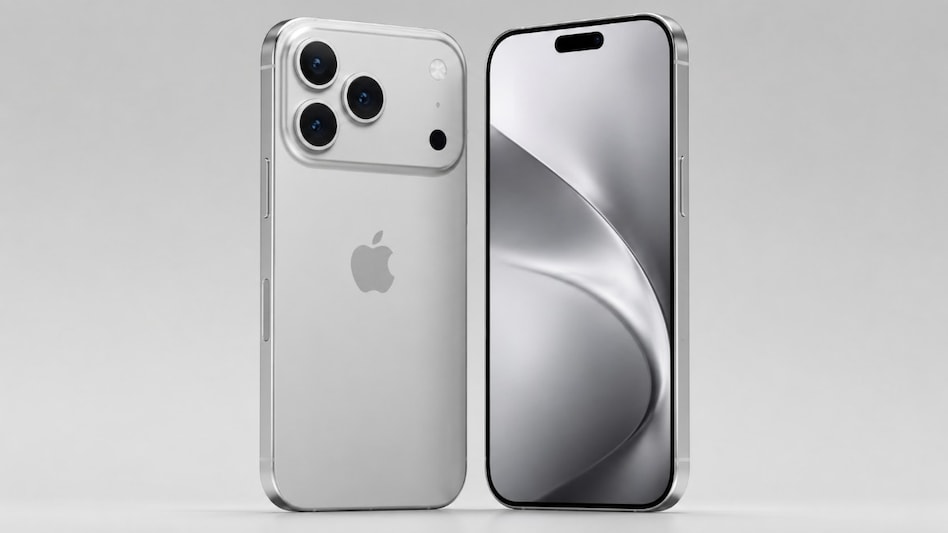
Perplexity's Visionary Founder Champions American Opportunity Amidst Economic Challenges
Aravind Srinivas, the CEO and co-founder of Perplexity, remains optimistic about the prospects of the American dream, as...
Business Insider | Jul 03, 2026, 12:45Top 5 Smartphones Under ₹25,000: Must-Have Picks From Amazon and Flipkart Sales
As the Amazon and Flipkart sales unfold, a plethora of impressive smartphones are available for under ₹25,000. This pric...
Business Today | Jul 04, 2026, 05:10
Unlocking the AI Lexicon: A Comprehensive Guide to Essential Terms
As artificial intelligence continues to transform our world, it comes with a unique vocabulary that can be daunting even...
TechCrunch | Jul 03, 2026, 21:45
Corporate Support Shapes Trump’s Freedom 250 Celebration Amid Controversy
In a striking display of corporate involvement, the Freedom 250 event on the National Mall is unveiling a blend of enter...
CNBC | Jul 03, 2026, 12:15