At Intel’s new fab in Arizona, the chipmaker’s fate hangs in the balance
Once regarded as the leading giant in the semiconductor industry, Intel has faced a significant decline in market value as it struggled to keep pace with competitors like Taiwan Semiconductor Manufacturing Company (TSMC). Despite investing heavily to regain its standing, Intel is now shifting gears with the high-volume production of its new 18A chip node, which it hopes will be a game changer. However, the challenge remains in persuading other major chipmakers to entrust Intel with their manufacturing needs. Currently, Intel’s primary customer is itself, with its anticipated Core Ultra series 3 processor, known as Panther Lake, set to debut in January as the flagship product utilizing the 18A technology. Intel's CEO, Daniel Newman of Futurum Group, highlighted the company's current predicament, noting that many firms have heavily invested in TSMC to secure chip production and are hesitant to change manufacturers at this point. The company is banking on its new Fab52 facility located in Chandler, Arizona, which was showcased in an exclusive tour. Just north of Chandler, TSMC operates its own facility, producing chips with advanced 4nm technology, and is working on even more sophisticated 2nm chips exclusively in Taiwan. While Intel's 18A technology is competitive with TSMC's 2nm in certain aspects, it has encountered issues with defects resulting in lower yields—an ongoing challenge for advanced chip nodes. David Yoffie, a Harvard Business School professor and former Intel board member, noted that yield issues are not uncommon in chip production, referencing Nvidia's early challenges which were swiftly addressed. Under the leadership of Pat Gelsinger, who took over as CEO in 2021, Intel made a renewed commitment to foundry services, focusing on manufacturing chips for external clients. However, Gelsinger's departure led to new CEO Lip-Bu Tan voicing concerns over previous investments made without ensuring sufficient demand. In a bid to stabilize Intel's position, the U.S. government stepped in with an $8.9 billion stake in August, part of the CHIPS Act initiatives aimed at bolstering domestic semiconductor manufacturing. Recent investments from SoftBank and Nvidia further illustrate the high stakes and potential of Intel's future. Founded in 1968, Intel has a rich history of innovation, but it has faced severe setbacks, including missing the mobile revolution and falling behind in the AI sector. The company’s previous chip nodes faced delays, attributed partly to a reluctance to invest in advanced manufacturing technologies. Intel's ambitious roadmap aims to catch up with TSMC by rolling out five new nodes in four years. Current efforts are concentrated on finding external clients for their foundry services, a challenging task given that Intel also manufactures its own devices, which may deter potential customers from revealing trade secrets. Yoffie suggests that separating the foundry operations from Intel’s other businesses could enhance its chances of success in attracting clients. As Intel prepares to launch Panther Lake, the pressure mounts to secure major clients like AMD and possibly Apple, which might consider returning to Intel for Mac chips in the future. The U.S. government’s investment signals confidence in Intel, emphasizing the importance of maintaining advanced semiconductor production within the country. The situation is critical not just for Intel, but for the U.S. semiconductor landscape as a whole, amidst fears of excessive reliance on Taiwanese manufacturing. Chandrasekaran, in charge of foundry operations, remains optimistic, asserting that Intel is dedicated to becoming a leader in advanced chip manufacturing—a necessity for supporting the global shift towards AI technology.
Navigating AI's Future: OpenAI Scientist Proposes New Measurement Standards
In a recent blog entry, Jakub Pachocki, the chief scientist at OpenAI, has shared insights on imposing potential restric...
TechCrunch | Nov 22, 2026, 21:30
Can a Single Cloud Outage Trigger a Surge in Insurance Claims in India?
The recent disruption of Microsoft 365 services has underscored the vulnerability of businesses reliant on a single tech...
Business Today | Nov 23, 2026, 08:05
Nvidia Under Fire: US Government Probes Compliance in China Operations
Nvidia is currently facing intense scrutiny from the US government regarding its operations related to China. Officials ...
Business Today | Nov 23, 2026, 06:10
Apple Set to Launch Upgraded MacBook Neo with New A19 Pro Chip
Apple is gearing up to unveil an upgraded version of its budget-friendly MacBook Neo, possibly as soon as early 2027. Th...
Business Today | Nov 23, 2026, 08:25
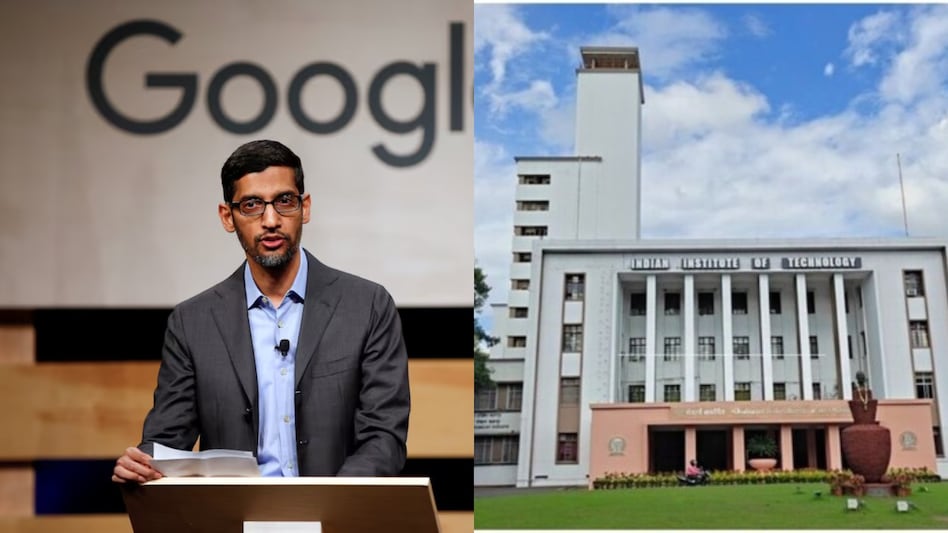
Google Invests ₹46 Crore to Propel AI Research at IIT Kharagpur
In a significant move to enhance artificial intelligence research, Google has pledged $5 million (approximately ₹46 cror...
Business Today | Nov 23, 2026, 11:40