A former OpenAI engineer describes what it’s really like to work there
Calvin French-Owen, a former engineer at OpenAI, recently shared his experiences from his year-long tenure with the company, offering a unique perspective on its rapid growth and culture. French-Owen, who played a crucial role in developing Codex—OpenAI’s innovative coding assistant—resigned three weeks ago, expressing a desire to return to his roots as a startup founder. He previously co-founded Segment, a customer data company acquired by Twilio for a staggering $3.2 billion in 2020. In his revealing blog post, French-Owen highlighted OpenAI's explosive growth, noting that the workforce expanded from 1,000 to 3,000 employees during his time there. This swift increase was driven by the success of ChatGPT, which boasts over 500 million active users and is regarded as the fastest-growing consumer product in history. However, such rapid scaling presents challenges. French-Owen remarked on the chaos that ensues, touching on issues like communication breakdowns, inefficient hiring processes, and the struggle to maintain organized product development. He pointed out that while the startup-like environment empowers employees to act on their ideas, it also leads to duplicated efforts across different teams. For instance, he noticed multiple teams creating similar libraries for tasks like queue management, illustrating the lack of centralized coordination. The coding expertise within the company varies widely, from experienced engineers capable of managing systems for billions of users to recent PhD graduates still honing their skills. This disparity contributes to a central code repository that often feels cluttered and prone to frequent issues. Despite these challenges, French-Owen praised the 'launching spirit' at OpenAI, likening the atmosphere to the early days of Facebook, where speed and innovation were paramount. He recounted how his small team, consisting of engineers, researchers, and product managers, managed to build and launch Codex in a mere seven weeks, fueled by sheer determination and minimal sleep. The excitement of launching a product that instantly attracted users was unparalleled, as they witnessed an immediate surge in engagement just from its introduction in a sidebar. French-Owen also addressed the culture of secrecy that has developed at OpenAI, driven by the need to control leaks amid intense public scrutiny. He humorously noted that the company seems to operate on social media 'vibes,' often responding to viral posts. One of the key misconceptions he aimed to clarify is the perception that OpenAI is unconcerned about safety. He stated that while critics have raised alarms about potential risks associated with AI, the company's internal focus leans toward practical safety measures. Issues such as hate speech, political manipulation, and self-harm are actively monitored. French-Owen emphasized that while long-term risks are acknowledged, the immediate concerns of ensuring safe AI usage for millions of users are at the forefront, especially with governments and competitors closely observing their operations. "The stakes feel really high," he concluded.
OpenAI to Open IPO Doors for Everyday Investors Amid Strong Demand
OpenAI is gearing up for a highly anticipated initial public offering (IPO), with plans to allocate a portion of its sha...
CNBC | Apr 08, 2026, 21:20
Autonomous Vehicle Controversy Erupts After Duck Incident in Austin Neighborhood
A tragic incident involving a duck in Austin, Texas, has ignited significant concern among residents regarding the prese...
TechCrunch | Apr 08, 2026, 20:35
Meta Unveils Muse Spark: A Bold New Direction for AI Innovation
On Wednesday, Meta introduced its latest AI model, Muse Spark, signaling a significant shift in the company’s approach t...
TechCrunch | Apr 08, 2026, 19:05
Neighborhood Outcry After Autonomous Vehicle Strikes Duck in Texas
In a startling incident in Austin, Texas, a self-driving car struck and killed a mother duck, igniting a wave of concern...
TechCrunch | Apr 08, 2026, 21:50Motorola Raises Prices on Budget Phones Amid Ongoing Memory Shortages
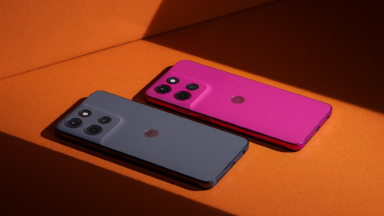
Motorola has unveiled the 2026 Moto G Stylus, a mid-range smartphone that, while not revolutionary, caters to users who ...
Ars Technica | Apr 08, 2026, 18:40