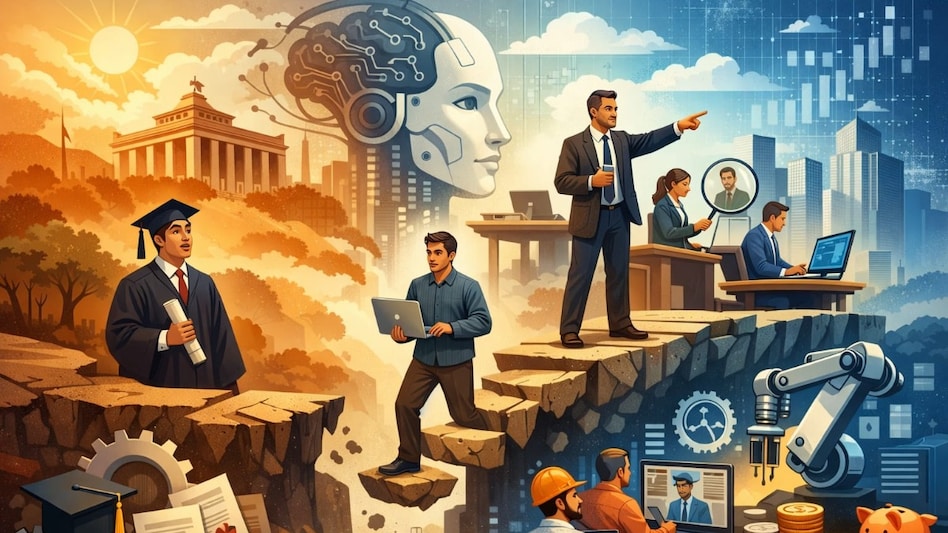
India doesn’t have a skills shortage, it has a readiness crisis in the age of AI
According to the recently released India Skills Gap Report 2026 by NIIT, the real issue facing India's workforce isn't a lack of talent but a significant readiness crisis. The report emphasizes that the challenge lies not in the number of qualified individuals but in their ability to adapt to the rapid transformations in job roles driven by advancements in artificial intelligence. The report, which gathered insights from 3,500 participants, including students, professionals, and corporate leaders, reveals that while there is a strong willingness to learn among individuals and investment from organizations, barriers such as cost and accessibility hinder widespread participation. "In an AI-driven economy, the primary limitation is not motivation but the ability to access learning opportunities at scale," it states. A striking observation from the report highlights a growing confidence gap in job readiness, particularly among entry-level candidates. Individuals with more experience rate their readiness significantly higher, with senior professionals scoring an average of 82 out of 100 compared to just 57 for students. This disparity underscores a mismatch in expectations, as 51% of academic leaders believe graduates will be ready for employment within a few years, while only 35% of students feel optimistic about their future prospects. As AI continues to reshape the employment landscape, the definition of being "job-ready" is evolving. The report points out that while 51% of employers recognize AI as a tool for enhancing productivity, only 34% of educational institutions are actively incorporating AI and digital skills into their programs, highlighting a notable execution gap. The report also sheds light on the mid-career talent crisis, stating that professionals with 6 to 15 years of experience are in high demand yet challenging to find, comprising 47% of hiring needs. Organizations are adjusting their hiring strategies, with nearly half opting for a blend of entry-level and experienced workers, which only exacerbates existing issues. Moreover, the traditional college degree is losing its significance as a marker of readiness in the job market. Employers are increasingly valuing demonstrable skills over formal qualifications, with portfolios and certifications gaining prominence. Despite this shift, many candidates remain focused on degrees, indicating a lag in adapting to new expectations. Access to learning opportunities remains a critical bottleneck. Though the desire for skill enhancement is strong, many individuals face challenges related to affordability and awareness of available resources. The report reveals that while 69% of organizations have increased their skills budgets, many still fail to reach a significant portion of their workforce, limiting the effectiveness of their training programs. In conclusion, the report calls for a reevaluation of how skills are developed and recognized within India's workforce, stressing the importance of scalable learning models and a focus on internal capability building to bridge the readiness gap.
Dimension Capital Raises $800 Million Fund, Highlighting Growth in Science and Technology Investments
In a remarkable move amid a challenging fundraising environment for many emerging venture capital firms, Dimension Capit...
TechCrunch | Jul 22, 2026, 01:50
Unexpected AI Beneficiaries: Japanese Companies Thrive Beyond Tech
In an era where the semiconductor sector has captivated investor interest, several lesser-known Japanese firms are emerg...
CNBC | Jul 22, 2026, 02:35
Revolutionizing Training: Synthesia Launches AI-Powered Roleplay Sessions
Synthesia, a pioneering British startup, is taking a bold step beyond its traditional focus on creating interactive trai...
TechCrunch | Jul 22, 2026, 08:40
Teen Arrested in ₹64 Crore AI-Driven Banking Scam: A Deep Dive into the Cyber Fraud Operation
In a significant breakthrough, Surat Police have apprehended an 18-year-old individual linked to a massive AI-fueled cyb...
Business Today | Jul 22, 2026, 08:25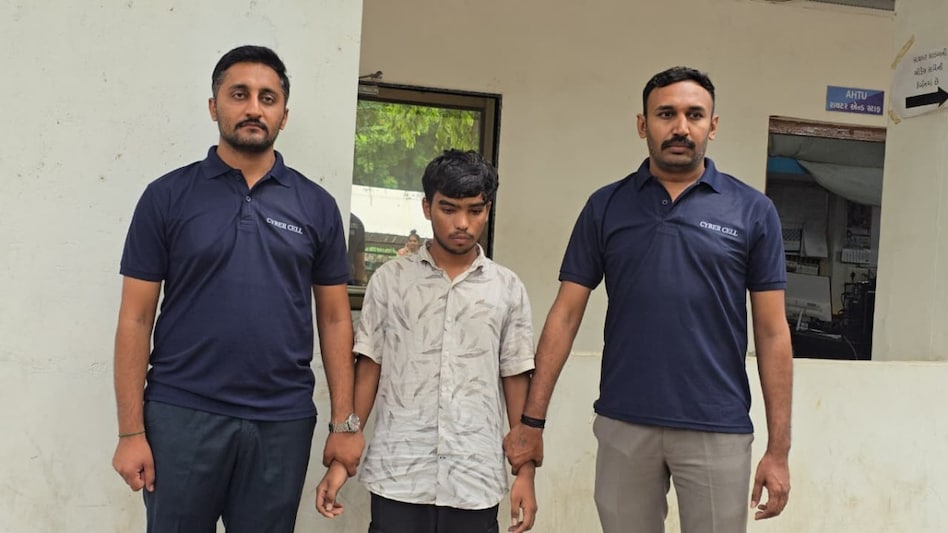
Teen Innovator Creates AI-Powered Robot Turtle to Combat Water Pollution
In a remarkable feat of ingenuity, 16-year-old Evan Budz has developed an autonomous robot turtle designed to detect mic...
Business Insider | Jul 22, 2026, 09:35