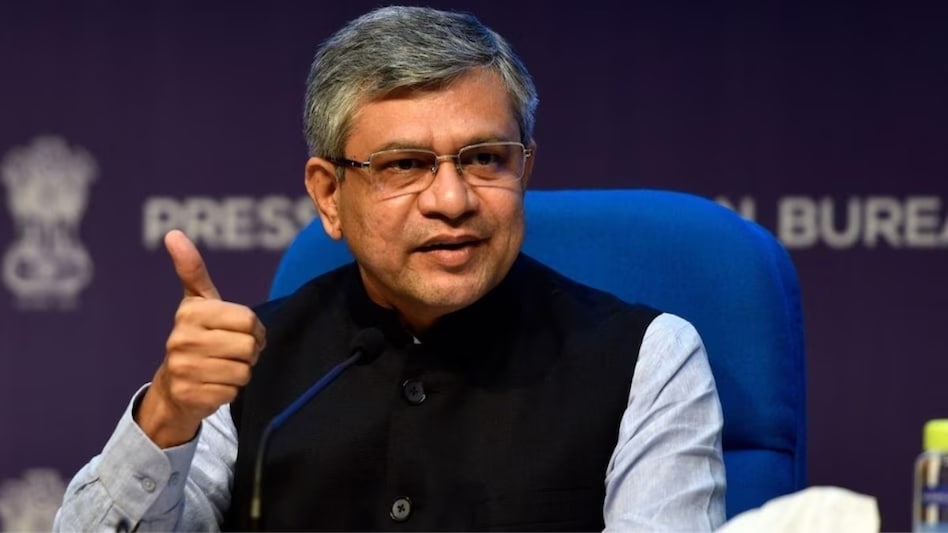
‘We in India are thinking at least 20 years ahead’: Ashwini Vaishnaw on cutting critical tech dependence
During a recent address at the Bloomberg New Economy Forum in New Delhi, Union Minister Ashwini Vaishnaw unveiled India's ambitious 20-25 year strategy aimed at reducing its reliance on critical technologies while enhancing its role in global technology supply chains. He emphasized the need for India to adapt its technological priorities in response to shifting geopolitical dynamics. Vaishnaw clarified that the objective is not to achieve total self-sufficiency but to foster domestic capabilities in sectors deemed strategically vital. "Things change, politics change, geopolitics play a big role, so we have to constantly calibrate our approach, and we in India are thinking at least 20 years ahead," he stated. The forum, which brought together influential business and policy figures, also featured Cisco's Chairman and CEO, Chuck Robbins, who praised India's scale and its strategic partnerships with trusted international firms. The minister outlined a comprehensive approach, categorizing the government's technological goals into three timelines: short-term (3-5 years), medium-term (5-15 years), and long-term (20-25 years). This multifaceted strategy focuses on identifying dependencies that might compromise India's manufacturing sector and economic stability due to geopolitical tensions. Vaishnaw stressed the importance of remaining integrated with global value chains despite the emphasis on domestic capabilities. He highlighted the necessity of establishing a robust semiconductor ecosystem, including the production of essential materials and chemicals, alongside chip design and manufacturing initiatives. He noted that the second phase of India's semiconductor program would prioritize these supporting capabilities, which require sustained investments and time. He illustrated India's progress in the mobile phone industry, noting a shift from mere assembly to the manufacturing of components, with exports beginning to flow to other nations. Additionally, he called for increased investments in research and development, particularly in applied research that translates technological advancements into practical, market-ready solutions. Vaishnaw also pointed to the successful development of India's 4G telecom stack, achieved through a collaboration between the government and private sector, now operational on over 100,000 towers. Looking to the future, he warned of potential global turbulence caused by technological and financial disruptions, particularly emphasizing the impact of artificial intelligence on employment in the services sector. As India aims to bolster its economic and technological resilience, Vaishnaw noted a reduction in the country's public debt-to-GDP ratio from 61% to 55% over the past five years, underscoring ongoing efforts to strengthen the nation’s financial foundation.
Electric Truck Innovator Harbinger Secures Major Funding from Erebor Bank
Harbinger, an emerging player in the electric truck industry, has secured a significant financial boost from Erebor Bank...
TechCrunch | Nov 24, 2026, 18:00
Uber and Nuro Kick Off Driverless Trials for Lucid Robotaxis Ahead of 2027 Launch
Uber and Nuro have officially launched their driverless testing phase for the Lucid Gravity SUVs on the streets of the S...
TechCrunch | Nov 24, 2026, 17:15
Staggering Recovery Rates Highlight Digital Payment Fraud Challenges
The battle against digital payment fraud continues to be an uphill struggle for consumers, with official data revealing ...
Business Today | Nov 24, 2026, 09:30
Anthropic's Stock Plummets, Raising Concerns for the AI Sector
Shares of Anthropic have dipped below their initial public offering (IPO) price of $83, reaching a low of $76 by midday ...
TechCrunch | Nov 24, 2026, 18:45
Jio Unveils Exciting New Plans with Unlimited 5G Data for the New Year
Reliance Jio has rolled out its latest prepaid recharge offerings, dubbed 'Happy New Year 2.0', featuring unlimited 4G a...
Business Today | Nov 24, 2026, 10:20