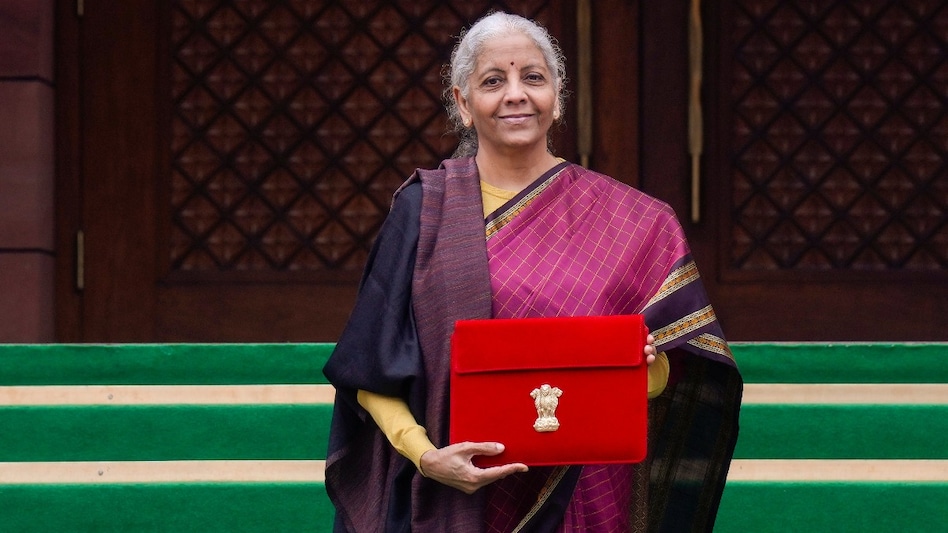
Union Budget 2026 puts technology at the centre of India's growth story
The Union Budget for 2026 has set a groundbreaking agenda for India, prioritizing technology as a cornerstone for economic growth. Finance Minister Nirmala Sitharaman introduced an extensive array of initiatives on February 1, aimed at fostering artificial intelligence (AI), enhancing semiconductor production, and expanding digital infrastructure across the nation. This budget is not just about adopting technology; it marks a decisive move towards establishing India's position as a leader in the digital realm. The government is focused on building domestic capabilities within vital technology sectors, including chip manufacturing, cloud services, and content creation, laying the foundation for India to become a global technology powerhouse by 2047. A pivotal component of this budget is the launch of the India Semiconductor Mission (ISM) 2.0. This initiative broadens India's ambitions from merely assembling chips to developing a comprehensive semiconductor ecosystem. The mission emphasizes local production capabilities across design, fabrication, and raw materials, aiming to reduce reliance on imported components in this critical sector. To bolster the electronics industry, the government has significantly increased funding for the Electronics Component Manufacturing Scheme (ECMS) to an impressive Rs 40,000 crore. This substantial investment is designed to enhance the domestic production of high-value electronic components, which is essential for advancing the entire supply chain from assembly to innovation. In a strategic move to draw in foreign cloud service providers, the budget includes a tax exemption until 2047 for companies operating Indian data centers while serving international customers. This initiative not only aims to promote investment in data centers but also introduces a safe harbour provision, allowing cloud providers to manage profits without facing transfer pricing issues, thus ensuring a stable investment environment. The budget also emphasizes the burgeoning creator economy with the establishment of dedicated labs for animation, visual effects, gaming, and comics (AVGC) in secondary schools and colleges nationwide. Major global tech companies are expected to collaborate with these labs, equipping students with industry-standard tools and valuable internship opportunities. Taking a step further into agriculture, the budget unveils Bharat-VISTAAR, an AI-driven tool designed to provide farmers with real-time insights on weather, soil health, and crop management. This initiative aims to enhance agricultural productivity while mitigating climate-related risks. Finally, to support the growth of electric mobility, the government has waived Basic Customs Duty on essential capital goods for lithium-ion battery production until March 2028. This move is expected to lower barriers for domestic manufacturers and support the transition to sustainable energy solutions.
Shifting Focus: The Cost-Effectiveness of AI Models Takes Center Stage
In recent years, the AI sector has been intensely focused on identifying the most advanced models. While this pursuit re...
Business Insider | Jul 25, 2026, 13:10Waymo Considers Parting Ways with Uber Amid Rising Tensions
Waymo is reportedly exploring options to exit its partnership with Uber, which has allowed the Alphabet-owned firm to de...
TechCrunch | Jul 24, 2026, 21:00
The Rise of AI Distillation: A Controversial Technique Sparks Debate in Tech and Government
In recent discussions, a once-obscure topic in artificial intelligence has surged to the forefront of debates among tech...
CNBC | Jul 25, 2026, 12:15
SpaceX's Latest Starlink Launch Marks Milestone Amid Booster Setbacks
On Friday, SpaceX marked a significant achievement by successfully launching its first batch of third-generation Starlin...
TechCrunch | Jul 24, 2026, 23:40
Finland Unveils World's Largest Sand Battery to Tackle Renewable Energy Challenges
In a groundbreaking move to address the critical issue of renewable energy intermittency, a small town in southern Finla...
CNBC | Jul 25, 2026, 05:35