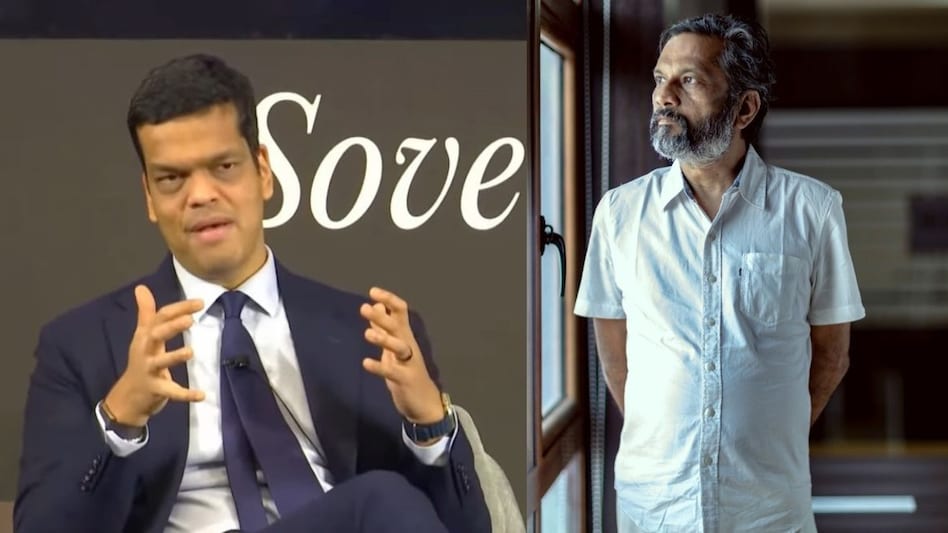
US wants world to use American AI stack; Zoho's Vembu reacts: 'This is why brain drain is costly'
During the India AI Impact Summit 2026, Sridhar Vembu, founder and chief scientist of Zoho, expressed concerns regarding the potential loss of India's technology talent in light of comments from Senior White House Policy Advisor on AI, Sriram Krishnan. At the summit in Delhi, Krishnan outlined the United States' strategy for artificial intelligence, emphasizing the desire for global adoption of the 'American AI stack'. Vembu took to X to highlight the importance of retaining the next generation of talent in India, stating, "This is why brain drain is costly, and we must fight hard to retain the next generation of talent in India." Krishnan's remarks included a detailed breakdown of the US AI action plan, which revolves around three main pillars. He indicated that the US aims to create a supportive environment for AI development both domestically and internationally. The first pillar of the action plan focuses on building necessary infrastructure, including energy resources and data centers essential for powering AI technologies. Krishnan underscored the need for robust facilities to support AI, stating, "AI needs energy. It needs data centers to power the GPUs and the TPUs." The second pillar is dedicated to fostering innovation by reducing regulatory barriers, with Krishnan aiming to support emerging companies and startups in the AI space. He expressed a desire to unleash potential innovators without the hindrance of outdated regulations, emphasizing, "We want to make sure we unlock the Geminis of the world, the OpenAIs, and many startups that may not even exist yet." The third and most pertinent pillar for India revolves around global adoption of the American AI framework. Krishnan noted that this entails not only the use of US-made semiconductors and advanced AI chips but also the integration of American AI models and applications into global markets. He emphasized the importance of making these technologies accessible and easy to implement for partners like India. Krishnan projected that the US would invest at least $600 billion in AI infrastructure next year, which he suggested could be a conservative estimate. He encouraged allies, particularly India, to leverage this infrastructure while maintaining their strategic autonomy. However, he cautioned that Indian companies must adapt their solutions to local needs, incorporating local language support and cultural nuances. Deepak Shenoy, CEO of Capitalmind, echoed Vembu's sentiments, stating that India should focus on developing its foundational AI models while ensuring that it retains critical capabilities independent of external influences.
Waymo Considers Parting Ways with Uber Amid Rising Tensions
Waymo is reportedly exploring options to exit its partnership with Uber, which has allowed the Alphabet-owned firm to de...
TechCrunch | Jul 24, 2026, 21:00
Unveiling the Future of Finance: TechCrunch Disrupt 2026's Smart Money Stage
The landscape of money is transforming beyond just cash or bank balances, and TechCrunch Disrupt 2026 is set to spotligh...
TechCrunch | Jul 24, 2026, 22:40
Reclaiming Control: Librarians Host Workshops to Help People Navigate AI Tools
In a lively library setting in South Philadelphia, Charlie Bailey, a local librarian, humorously noted, "Everybody’s on ...
TechCrunch | Jul 25, 2026, 16:20
Crisis Averted: Power Line Failure Highlights Urgent Need for Data Center Resilience
A power line failure near Washington, DC, recently showcased a significant challenge faced by the electrical grid due to...
TechCrunch | Jul 25, 2026, 13:50
The Rise of AI Distillation: A Controversial Technique Sparks Debate in Tech and Government
In recent discussions, a once-obscure topic in artificial intelligence has surged to the forefront of debates among tech...
CNBC | Jul 25, 2026, 12:15