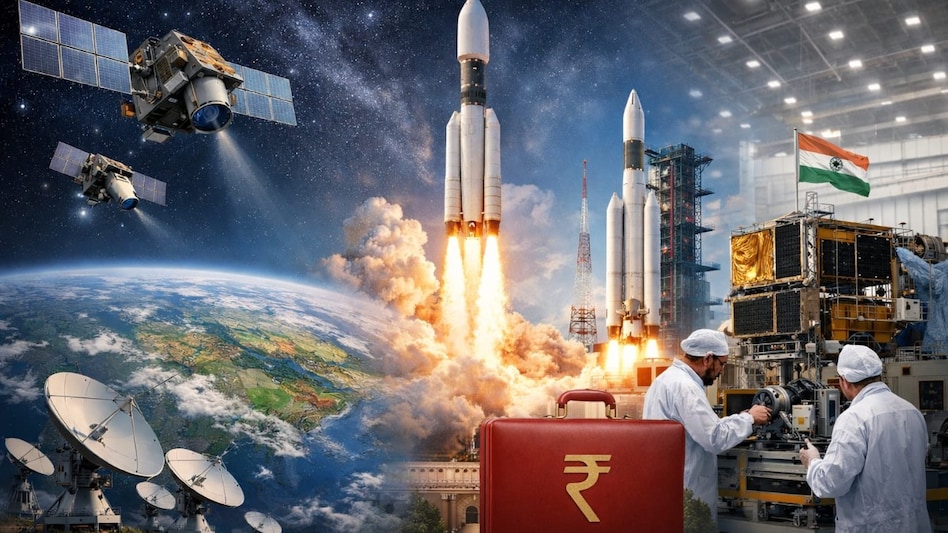
Budget 2026: India’s space startups want long-term EO deals, lower taxes and PLI support
With the upcoming Budget 2026 on the horizon, India's private space startups are urging the government for stable procurement processes, tax reforms, and manufacturing incentives to enhance their Earth observation (EO) capabilities. This appeal follows a significant increase in the Department of Space's budget last year, which rose by nearly 14% to ₹13,416.20 crore, aimed at supporting major initiatives like Chandrayaan-4 and the Venus Orbiter Mission. Despite India's reputation as a cost-effective global launch hub, founders emphasize that technical expertise alone won't secure market dominance without a consistent demand and reduced operational costs. Awais Ahmed, CEO of Pixxel, highlighted the critical need for long-term contracts from the government. He stated, "A predictable, long-term procurement program for both satellites and EO data would unlock potential. If government ministries could commit to multi-year agreements for data purchases in sectors like agriculture and disaster management, it would empower companies like Pixxel to expand at a faster pace." Ahmed further explained that establishing clear budgets for purchasing commercial EO data, along with transparent tendering processes and quicker contract cycles, would facilitate a transition from pilot programs to widespread national applications. This would reinforce the creation of larger satellite constellations, ensuring reliable access to high-quality Earth intelligence. Earlier this year, Pixxel entered into a partnership with the Indian National Space Promotion and Authorization Center (IN-SPACe) to establish India's first privately-led national EO constellation. As part of this public-private partnership, Pixxel, along with a consortium of three other Indian firms, plans to invest over ₹1,200 crore over the next five years to deploy a constellation of 12 satellites. The startups also highlighted the challenges posed by indirect taxes and the classification of components, which contribute significantly to operational costs. Ahmed pointed out that essential ground infrastructure, including antennas and testing equipment, represents a considerable financial burden. He suggested that providing GST exemptions on such equipment would alleviate initial capital constraints, allowing for greater investment in software and analytics. From a regulatory perspective, Keyur Gandhi, Director of Space Regulatory and Commercialization at Dhruva Space, called for clearer tax classifications. He emphasized the importance of creating specific codes for space-grade components to reduce GST burdens, enhance local value addition, and lessen dependency on imports. Skyroot Aerospace's co-founder, Pawan Kumar Chandana, echoed the sentiment for increased localization in manufacturing, aiming for 100% local value in their projects. Additionally, startups are seeking targeted funding for advanced missions and clearer foreign direct investment (FDI) regulations to attract strategic partners. Chandana stated, "For India to emerge as a key player in the global space economy, a robust space-tech industry is essential, one that regularly launches rockets and develops its own satellites. A production-linked incentive for the space sector would significantly propel this objective forward."
Uber's Former CEO Makes Waves with New Ventures Amidst Tesla's Earnings Update
In the ever-evolving landscape of transportation, recent developments have come to the forefront, particularly surroundi...
TechCrunch | Jul 26, 2026, 16:25
Revolutionizing Startup Living: Inside London's Unique Lift House
In East London, a group of six young entrepreneurs is redefining the concept of collaborative living for tech founders. ...
TechCrunch | Jul 26, 2026, 17:10
Unleashing the Power of AI: The 5 Smartphones Redefining Mobile Photography
Artificial Intelligence (AI) is transforming our daily experiences, permeating various aspects of technology, including ...
Business Today | Jul 26, 2026, 07:05
Crisis Averted: Power Line Failure Highlights Urgent Need for Data Center Resilience
A power line failure near Washington, DC, recently showcased a significant challenge faced by the electrical grid due to...
TechCrunch | Jul 25, 2026, 13:50
The Boring Company Eyes $4 Billion Funding Boost Amid Expanding Tunnel Ventures
Elon Musk's tunneling enterprise, The Boring Company, is reportedly negotiating a substantial funding round of $4 billio...
TechCrunch | Jul 25, 2026, 19:50