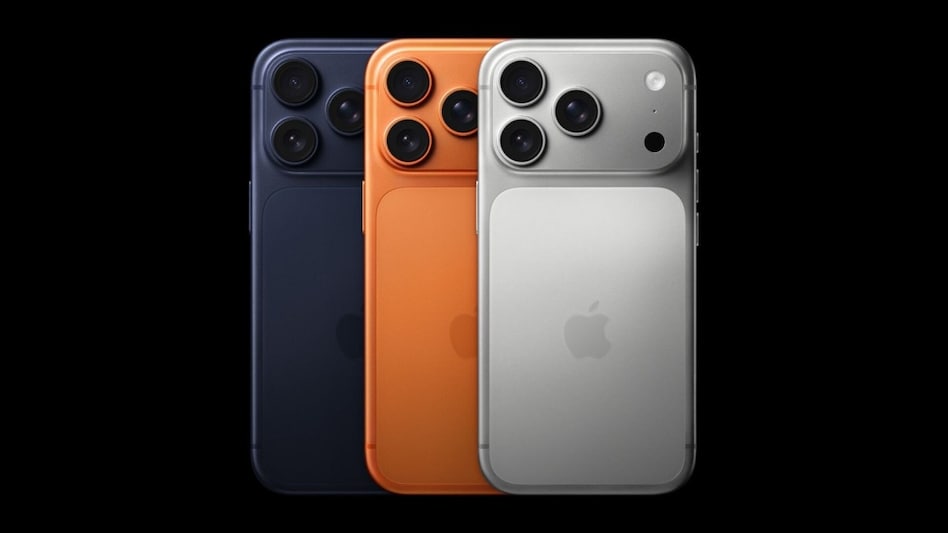
Over 1 in 5 smartphones sold in India cost more than Rs 30,000, Apple sees 'highest ever' value share: Report
In a significant shift for the Indian smartphone market, 2025 marked a historic upswing in the sale of premium devices, with over 20% of smartphones sold exceeding the price of Rs 30,000. Counterpoint Research reports that this trend of 'premiumisation' has propelled the market's annual value to unprecedented heights, despite only a modest 1% increase in shipment volume year-on-year. The total market value soared by 8%, primarily driven by the premium segment, which grew by 11% and captured a record 22% share of overall shipments. Tarun Pathak, Research Director at Counterpoint Research, attributed this momentum to stable economic conditions that fostered consumer spending. "India's macroeconomic environment remained resilient in 2025, supported by robust domestic demand and controlled inflation. This environment allowed OEMs to enhance their premium offerings, focusing on high-end camera features and flagship experiences," he explained. Apple emerged as a key player, achieving its highest-ever value share in India at 28%. The iPhone 16 was instrumental in this success, becoming the top-selling smartphone in the country and achieving the highest annual shipment share for any single iPhone model. In terms of volume, Vivo held the lead with a 20% market share, followed closely by Samsung at 16%, which dominated the foldable segment with an impressive 88% share. Vivo's strategy combined mass-market appeal with premium features, particularly through its camera-centric X series, which saw a remarkable 185% growth year-on-year, thanks in part to its partnership with ZEISS. Prachir Singh, Senior Research Analyst at Counterpoint, noted that Vivo's dual strategy effectively bridged the gap between its various product lines. The report also highlighted the rapid ascent of smaller brands. Motorola emerged as the fastest-growing major brand, boasting a 54% increase in volume, while Nothing's sub-brand CMF achieved a phenomenal 83% growth. Nothing itself was recognized as the fastest-growing OEM in the fourth quarter of 2025, driven by its expanding retail presence and commitment to localizing smartphone production in India. As for the foldable smartphone market, Samsung maintained its leadership with an 88% volume share and 28% year-on-year growth. Technological advancements were evident across all price tiers, with average smartphone DRAM usage increasing by 5% to meet the demands of AI applications, and battery capacities rising by about 9% thanks to emerging silicon-carbon technologies. MediaTek led the chipset market with a 47% share, followed by Qualcomm at 29%. Looking ahead to 2026, the market may encounter challenges in the budget segment due to rising component costs, potentially resulting in a slight decline in overall shipment volumes. However, the value of the market is expected to remain robust, with average selling prices anticipated to increase by 5% to 7% as consumers continue to gravitate towards premium devices.
Domo's $400 Million Deal Marks New Era for Tech Visionary Josh James
In a significant move within the tech landscape, Progress Software has agreed to acquire Domo's AI and data business for...
Business Insider | Jul 23, 2026, 17:15Meta's New Ad Sparks Debate: Optimism or Irony in AI's Future?
Meta has released a striking new advertisement that opens with a stark black-and-white image of an eye, reflecting the a...
TechCrunch | Jul 23, 2026, 17:10
Runway Unveils Revolutionary Media Router to Transform Generative Content Creation
Runway is taking a bold step beyond being merely another AI model company; it aims to establish itself as the foundation...
TechCrunch | Jul 23, 2026, 17:45
OpenAI Expands ChatGPT Health Feature for U.S. Users Amid Legal Challenges
OpenAI has announced the rollout of ChatGPT Health, a specialized feature designed to assist users with health inquiries...
TechCrunch | Jul 23, 2026, 17:35
AMD Partners with Cerebras to Revolutionize AI Inference
In a significant move for the future of artificial intelligence, AMD is shifting its strategy by collaborating with chip...
Business Insider | Jul 23, 2026, 17:50