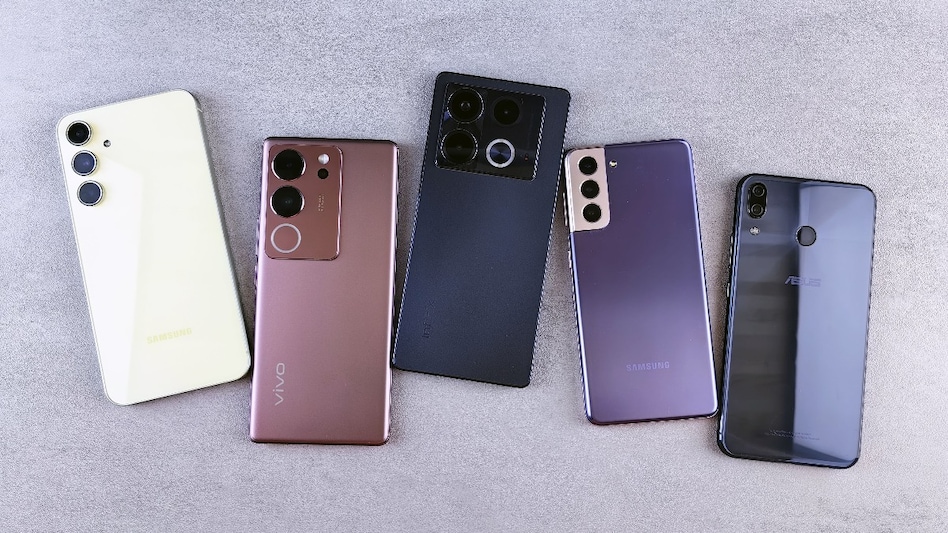
India smartphone market hits five-year low: Phones under Rs 10,000 are fast disappearing
For those considering purchasing a smartphone in India, the landscape is shifting dramatically, making it increasingly challenging to find budget-friendly options packed with features. Recent trends indicate a troubling development in the market: rising memory costs are driving up prices for handsets, even as demand continues to decline. According to IDC, smartphone shipments in India plunged by 11.1% year-on-year, totaling 33.2 million units in the second quarter of 2026, marking the weakest first half for the market in five years. The average selling price of smartphones has also surged, experiencing a 14.4% year-on-year increase, highlighting the impact of elevated costs on consumer choices. The most pronounced effects are felt in the entry-level segment, where IDC's Q1 data revealed a staggering 59% drop in shipments for smartphones priced below $100, reducing their market share from 18% to just 8%. For consumers, the rising costs of DRAM and NAND memory are making it increasingly difficult for manufacturers to profit from low-cost smartphone sales. In response, brands are scaling back on discounts, increasing prices, and repositioning their product lines towards more premium devices. This trend is reflected across major brands: while Vivo retained its status as India's leading smartphone brand, it saw a 13.9% decline in shipments in Q2. Similarly, Xiaomi, Oppo, and Realme faced decreases of 10%, 8.5%, and 14.2%, respectively, with iQOO experiencing an alarming 61% drop. In an unexpected turn, the market has witnessed a resurgence of cheaper 4G smartphones, which saw their share of shipments rise from 5.8% in Q1 to 11.1% in Q2. Manufacturers are reintroducing lower-cost models to counteract the rising prices of entry-level 5G options. Amidst the downturn, Samsung and Apple have managed to perform relatively well. Samsung's shipments increased by 0.4%, while Apple’s rose by 0.7%, boosting their market shares to 16.4% and 8.5%, respectively. Other brands like Motorola and OnePlus also fared better compared to their competitors. Consumer purchasing habits are shifting as well. Online shipments have seen a steep decline of 19.8%, while offline sales dipped only 3.6%, resulting in offline channels now accounting for 58.1% of total sales. The challenges faced by budget smartphones are not entirely new; IDC's global outlook has cautioned that the sub-$100 segment is becoming increasingly unviable due to persistently high memory prices. Looking ahead, the company anticipates that India's smartphone shipments could decrease by more than 15% in the latter half of 2026, indicating that affordability issues may worsen before they improve.
Tidal Takes Bold Step Against AI Music Flood, Set to Remove Millions of Tracks
In a decisive move to combat the overwhelming influx of AI-generated music, Tidal announced on Tuesday its plans to ban ...
TechCrunch | Nov 24, 2026, 17:10
Nvidia's CEO Jensen Huang Returns Amid Scandal and Government Intervention
In a surprising turn of events, Nvidia's board has reinstated Jensen Huang as CEO and president just two weeks after his...
TechCrunch | Nov 24, 2026, 13:45
Electric Truck Innovator Harbinger Secures Major Funding from Erebor Bank
Harbinger, an emerging player in the electric truck industry, has secured a significant financial boost from Erebor Bank...
TechCrunch | Nov 24, 2026, 18:00
Pinterest Empowers Parents with New Controls Over AI Content for Teens
This week, Pinterest unveiled an enhancement to its parental controls, introducing a feature that allows parents to regu...
TechCrunch | Nov 24, 2026, 16:25
Nvidia's Leadership Shakeup: CFO Excluded from CEO Reinstatement Talks
Nvidia's chief financial officer, Colette Kress, who had a brief stint as interim CEO, was reportedly not included in se...
Business Today | Nov 24, 2026, 15:15