
India’s ISM 2.0 cuts chip subsidies, bets on building a deeper ecosystem
For years, India has been perceived as a hopeful contender in the semiconductor sector, often overshadowed by the established industries in East Asia, the US, and Europe. High costs and a lack of a domestic manufacturing ecosystem hindered its progress. However, this narrative began to transform when the Indian government prioritized semiconductor manufacturing, launching the India Semiconductor Mission (ISM) in December 2021. Fast forward nearly five years, and India has secured commitments for its inaugural commercial semiconductor fabrication facility, alongside several assembly, testing, marking, and packaging (ATMP) and outsourced semiconductor assembly and test (OSAT) facilities. The government is now aiming to capitalize on this progress with ISM 2.0, which has been approved with a significant budget of Rs 1.27 lakh crore, nearly double that of the first phase. This new phase represents a pivotal change in the strategy for government support, focusing more on building a comprehensive ecosystem rather than solely on subsidies. When India embarked on its semiconductor journey in 2021, it offered a blanket 50% fiscal support to entice investors wary of coming to a country without an established chip production framework. This strategy successfully attracted major players like Micron Technology, which set up an assembly and testing facility in India. Following that, other significant partnerships emerged, including Tata Electronics’ silicon fab in collaboration with Taiwan’s PSMC and CG Power’s packaging facility backed by Japan’s Renesas Electronics. In total, 12 projects received approval under ISM 1.0, marking a notable achievement given India's history of struggles in attracting significant semiconductor ventures. However, the initial phase was not without its flaws. The inability to secure a proposed fab utilizing Tower Semiconductor’s technology and the lack of commercialization at the government-operated Semiconductor Laboratory were seen as setbacks. Despite these issues, analysts view ISM 1.0 as a meaningful step forward for India’s position in the global semiconductor landscape. With ISM 2.0, the Indian government remains committed to positioning the nation as a global hub for semiconductor manufacturing. This new initiative introduces a differentiated support system across various project types, reducing fiscal incentives for silicon fabs from 50% to 40%. Compound semiconductor and display fabs will now receive incentives up to 35%, while conventional packaging facilities will be eligible for support of up to 25%. Industry experts suggest that despite the reduction in subsidies, serious investors are unlikely to be deterred, as investment decisions are influenced by a broader range of factors beyond just subsidies. India’s expanding electronics manufacturing base, increasing semiconductor demand, and the presence of a skilled workforce provide significant advantages. Danish Faruqui, CEO of Fab Economics, points out that India’s incentive model stands out globally for its approach of offering upfront cash grants for capital expenditure. This contrasts with more mature semiconductor ecosystems, where incentives are typically structured around tax benefits and operational subsidies. A key innovation in ISM 2.0 is its emphasis on creating a robust semiconductor ecosystem. The industry relies not only on fabrication plants but also on suppliers of essential materials, chemicals, and equipment. By addressing these supply chain gaps—offering government incentives of up to 30% for investments in necessary components—ISM 2.0 aims to enhance logistics efficiency and reduce production delays. The real test for ISM 2.0, however, will lie in its execution. Manufacturing facilities necessitate stable utilities, specialized infrastructure, and a skilled workforce; any delays can lead to increased costs and production halts. As stakeholders continue to assess their investments, policy stability and the ability to deliver timely approvals will be crucial. While the manufacturing capacity approved under ISM 1.0 is still being developed, ISM 2.0 offers continuity and clearer prospects for companies considering long-term investments. As India navigates this complex landscape, it must ensure that its semiconductor ambitions translate into tangible outcomes.
RBI's New Proposal Aims to Enhance Digital Payment Security for Customers
The Reserve Bank of India (RBI) has unveiled a plan to bolster protections for electronic banking transactions, focusing...
Business Today | Nov 23, 2026, 16:15
Trump Claims Role in Jensen Huang's Return as Nvidia CEO Amid Security Concerns
On Monday, former President Donald Trump asserted that he played a pivotal role in convincing Nvidia's board to reinstat...
Business Today | Nov 23, 2026, 17:05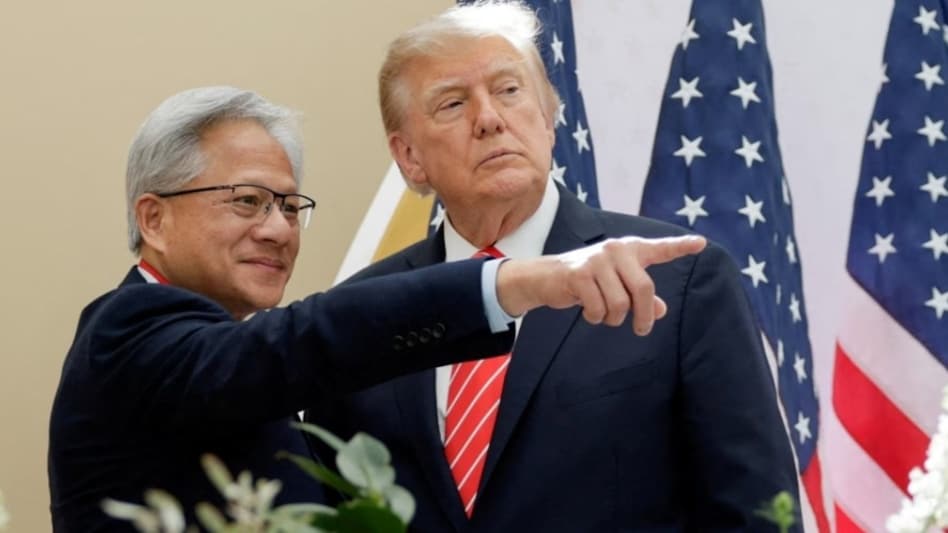
Amazon Acquires Decart for $7.5 Billion to Boost AI Capabilities
In a significant move to enhance its artificial intelligence capabilities, Amazon has announced its acquisition of the I...
TechCrunch | Nov 23, 2026, 17:30
Dutch Privacy Watchdog Sounds Alarm on AI Camera Glasses
The Dutch Data Protection Authority has issued a strong warning to consumers regarding the purchase of AI-powered camera...
TechCrunch | Nov 23, 2026, 15:55
Jensen Huang's Triumphant Return to Nvidia: Applause Amid Controversy
On Monday, Jensen Huang made a dramatic return to Nvidia's headquarters, greeted by a cheering crowd of hundreds of empl...
TechCrunch | Nov 23, 2026, 21:10