
Explained: What is DHRUV64 and why does it matter for India’s chip ambitions?
India is making strides towards achieving semiconductor independence with the introduction of DHRUV64, the nation's inaugural 1.0 GHz, 64-bit dual-core microprocessor. This innovative chip, developed by the Centre for Development of Advanced Computing (C-DAC) as part of the Microprocessor Development Programme (MDP), marks a pivotal moment for the country’s tech ambitions. Designed to support a multitude of strategic and commercial applications, DHRUV64 is a completely indigenous microprocessor. It employs modern architectural principles to enhance multitasking capabilities, improve efficiency, and boost system reliability. Furthermore, it is compatible with external hardware systems, making it a versatile choice for various electronic devices, including smartphones, vehicles, medical devices, defense systems, and satellites. The strategic significance of this launch cannot be overstated. Currently, India accounts for nearly 20% of the world’s microprocessor consumption but remains heavily reliant on imports. With the DHRUV64, India is poised to reduce its dependence on foreign chip suppliers, thereby reinforcing its semiconductor ecosystem and securing its digital infrastructure. Additionally, DHRUV64 aims to foster an environment conducive to research and development (R&D), benefiting startups, academic institutions, and the industry at large. This microprocessor is designed to be development-friendly, enabling creators to prototype local computing products at a more accessible cost, free from the licensing constraints tied to proprietary architectures. Given that India is home to around 20% of the global chip design engineers, DHRUV64 is expected to enhance skill development and research, paving the way for next-generation processors like Dhanush and Dhanush+, which are already in the pipeline. Central to this initiative is the Digital India RISC-V (DIR-V) Programme, which champions open-architecture chip design. The RISC-V architecture is free from licensing fees, promoting widespread adoption and collaborative innovation among startups, research institutions, and industry players. This ambitious indigenous chip initiative is backed by a robust institutional framework led by MeitY and C-DAC, with support from various national missions. The launch of DHRUV64 signifies a transition from policy aspirations to tangible silicon solutions. With advancements from THEJAS32 to DHRUV64 and the ongoing development of Dhanush, India is steadily advancing towards its goal of self-reliance in cutting-edge chip technologies.
The Boring Company Eyes $4 Billion Funding Boost Amid Expanding Tunnel Ventures
Elon Musk's tunneling enterprise, The Boring Company, is reportedly negotiating a substantial funding round of $4 billio...
TechCrunch | Jul 25, 2026, 19:50
Vision Breakthrough: US Startup Launches Groundbreaking Retina Chip in Europe
Science Corp is poised to introduce a revolutionary retina chip in Europe, designed to restore partial vision for indivi...
Business Today | Jul 25, 2026, 01:00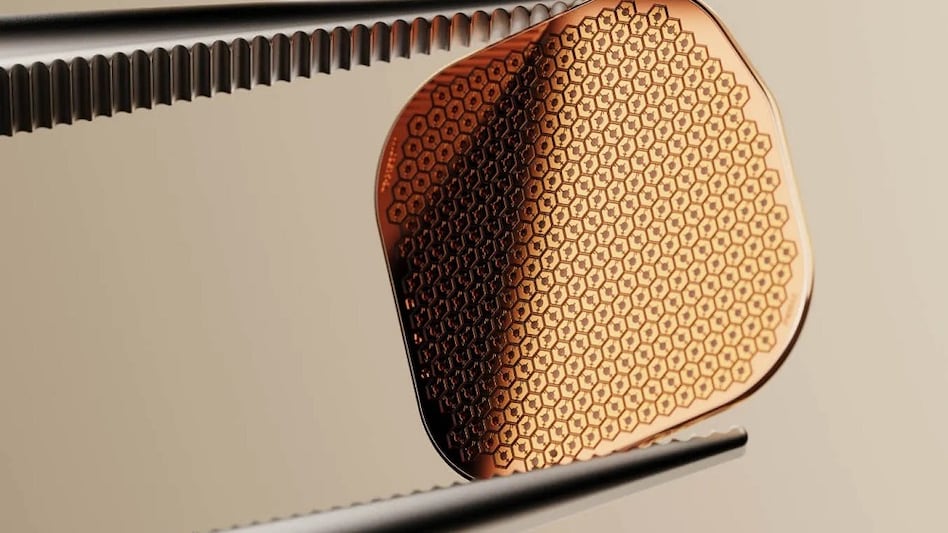
Reclaiming Control: Librarians Host Workshops to Help People Navigate AI Tools
In a lively library setting in South Philadelphia, Charlie Bailey, a local librarian, humorously noted, "Everybody’s on ...
TechCrunch | Jul 25, 2026, 16:20
Finland Unveils World's Largest Sand Battery to Tackle Renewable Energy Challenges
In a groundbreaking move to address the critical issue of renewable energy intermittency, a small town in southern Finla...
CNBC | Jul 25, 2026, 05:35
Market Turbulence: Four Key Factors Impacting Stocks This Week
This past week has been challenging for the stock market, driven by several significant forces that have created turbule...
CNBC | Jul 25, 2026, 20:05