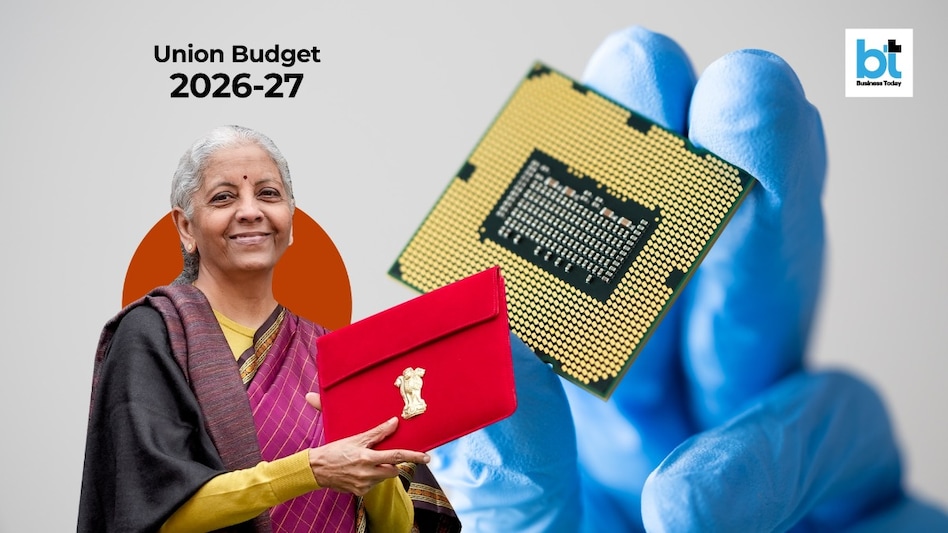
Budget 2026 puts spotlight on equipment, materials and IP with India Semiconductor Mission 2.0
In a landmark move aimed at establishing India as a pivotal player in the global semiconductor landscape, Finance Minister Nirmala Sitharaman unveiled the India Semiconductor Mission (ISM) 2.0 during her Union Budget 2026 presentation on February 1. This initiative marks a shift from a traditional focus on fabrication plants to a comprehensive full-stack semiconductor strategy. Following the launch of ISM 1.0 in December 2021, which saw the government allocate ₹76,000 crore for semiconductor manufacturing, the new phase has a budget of ₹1,000 crore for the fiscal year 2027. This demonstrates a commitment to expanding the scope of support within the sector. Sitharaman emphasized the goal of ISM 2.0 to not only enhance production capabilities but also to develop essential equipment, materials, and intellectual property (IP) domestically, while also strengthening supply chains. Industry experts view ISM 2.0 as a pivotal transformation in India's approach to semiconductor manufacturing. The initiative is expected to foster domestic capacities in various facets of the semiconductor supply chain, including design, materials, and equipment, thus moving India closer to being a significant player in the global market. Sathish S, a partner and national sector leader at KPMG in India, remarked on the global implications of India's semiconductor strategy. He noted that the increased budget allocation reflects India's determination to establish itself as a hub for electronic components manufacturing. This will bolster the development of a comprehensive ecosystem for semiconductor production, covering everything from equipment to packaging. Ashok Chandak, President of the India Electronics and Semiconductor Association (IESA), highlighted the strategic shift from merely attracting fabrication facilities to a comprehensive value-chain approach, which includes supply chain robustness and resilience. This evolution is crucial for India to transition from being a participant to a significant player in the global semiconductor ecosystem. Under ISM 1.0, India committed ₹76,000 crore towards several projects, including a high-volume chip fabrication plant by Tata Electronics and various testing facilities by companies like Micron and HCL-Foxconn. As ISM 2.0 takes shape, it is anticipated to drive further growth in the latter half of the decade. Experts like Danish Faruqui, CEO of Fab Economics, have praised the initiative's focus on Semiconductor Wafer Fab Equipment (WFE), which he considers essential for building a successful semiconductor manufacturing ecosystem. With global supply constraints affecting delivery times, India's proactive inclusion of WFE manufacturing is seen as a strategic necessity. Faruqui contrasted India's approach with that of China, which has historically invested heavily in semiconductor manufacturing without adequately developing its equipment manufacturing capability. As geopolitical tensions have grown, China has faced significant challenges in accessing advanced fabrication resources, a situation India aims to navigate differently. The significance of materials in semiconductor manufacturing cannot be overstated. High-purity materials are crucial, as even minor impurities can severely impact production yields. Manish Rawat, an analyst at TechInsights, pointed out that India has a unique opportunity to localize the production of essential materials, reducing dependency on imports and enhancing supply chain stability. Despite the positive sentiment surrounding ISM 2.0, industry leaders are calling for clarity on policy implementation and continued government support for research and development, training, and global partnerships. As the semiconductor industry is projected to grow significantly in the coming years, India's strategic initiatives could place it at the forefront of this burgeoning sector.
Market Turbulence: Four Key Factors Impacting Stocks This Week
This past week has been challenging for the stock market, driven by several significant forces that have created turbule...
CNBC | Jul 25, 2026, 20:05
Navigating the AI Landscape: Insights from a Former OpenAI Intern
As the demand for expertise in artificial intelligence surges, many are seeking ways to break into this dynamic field. H...
Business Insider | Jul 26, 2026, 10:10The Aluminum Foil Trend: A DIY Shield Against Wireless Identity Theft
Have you noticed an unusual trend where people are wrapping their wallets in aluminum foil? This peculiar practice has e...
Business Today | Jul 25, 2026, 02:45
Kalshi Challenges Netflix Over Controversial Documentary Trailer
Kalshi, the prediction market platform, has taken significant legal steps against Netflix, sending a cease-and-desist le...
TechCrunch | Jul 25, 2026, 17:10
Shifting Focus: The Cost-Effectiveness of AI Models Takes Center Stage
In recent years, the AI sector has been intensely focused on identifying the most advanced models. While this pursuit re...
Business Insider | Jul 25, 2026, 13:10