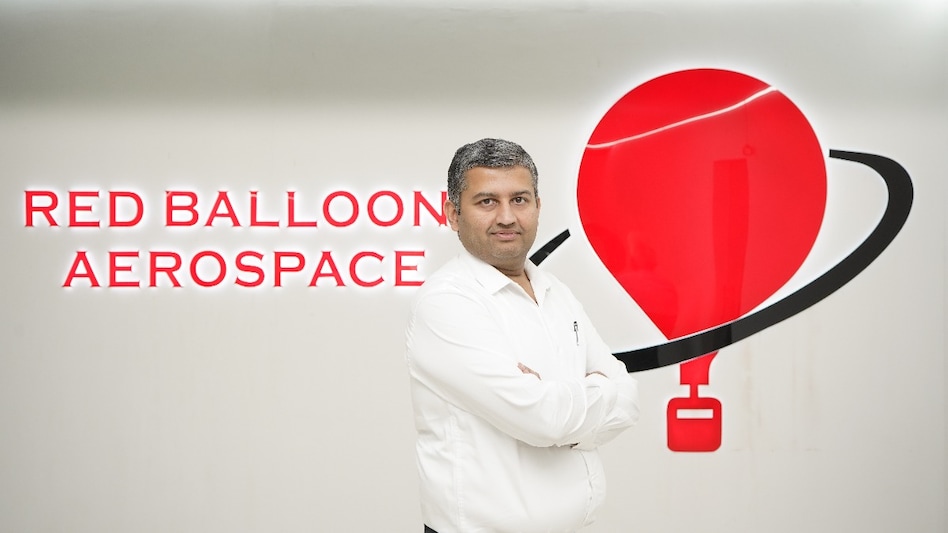
Red Balloon Aerospace tests near-space platform for telecom, disaster monitoring applications
India has achieved a significant milestone by developing its own stratospheric super-pressure balloon technology, with Red Balloon Aerospace successfully launching the nation’s inaugural near-space commercial balloon platform. The startup, based in Vijayawada, announced that its VISTA platform ascended nearly 25 kilometers above the Earth, carrying payloads from seven partners, both domestic and international. This pioneering mission featured a range of payloads, including biological experiment systems, propulsion technology trials, Earth observation sensors, onboard computing platforms, and navigation validation systems. By accomplishing this feat, India joins an elite group of countries including the United States, France, Japan, and China, which have all developed their own stratospheric hydrogen balloon systems. Stratospheric platforms, like VISTA, operate at altitudes between aircraft and satellites, providing a more cost-effective deployment solution and longer observation periods compared to traditional methods. "VISTA validates our core near-space platform technology, and this is merely the beginning of our journey," stated CVS Kiran, co-founder and CEO of Red Balloon Aerospace. He emphasized the company’s plans to enhance VISTA's capabilities through additional missions, accelerate the development of their HELIX airship, and forge deeper commercial partnerships in telecommunications and disaster management sectors. Founded in 2025, Red Balloon Aerospace transitioned from development to operational commercial flight in just eight months, a timeline touted as one of the fastest in the global near-space industry. Unlike typical high-altitude balloons that descend within hours, the VISTA platform employs super-pressure balloon technology, which allows it to maintain a stable altitude for extended periods without gas loss due to temperature variations. The company claims that the VISTA platform could operate for weeks or even months, making it ideal for various applications such as rural telecommunications, disaster response, atmospheric research, agricultural monitoring, and surveillance. It is also capable of providing Non-Terrestrial Network (NTN) connectivity in areas lacking reliable terrestrial communication. “A single VISTA mission can accommodate multiple customers, experiments, and industries simultaneously,” remarked Sireesh Pallikonda, co-founder and COO of Red Balloon Aerospace. He added that this shared high-altitude platform model enables multiple organizations to gain access to robust capabilities concurrently, instead of developing isolated systems for each specific use case.
AI Assistants Struggle to Handle Everyday Tasks, New Research Reveals
In recent months, AI firms have been promoting personal AI agents as solutions to alleviate the mundane aspects of daily...
TechCrunch | Nov 24, 2026, 21:45
UK Government Sounds Alarm on Surge of AI-Enhanced Cyber Threats
The United Kingdom's cybersecurity agency has reported a significant increase in cyberattacks driven by artificial intel...
TechCrunch | Nov 24, 2026, 18:30
Anthropic's Stock Plummets, Raising Concerns for the AI Sector
Shares of Anthropic have dipped below their initial public offering (IPO) price of $83, reaching a low of $76 by midday ...
TechCrunch | Nov 24, 2026, 18:45
Jensen Huang Shares Personal Journey in First All-Hands Meeting Post-Reinstatement
In a pivotal moment for Nvidia, CEO Jensen Huang addressed employees on Tuesday during his first companywide meeting sin...
Business Insider | Nov 24, 2026, 19:55Yale Expert Warns Nvidia’s Leadership Changes Could Harm U.S. Tech Dominance
On Monday, the market's enthusiasm for Nvidia may have been misguided, according to Yale business scholar Jeffrey Sonnen...
TechCrunch | Nov 25, 2026, 24:35