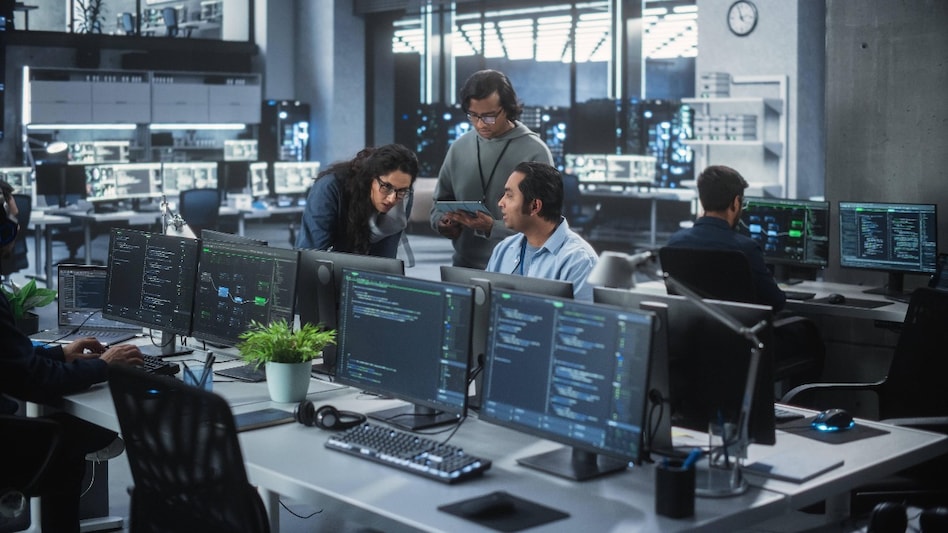
India’s GCCs move from cost centres to AI-powered command hubs as policy clarity boosts enterprise confidence
India's global capability centres (GCCs) are undergoing a significant transformation, shifting from traditional cost centres to AI-powered command hubs that play a pivotal role in shaping global enterprise strategies. This evolution is largely driven by enhanced policy clarity and a robust talent pool, which encourage multinational corporations to ramp up their investments in the country. Lalit Ahuja, the Founder and CEO of ANSR, emphasizes that GCCs are increasingly becoming integral to enterprise operations and global decision-making, rather than merely serving as support functions. "Today, India's GCCs are not operating at the margins; they are strategically embedded within enterprise operating models," Ahuja stated during an interview. The shift in focus for many GCCs has moved beyond traditional service delivery to encompass end-to-end responsibilities across various domains such as engineering, data management, cybersecurity, finance, customer experience, and AI. Ahuja notes, "Leading GCCs are transitioning from merely providing scale to taking ownership of business outcomes. They are now accountable for delivering tangible results rather than just performing activities." As a result of this transformation, global firms are expanding their operations in India, even while reassessing their presence in other regions. Ahuja highlights that the combination of a deep talent pool, mature leadership, and an ecosystem adept at managing complex global operations has positioned India as a critical hub for product development, platform operations, and risk management on a global scale. Policy initiatives are also playing a crucial role in bolstering India's status as a prime destination for GCCs. Ahuja points out that recent policies, particularly those introduced in the Union Budget 2026, are designed to reduce regulatory hurdles and enhance predictability for multinational enterprises. "The expansion of the safe harbour framework significantly diminishes transfer-pricing uncertainties, making it easier for companies to commit to long-term investments in AI and digital infrastructure," he explained. Furthermore, the Indian government's commitment to enhancing digital infrastructure, including data centres and cloud ecosystems, is pivotal in establishing the country as a global technology leader. These developments reflect a maturing policy landscape that prioritizes stability, scalability, and long-term competitiveness. The IndiaAI Mission is another initiative that is solidifying the country's appeal to global businesses seeking to build AI capabilities. Ahuja underscores that the mission's emphasis on computational infrastructure and research support enables companies to anchor sizeable AI mandates in India. "The scale of engineering talent, coupled with growing expertise in cloud platforms and advanced analytics, allows multinational companies to establish both operational capacity and strategic decision-making in India," he added. This evolution is also transforming the roles of GCC leaders. As Vikram Ahuja, Co-Founder of ANSR and CEO of 1Wrk, points out, many organizations are moving beyond mere experimentation with AI to focus on achieving measurable business outcomes. "Currently, over 70% of GCCs are spearheading enterprise AI initiatives, but fewer than 25% have successfully transitioned from pilot projects to large-scale production." He observes that many AI initiatives tend to stall due to a lack of a clear framework that aligns AI investments with business outcomes. "Enterprises often conduct numerous AI experiments, but many fail to reach production status due to the absence of a strategic connection between AI investments and their business impacts," Vikram Ahuja noted. The next phase of GCC evolution will see them functioning as global orchestration hubs that coordinate talent, AI systems, and enterprise operations. "By 2026, GCCs will be crucial for orchestrating essential capabilities within enterprises," Vikram Ahuja stated, highlighting platforms like ANSR’s 1Wrk that aim to integrate talent management, AI governance, and operational workflows into a unified control system. India’s competitive edge in AI-driven GCCs stems from a blend of talent, ecosystem maturity, and extensive global operating experience. Vikram Ahuja remarked, "The advantages India holds in AI-led GCCs are not due to a single factor; rather, it is a complex combination of structural strengths that no other APAC region can replicate at such scale." He also noted a significant surge in AI hiring within GCCs across India, indicating that enterprises can assemble multidisciplinary teams, including AI engineers, data scientists, and machine learning specialists, in a matter of months rather than years.
The Aluminum Foil Trend: A DIY Shield Against Wireless Identity Theft
Have you noticed an unusual trend where people are wrapping their wallets in aluminum foil? This peculiar practice has e...
Business Today | Jul 25, 2026, 02:45
Warner Bros. Takes Legal Action Against Amazon Over Executive Poaching Allegations
Warner Bros. Discovery has initiated legal proceedings against Amazon, accusing the tech giant of unlawful interference ...
TechCrunch | Jul 25, 2026, 21:25
OpenAI's Micro Keypad: A Novelty for Coders or Just a Confounding Gadget?
Last week, OpenAI made its debut in the hardware landscape with the launch of Micro, a stylish keypad designed to integr...
TechCrunch | Jul 25, 2026, 24:40
Shifting Focus: The Cost-Effectiveness of AI Models Takes Center Stage
In recent years, the AI sector has been intensely focused on identifying the most advanced models. While this pursuit re...
Business Insider | Jul 25, 2026, 13:10The Shift in Human Cognition: Embracing AI as a Collaborative Tool
As technology continues to evolve, a notable shift is occurring in the relationship between humans and artificial intell...
Business Insider | Jul 25, 2026, 09:50