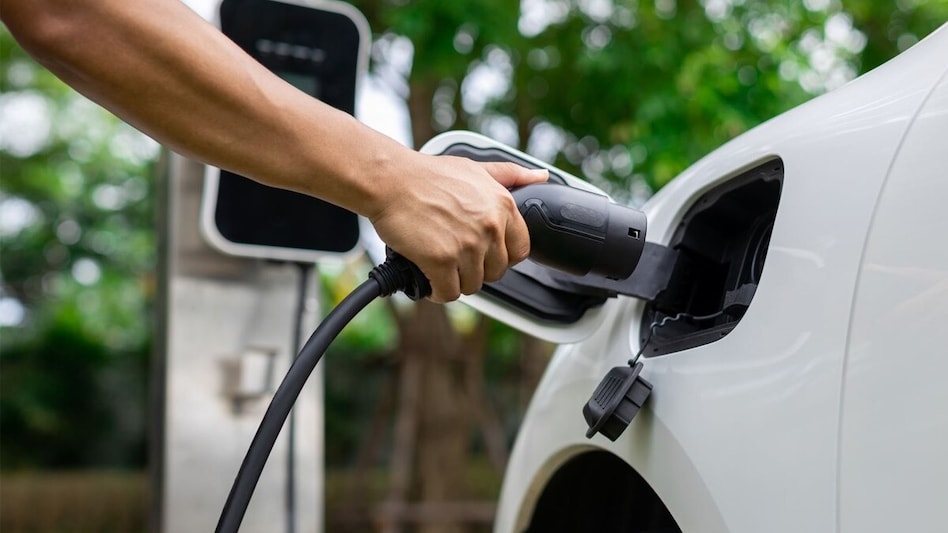
Economic Survey 25-26: Govt schemes led Indians to embrace EVs as registrations rise
The Economic Survey for 2025-26, presented in Parliament on January 29, underscores the Indian government's strong commitment to the electric vehicle (EV) sector. This report highlights how specific government initiatives have significantly boosted EV registrations nationwide. By implementing targeted Production Linked Incentive (PLI) schemes, the government aims to foster a robust, self-sufficient manufacturing ecosystem that shifts India from an import-driven model to one marked by strategic resilience. The results of these supply-side measures, coupled with recovering demand, have led to a remarkable uptick in EV registrations across the country. The automotive industry is experiencing a transformative era, with the transition to electric vehicles contributing to nearly 33% growth in production over the last decade, from FY15 to FY25. Key PLI schemes have played a pivotal role in this transformation: 1. **National Programme on Advanced Chemistry Cell (ACC) Battery Storage**: This initiative is fundamental to India's EV strategy, concentrating on the crucial and costly component of electric vehicles—the battery. The government has earmarked an impressive Rs 18,100 crore to establish domestic manufacturing capabilities for 50 Giga Watt Hours (GWh) of Advanced Chemistry Cells, with 40 GWh already awarded, thereby bolstering the EV ecosystem. 2. **Scheme to Promote Manufacturing of Electric Passenger Cars in India (SMEC)**: Launched in March 2024, this program seeks to draw investments from international EV manufacturers while positioning India as a key manufacturing hub for electric cars. It allows for the temporary import of high-value electric four-wheelers at reduced customs duties, provided that a minimum investment of Rs 4,150 crore ($500 million) is made, alongside achieving mandated Domestic Value Addition targets. As the government targets the passenger car segment, it aims to initiate a widespread shift toward electric mobility. The automotive sector's significance is further highlighted by its contribution of approximately 15% to India's total GST collections, marking it as a crucial pillar of the economy. This surge in electric vehicle registrations is also reflected in public infrastructure advancements, such as the Kochi Water Metro, which utilizes LTO battery-powered electric-hybrid ferries—a model now being expanded to 21 other Indian cities.
Prentis: Ambitious New AI Lab Eyes $100 Million Funding with Innovative Automation Goals
Prentis, a cutting-edge AI research laboratory co-founded by Ritankar Das, Reid Hoffman, and Marc Pincus, is currently i...
TechCrunch | Jul 24, 2026, 22:45
OpenAI's Micro Keypad: A Novelty for Coders or Just a Confounding Gadget?
Last week, OpenAI made its debut in the hardware landscape with the launch of Micro, a stylish keypad designed to integr...
TechCrunch | Jul 25, 2026, 24:40
The Shift in Human Cognition: Embracing AI as a Collaborative Tool
As technology continues to evolve, a notable shift is occurring in the relationship between humans and artificial intell...
Business Insider | Jul 25, 2026, 09:50Unveiling the Future of Finance: TechCrunch Disrupt 2026's Smart Money Stage
The landscape of money is transforming beyond just cash or bank balances, and TechCrunch Disrupt 2026 is set to spotligh...
TechCrunch | Jul 24, 2026, 22:40
Vision Breakthrough: US Startup Launches Groundbreaking Retina Chip in Europe
Science Corp is poised to introduce a revolutionary retina chip in Europe, designed to restore partial vision for indivi...
Business Today | Jul 25, 2026, 01:00