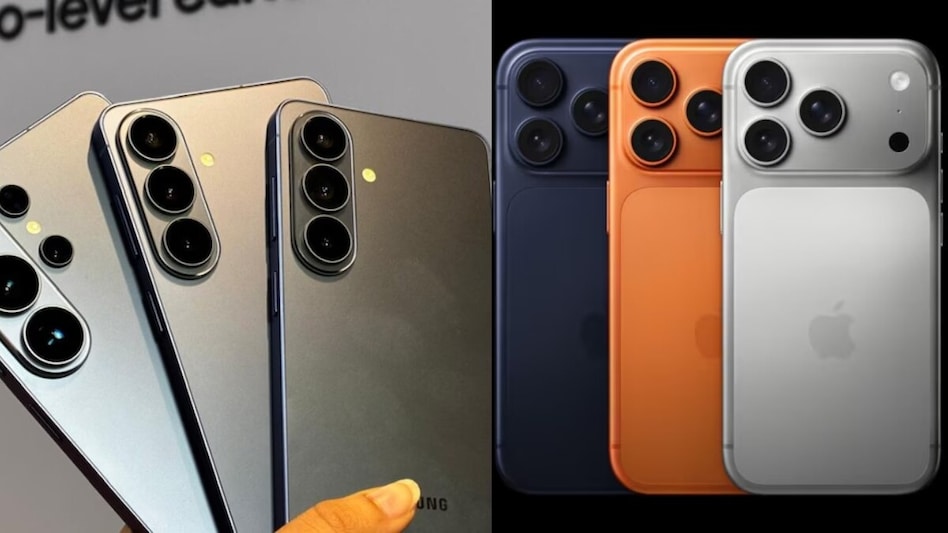
India bets billions on breaking China’s grip on smartphone manufacturing
In a significant push to reshape its smartphone manufacturing sector, India has unveiled a massive incentive program worth ₹625 billion (approximately $6.5 billion). This initiative, named the Mobile Phone Manufacturing Scheme, aims to build upon India’s recent successes in assembling Apple iPhones and to attract more of the global electronics supply chain away from China. The program, which is set to run for five years, offers manufacturers incentives ranging from 2.25% to 5% based on eligible sales, with an additional 1.5% for sourcing crucial components locally. Alongside this, the Indian government has committed an impressive ₹1.28 trillion (around $13.3 billion) to enhance domestic semiconductor manufacturing. This funding expands on a previous $10 billion chip incentive program launched in 2021, providing increased support for chip equipment, materials, and research. Over the last decade, India has emerged as a vital hub for smartphone production, attracting major brands such as Apple, Samsung, and various Chinese companies like Xiaomi, Oppo, and Vivo. Apple began assembling iPhones in India back in 2017 and has significantly ramped up production through collaborations with suppliers like Foxconn and Tata Group, with approximately 25% of its iPhones now manufactured in India as the company diversifies its supply chain away from China. The government's manufacturing initiative is not limited to Apple; it recently approved a joint venture between Chinese firm Vivo and Indian manufacturer Dixon Technologies to further bolster local production. Additionally, the Indian government has eliminated import duties on certain phone and electronics components, a strategic move that could reduce production costs for companies including Apple and Xiaomi. However, India still faces the challenge of competing with China's manufacturing dominance, as China accounted for 63% of global smartphone production in 2025, compared to India's 18%, according to Counterpoint Research. This new program represents a pivotal shift in India’s approach, moving from merely assembling products to fostering depth in research, development, and local value capture, as noted by Navkendar Singh, an associate vice president at IDC. He highlighted that while India has excelled in final assembly, it remains reliant on imported components. The Indian government anticipates that mobile phone production under this scheme will reach approximately ₹39 trillion (around $405 billion) by its conclusion in March 2031, generating about 60,000 direct jobs. Tarun Pathak, a research director at Counterpoint Research, emphasized that this initiative could strengthen India's component ecosystem and attract more manufacturers to the region. With rising memory prices, smartphone brands are keen to optimize component sourcing costs, and local production could offer long-term advantages, especially as the Indian rupee weakens. The government aims to not only boost local manufacturing but also to encourage the growth of homegrown mobile brands. Indian IT Minister Ashwini Vaishnaw announced plans to foster local brands, offering an additional 3% incentive on eligible sales for product design and research. Despite having homegrown manufacturers like Micromax and Lava, Indian brands have struggled against fierce competition from Chinese rivals, which now dominate the market. Pankaj Mohindroo, chairman of the India Cellular and Electronics Association, expressed aspirations for India to account for 35% to 40% of global mobile phone production. The new policy is seen as a critical step toward building the necessary supplier networks and manufacturing expertise to solidify India's position in global electronics supply chains. India’s commitment to both mobile phones and semiconductors reflects a strategic effort to create a comprehensive electronics manufacturing ecosystem that could rival China's longstanding dominance.
The Aluminum Foil Trend: A DIY Shield Against Wireless Identity Theft
Have you noticed an unusual trend where people are wrapping their wallets in aluminum foil? This peculiar practice has e...
Business Today | Jul 25, 2026, 02:45
Nvidia Strikes Major Deal with SK Hynix to Secure AI Memory Supply
Nvidia has successfully forged a significant partnership with South Korea's SK Hynix to secure memory supplies essential...
CNBC | Jul 25, 2026, 05:15
Finland Unveils World's Largest Sand Battery to Tackle Renewable Energy Challenges
In a groundbreaking move to address the critical issue of renewable energy intermittency, a small town in southern Finla...
CNBC | Jul 25, 2026, 05:35
Kalshi Challenges Netflix Over Controversial Documentary Trailer
Kalshi, the prediction market platform, has taken significant legal steps against Netflix, sending a cease-and-desist le...
TechCrunch | Jul 25, 2026, 17:10
Unleashing the Power of AI: The 5 Smartphones Redefining Mobile Photography
Artificial Intelligence (AI) is transforming our daily experiences, permeating various aspects of technology, including ...
Business Today | Jul 26, 2026, 07:05