
India proposes charging OpenAI, Google for training AI on copyrighted content
India is taking a groundbreaking step by proposing a mandatory royalty system for artificial intelligence companies that utilize copyrighted materials for training their models. This initiative could significantly impact how major players like OpenAI and Google operate within one of their most critical and rapidly expanding markets worldwide. On Tuesday, the Department for Promotion of Industry and Internal Trade in India unveiled a proposed framework that would allow AI firms to access all copyrighted works for training purposes. In return, these companies would be required to pay royalties to a newly established collecting body made up of rights-holding organizations, which would then distribute the funds to the original creators. The proposal advocates for a "mandatory blanket license" that aims to reduce compliance costs for AI companies while ensuring fair compensation for writers, musicians, artists, and other rights holders whose work may be used in training commercial models. This initiative comes in the wake of increasing global scrutiny regarding how AI companies acquire and utilize copyrighted material, an issue that has led to numerous lawsuits from various creators in the U.S. and Europe. While courts and regulators continue to debate the legality of using copyrighted content for AI training under the fair use doctrine, India is proposing one of the most proactive solutions to date. Unlike the U.S. and the European Union, where discussions revolve around transparency and fair use limitations, India's approach would grant AI companies automatic access to copyrighted works, contingent on their payment of royalties. The eight-member committee established by the Indian government in April argues that this system would minimize legal ambiguity and guarantee creators are compensated from the beginning. Their 125-page submission emphasizes that the blanket license would provide easier access to content for AI developers, lower transaction costs, and ensure that rights holders receive fair compensation. The committee noted India’s growing significance as a market for generative AI tools, referencing OpenAI CEO Sam Altman's statement that India is the company’s second-largest market, with potential to become the largest. They argue that since AI companies generate substantial revenue from Indian users while also relying on local creative content for model training, it is only fair that a portion of that revenue benefits the creators. The proposal arrives amid escalating legal conflicts globally regarding the lawful use of copyrighted materials by AI firms. In India, the news agency ANI has initiated legal action against OpenAI in the Delhi High Court, claiming unauthorized use of its articles. This case has prompted the court to assess whether AI training constitutes reproduction or is protected under “fair dealing.” Similar disputes are unfolding in the U.S. and Europe, where creators have accused tech companies of building their models on unlicensed content. However, not all stakeholders agree with the Indian government's suggested framework. Nasscom, representing tech firms including Google and Microsoft, has formally opposed the proposal, advocating instead for a broad text-and-data-mining exception that would permit AI developers to train on copyrighted content as long as it is lawfully accessed. They argue that a mandatory licensing system could hinder innovation and suggest that right holders who disagree should have the option to opt out. The Business Software Alliance, which includes major tech firms like Adobe and Amazon Web Services, has also advised the Indian government to avoid a solely licensing-focused approach. They argue that relying exclusively on direct licensing could be impractical and may not yield optimal results. They warn that restricting AI models to smaller licensed or public-domain datasets might diminish model quality and amplify the risk of biases reflected in limited training data. In contrast, the committee has dismissed the idea of a broad text-and-data-mining exception, asserting that such frameworks either weaken copyright protections or are unenforceable. Instead, they propose a hybrid model that would automatically grant AI companies access to all legally available copyrighted works while mandating royalty payments to a central collecting body for distribution to creators. The proposal is currently open for public consultation, allowing companies and stakeholders 30 days to provide feedback. Following this review, the committee will finalize its recommendations before presenting the framework to the government for consideration. As of now, OpenAI and Google have not responded to requests for comments regarding the proposal.
Ashneer Grover Unveils Innovative Loan Guarantee Platform for Employees
Ashneer Grover, the former MD and co-founder of BharatPe, has made waves with the announcement of his new fintech initia...
Business Today | Jul 24, 2026, 05:55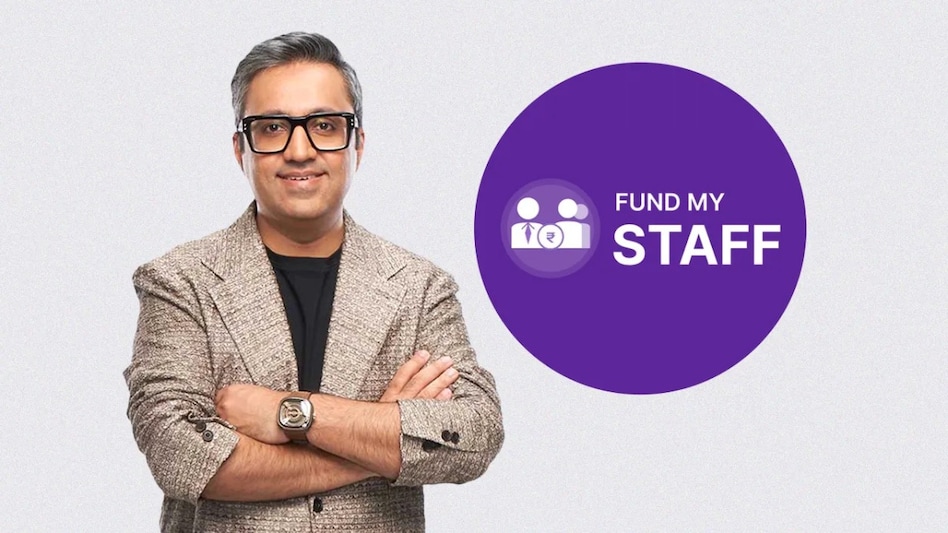
Global Leaders Unite to Promote Secure Open-Source AI at APEC Summit
In a significant development at the recent APEC summit in Chengdu, China, member nations, including the United States, e...
CNBC | Jul 24, 2026, 02:45
Facebook Unveils New Seller App and Free Verification System to Boost Marketplace Engagement
In an effort to enhance user engagement and streamline operations, Facebook has announced a series of updates aimed at M...
TechCrunch | Jul 24, 2026, 13:00
Elon Musk Reflects on the Unexpected Acceleration of AI Development
Elon Musk has expressed that his initial efforts to curb the concentration of artificial intelligence power may have ina...
Business Insider | Jul 24, 2026, 04:15China's Memory Chip Giant CXMT Set to Challenge Market Dynamics with Major IPO
ChangXin Memory Technologies (CXMT), China's leading memory chip manufacturer, is preparing for a significant public lis...
CNBC | Jul 24, 2026, 02:15