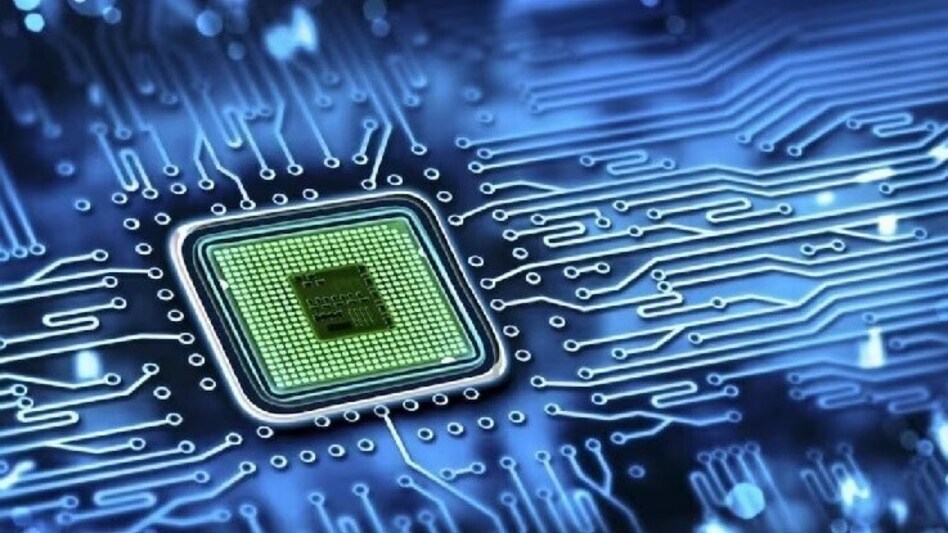
The 3nm moonshot: Can India build the world’s most advanced chips by 2032?
For decades, India has been largely absent from the global semiconductor manufacturing scene, despite early initiatives like the Semiconductor Complex in Mohali and occasional interest from giants like Intel. However, this narrative began to change in December 2021 when the Indian government launched the ambitious Rs 76,000-crore Semicon India programme. This initiative was largely spurred by the Covid-related chip shortage and the increasing recognition of semiconductors as vital to both economic and national security. Electronics and IT Minister Ashwini Vaishnaw expressed the government's bold vision during the World Economic Forum in Davos, stating, "By 2030 we should be doing 7-nanometer chips. By 2032, we should be doing 3-nanometer chips." This timeline is audacious, demanding that India compress decades of chip manufacturing expertise into less than ten years. Historically, semiconductor production has been dominated by a select few nations, leaving many others reliant on imports. However, since 2020, emerging economies like India, Saudi Arabia, Vietnam, and Mexico have joined the race to establish their own high-volume fabrication facilities. Notably, India's efforts are gaining traction with a commercial fabrication plant already under construction. Among the ten approved projects, Tata Electronics' Rs 91,000 crore facility in Dholera, in collaboration with Taiwan's Powerchip Semiconductor Manufacturing Corporation, aims to commence trial production by 2027. Additionally, companies like Micron and Kaynes Semicon are preparing to launch their commercial operations this year. Global semiconductor suppliers are also expanding their presence in India, with Applied Materials investing $400 million in an engineering center in Bengaluru and Lam Research committing Rs 10,000 crore to enhance semiconductor equipment manufacturing within the country. Despite these advancements, a critical question looms: Can India realistically produce advanced 3nm chips by 2032, or is this goal overly ambitious? The 3nm technology represents one of the most sophisticated production processes available today, allowing for billions of transistors to be integrated into chips smaller than a fingernail, significantly enhancing performance and energy efficiency. Industry leaders like Danish Faruqui, CEO of Fab Economics, point out that the capability to manufacture 3nm chips is essential for high-performance products across various sectors, with major players like Nvidia, AMD, and Google relying on this technology. Currently, only a few companies, such as Taiwan Semiconductor Manufacturing Company (TSMC) and Samsung Electronics, have successfully moved 3nm chips into production. As India aspires to join this elite group, it faces several formidable challenges: access to equipment, achieving production yields, and securing skilled talent. The manufacturing of 3nm chips relies heavily on Extreme Ultraviolet (EUV) lithography, a technology that is not only expensive—costing between $150 million to $200 million per machine—but also limited in availability, with ASML as the primary supplier. Moreover, geopolitical factors complicate access to these advanced chipmaking tools, with stringent export controls creating additional hurdles for countries like India. Even if the necessary machinery is acquired, producing chips with acceptable yields remains a daunting challenge, as even minor defects at the 3nm scale can lead to unusable products. The talent pool presents another obstacle. While India boasts strong capabilities in chip design, it lacks a sufficient number of experienced engineers specializing in advanced manufacturing processes. Industry analysts suggest that recruiting skilled professionals, particularly those with experience abroad, will be crucial, yet enticing them to return may prove difficult. India's strategy begins with plans for 28nm chip production at Tata Electronics' facility, which, while a sensible starting point, still places the country significantly behind the global technological curve. Transitioning from 28nm to 3nm generally takes about a decade, even for the most advanced fabs, due to the intricate challenges associated with each node in the manufacturing process. Experts emphasize that each node serves as a critical learning platform, and skipping stages can jeopardize yield, inflate costs, and hinder talent development. Intel's own recent struggles serve as a cautionary tale for India's ambitions. The company, which has faced difficulties scaling its own advanced processes, highlights the importance of having comprehensive experience in both current and legacy technologies to succeed in high-end chip production. As India charts its path toward 3nm chip technology, it signifies a transformative shift from a peripheral player to a nation aspiring for technological independence. While initial developments are promising and significant investments are being made, achieving 3nm manufacturing is not merely a sprint but a marathon that demands ongoing commitment, strategic partnerships, and a focus on long-term goals. If India can establish a robust ecosystem capable of stable sub-10nm manufacturing, the dream of achieving 3nm chips may ultimately become a reality—not a question of if, but when.
Volkswagen Engineers Indicted for Insider Trading Linked to Rivian Partnership
In a significant legal development, the U.S. Department of Justice has brought securities fraud charges against two engi...
TechCrunch | Jul 24, 2026, 20:30
Unlocking the Secrets of Quantum Gravity: Can AI Help Physics Make a Leap?
The realm of scientific research is undergoing a profound transformation, fueled by the rapid advancements in artificial...
Business Today | Jul 25, 2026, 24:30
SpaceX Successfully Tests Starship Rocket, Launching New Era of Space Exploration
On Friday evening, SpaceX executed a significant milestone by launching its colossal Starship rocket from its facility i...
CNBC | Jul 25, 2026, 24:10
Cognition Acquires Poke: Redefining AI Interaction for Enhanced Productivity
Poke, the friendly AI assistant that users interact with as if chatting with a friend, is set to embark on a new journey...
TechCrunch | Jul 24, 2026, 18:25
Legal Battle Erupts Over 'Duress' Password in Groundbreaking Data Wiping Case
The U.S. Justice Department has initiated legal proceedings against a Georgia resident, Samuel Tunick, who is accused of...
TechCrunch | Jul 24, 2026, 18:25