Budget 2026: India to set up and upgrade 4 telescope locations to boost astronomy and astrophysics
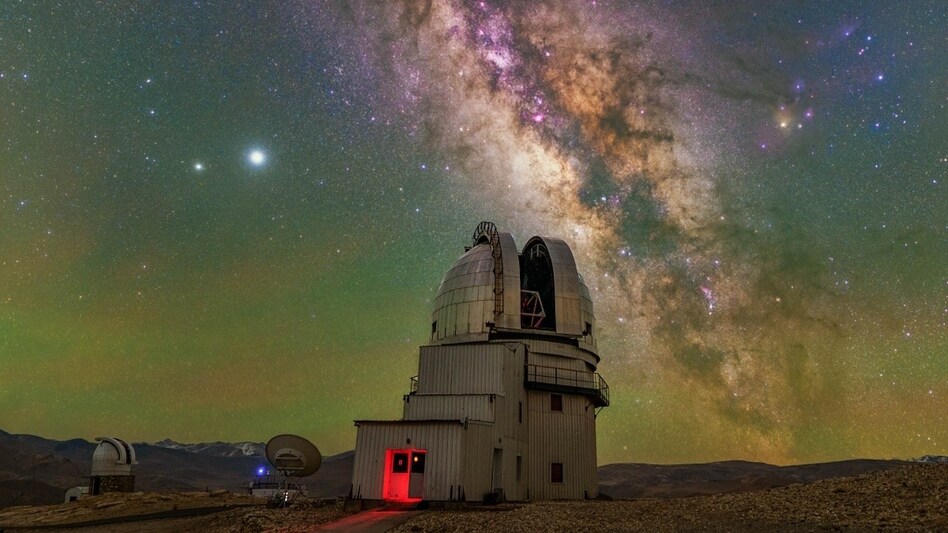
In a bold move to enhance its status in the realm of space exploration, India is set to establish and upgrade four significant telescope facilities, as announced by Finance Minister Nirmala Sitharaman during the Union Budget 2026 presentation. These initiatives aim to elevate the fields of astrophysics and astronomy through immersive and transformative experiences. The four key projects include the National Large Solar Telescope (NLST), the National Large Optical Infrared Telescope (NLOT), the Himalayan Chandra Telescope, and the COSMOS 2 Planetarium. Each of these facilities is designed to bolster India's standing as a leader in global space research. Among the highlights is the NLST, which will focus on monitoring solar activity. This state-of-the-art facility is expected to capture high-resolution images of the Sun's surface and its magnetic fields, providing vital data that could help forecast significant "space weather" phenomena. These solar storms pose risks to essential infrastructure, including satellites and power grids, making this telescope an invaluable asset once operational. The NLOT will serve as a gateway to the distant universe, specializing in the detection of faint celestial objects located millions of light-years away. By employing advanced infrared technology, this telescope will be capable of penetrating cosmic dust clouds, allowing astronomers to investigate the formation of celestial bodies, including newborn stars and distant galaxies. To enhance existing capabilities, the Himalayan Chandra Telescope in Ladakh will undergo modernization. Positioned at one of the world's highest altitudes, this observatory takes advantage of pristine atmospheric conditions, ideal for astronomical observations. Additionally, the introduction of the COSMOS 2 Planetarium is set to make space exploration more accessible to the general public. This modern educational facility will inspire students and space enthusiasts alike through engaging displays and immersive celestial experiences. Together, these four projects represent a significant investment in scientific exploration, ensuring that India not only observes the cosmos but also ignites curiosity in future generations of scientists.
The Shift in Human Cognition: Embracing AI as a Collaborative Tool
As technology continues to evolve, a notable shift is occurring in the relationship between humans and artificial intell...
Business Insider | Jul 25, 2026, 09:50The Boring Company Eyes $4 Billion Funding Boost Amid Expanding Tunnel Ventures
Elon Musk's tunneling enterprise, The Boring Company, is reportedly negotiating a substantial funding round of $4 billio...
TechCrunch | Jul 25, 2026, 19:50
AI Transformations Lead to Major Job Cuts at Tech Giants
Monday.com, the innovative work management platform based in Tel Aviv, has recently announced significant layoffs, attri...
TechCrunch | Jul 26, 2026, 01:45
Vision Breakthrough: US Startup Launches Groundbreaking Retina Chip in Europe
Science Corp is poised to introduce a revolutionary retina chip in Europe, designed to restore partial vision for indivi...
Business Today | Jul 25, 2026, 01:00
Crisis Averted: Power Line Failure Highlights Urgent Need for Data Center Resilience
A power line failure near Washington, DC, recently showcased a significant challenge faced by the electrical grid due to...
TechCrunch | Jul 25, 2026, 13:50