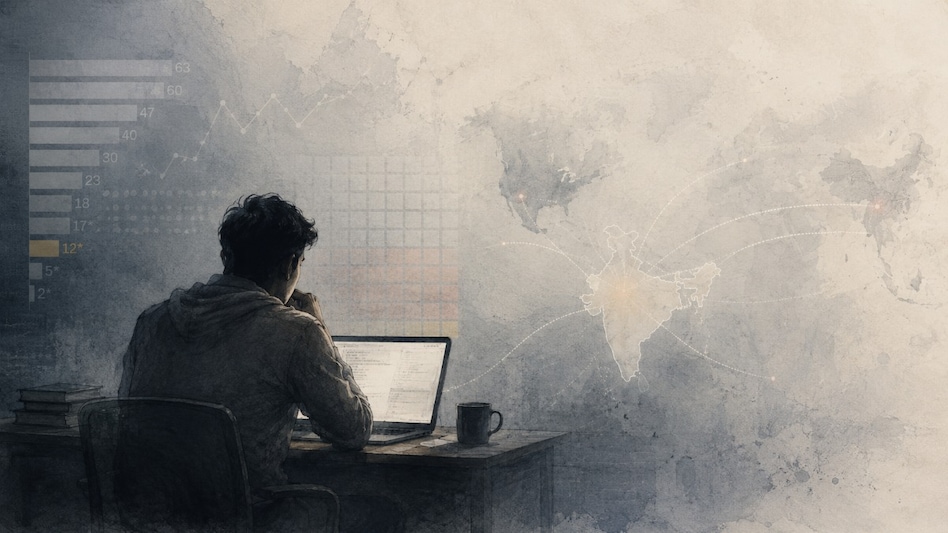
The Cheapest AI in the World Is Indian. It Is Also the Weakest
In a revealing analysis of India's AI capabilities, recent data highlights a stark reality: the majority of AI models utilized in the country are not domestically developed. Between January and July, a staggering 94% of AI requests sent through OpenRouter were directed to models created in the United States or China, as reported by Bloomberg Businessweek. The only Indian models making their mark originate from Sarvam, a Bengaluru-based company, which has contributed two models to the global market. The Sarvam 105B, India's leading AI model, has a score of just 11.9 out of 100 on the Artificial Analysis benchmark, placing India ninth among eleven countries that have developed AI models. In stark contrast, Anthropic's Claude Opus 5, the top model globally, boasts a score of 63.1, illustrating the significant gap in performance. The timeline of AI development reveals that India's best model currently lags behind the advancements made by its competitors. Sarvam 105B is estimated to be at a level comparable to leading AI models from two years ago, with 171 out of 257 available models scoring higher. The United States has introduced 113 new models this year alone, while India has managed only two. Despite these challenges, Sarvam offers a competitive pricing structure. Running a task through Claude Opus 5 costs around $10, while the same task on Sarvam 105B costs roughly seven cents, showcasing its affordability. Moreover, Sarvam provides its models for free download, unlike many leading companies that restrict access to their advanced models. India's AI usage is significant, with a total of 9 trillion tokens processed through OpenRouter during the analyzed period, making it the 10th largest market globally. However, the majority of this work still relies on foreign models, with 51% going to U.S. models and 43% to Chinese ones. One notable aspect of AI evaluation is that none of the standard tests currently assess performance in Indian languages, which poses a unique challenge for local AI development. Sarvam was established to address this gap, yet the global benchmarks fail to capture its potential in this area. Nandan Nilekani, co-founder of Infosys, argues that India should pivot from chasing advanced models to focusing on application-based solutions, positioning the country as a leader in AI use cases. He cites a Stanford report indicating that India has one of the highest rates of AI adoption in the workplace, exceeding 80% in several sectors. The Indian government has begun initiatives to support AI growth, including the IndiaAI Mission, which aims to provide affordable access to GPUs for startups and researchers. However, the road ahead remains challenging as India grapples with its AI development and reliance on foreign technology. The path to innovation may be long, but the potential for transformation is significant.
Uber and Nuro Kick Off Driverless Trials for Lucid Robotaxis Ahead of 2027 Launch
Uber and Nuro have officially launched their driverless testing phase for the Lucid Gravity SUVs on the streets of the S...
TechCrunch | Nov 24, 2026, 17:15
Investing in the Future: Solar and Battery Solutions for AI Data Centers
The challenge of powering AI data centers has emerged as a pivotal issue in the current technological landscape. Over th...
TechCrunch | Nov 24, 2026, 16:25
Saudi Engineer Faces Legal Battle Over Alleged Espionage Using AI Tech
A Saudi engineer employed by OpenAI, Abdulrahman Alfozan, is at the center of a legal dispute as prosecutors allege he u...
Business Insider | Nov 23, 2026, 23:50Staggering Recovery Rates Highlight Digital Payment Fraud Challenges
The battle against digital payment fraud continues to be an uphill struggle for consumers, with official data revealing ...
Business Today | Nov 24, 2026, 09:30
Figma Engineer Files Lawsuit Claiming Workplace Harassment and Retaliation
A former engineer at Figma has initiated legal action against the design software firm and its CEO, Dylan Field, citing ...
TechCrunch | Nov 23, 2026, 23:15