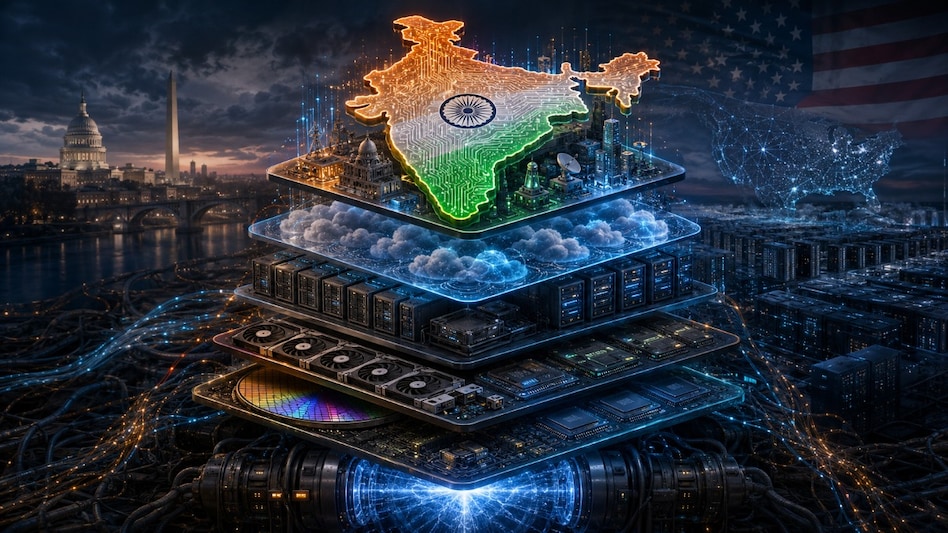
India’s AI dream runs on a stack it does not control
In 2022, the Biden administration's decision to tighten export controls on advanced chips destined for China marked a significant shift in the landscape of global technology. This move, initially perceived as a strategy to curb a rival, has expanded under subsequent administrations, underscoring that access to advanced AI hardware is now intertwined with geopolitical considerations. Recently, restrictions on Anthropic’s AI models for non-US users have further highlighted this trend, suggesting that even frontier AI technologies are being treated as strategic assets. While the stated rationale focuses on national security and misuse prevention, the broader implication is clear: access to essential AI resources can no longer be taken for granted. Neil Shah, vice president at Counterpoint Research, emphasizes that the U.S. is transitioning from semiconductor control to software control, as the capabilities of its AI ecosystem pose a significant challenge to competing nations. For India, this reality serves as a wake-up call, particularly given its reliance on foreign technologies in both AI semiconductors and software. As India embarks on a mission to establish its own AI capabilities through the IndiaAI initiative, the government is investing in a national computing infrastructure that includes over 38,000 GPUs aimed at supporting startups and researchers. However, the underlying issue of dependence on foreign technology remains a significant hurdle. Much of this infrastructure relies on chips from U.S. companies like NVIDIA, AMD, and Intel, raising concerns about the sustainability of such dependencies. The risks associated with this reliance have been apparent in previous policy frameworks, such as the Biden administration’s AI Diffusion Framework, which had positioned India in Tier 2 for access to advanced AI hardware. While current GPU infrastructure is safeguarded by contracts, the potential for software-based restrictions looms, posing challenges for India's tech aspirations. Pareekh Jain, CEO at EIIRTrend & Pareekh Consulting, points out that the real concern may not be the existing infrastructure, but rather future access to crucial technologies. Restrictions could impede not only hardware access but also vital updates, cloud services, and technical support, placing India’s technological ambitions at risk. The vulnerability extends beyond just GPUs. Sarvam AI, a standout example of India's sovereign AI goals, relies heavily on U.S. technology, utilizing NVIDIA’s frameworks and imported GPUs to develop models tailored to local needs. Although the end-user applications are developed domestically, the foundational technology remains heavily American. Sanchit Vir Gogia, chief analyst at Greyhound Research, notes that while dependence on foreign technology is evident, it also signifies India's commitment to leveraging the best available tools for technological growth. However, the dependency on the software ecosystem surrounding these technologies poses a significant risk, as shifting away from established systems can be slow and costly. The recent restrictions serve as a reminder of the geopolitical nature of AI advancements. The loss of access to leading models like ChatGPT or Claude could disrupt Indian enterprises and researchers, hindering innovation and increasing costs. As India strives to position itself as a global leader in AI, experts caution that complete technological independence is neither feasible nor economically viable. Instead, the focus should be on reducing reliance where possible and enhancing capabilities in areas such as inference sovereignty and model portability. Gogia suggests that creating alternative pathways for critical systems and ensuring access to computing resources are paramount for India’s future in AI. As technology becomes a tool for national interests, India's challenge lies in developing AI capabilities that are resilient, accessible, and capable of fostering innovation in a competitive global landscape.
Vision Breakthrough: US Startup Launches Groundbreaking Retina Chip in Europe
Science Corp is poised to introduce a revolutionary retina chip in Europe, designed to restore partial vision for indivi...
Business Today | Jul 25, 2026, 01:00
The Rise of AI Distillation: A Controversial Technique Sparks Debate in Tech and Government
In recent discussions, a once-obscure topic in artificial intelligence has surged to the forefront of debates among tech...
CNBC | Jul 25, 2026, 12:15
Kalshi Challenges Netflix Over Controversial Documentary Trailer
Kalshi, the prediction market platform, has taken significant legal steps against Netflix, sending a cease-and-desist le...
TechCrunch | Jul 25, 2026, 17:10
Market Turbulence: Four Key Factors Impacting Stocks This Week
This past week has been challenging for the stock market, driven by several significant forces that have created turbule...
CNBC | Jul 25, 2026, 20:05
Nvidia Strikes Major Deal with SK Hynix to Secure AI Memory Supply
Nvidia has successfully forged a significant partnership with South Korea's SK Hynix to secure memory supplies essential...
CNBC | Jul 25, 2026, 05:15