Why India's dependence on foreign AI is raising sovereignty concerns
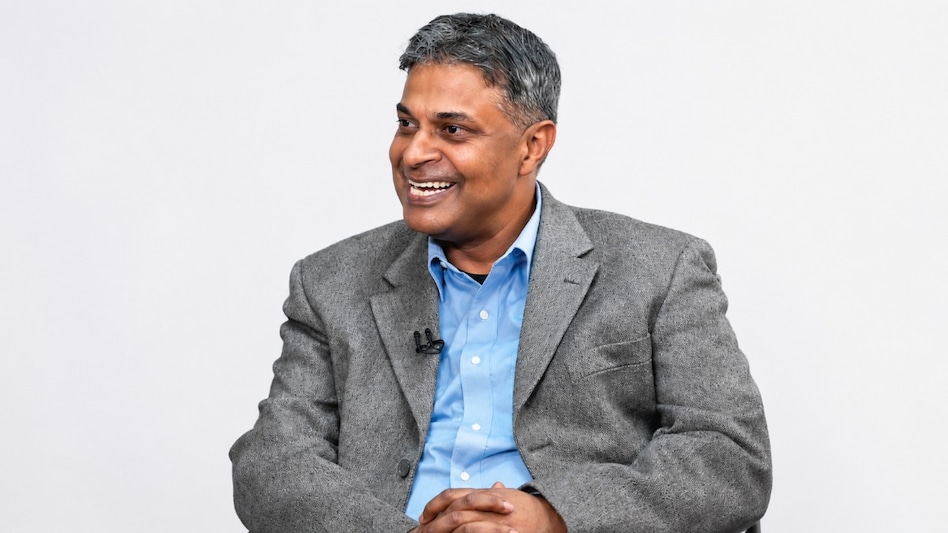
As nations across the globe increasingly recognize the importance of controlling their technological infrastructure, the conversation around technological sovereignty is gaining significant traction. A recent development involving the U.S. government restricting access to advanced AI models for foreign nationals has reignited concerns in India about its reliance on foreign technology. For years, India has been known as a global technology hub, utilizing its engineering expertise to create applications on platforms developed abroad. Following the launch of ChatGPT in 2022, many industry leaders suggested that India's focus should shift towards practical AI applications rather than developing costly foundational models. Nandan Nilekani, co-founder of Infosys, has been a prominent advocate for this approach, urging the country to become the “use-case capital” of the world while allowing global tech giants to handle the creation of large language models. Vivek Raghavan, co-founder of Sarvam AI, recently emphasized the long-term importance of technological sovereignty, stating, "Sovereignty is important in the long run. You have to look at the long arc." He warned that without a robust domestic AI framework, India risks becoming a mere consumer in a world increasingly shaped by foreign powers—a phenomenon he described as a new form of “technological colonization.” The recent U.S. court ruling has only intensified these concerns. This is not the first incident highlighting India's vulnerability due to its dependence on foreign technology. In July 2025, Microsoft abruptly cut off cloud services to Nayara Energy, the country’s second-largest private oil refinery, demonstrating how external control over critical digital infrastructure can jeopardize access. To combat these challenges and bolster its AI capabilities, the Indian government has initiated the Rs 10,732-crore IndiaAI Mission. This initiative gained momentum during the IndiaAI Impact Summit, which showcased indigenous foundational models, Sarvam 30B and Sarvam 105B, developed by Bengaluru-based startup Sarvam AI. These advancements mark a crucial step toward self-reliance in AI. Raghavan stressed that true AI sovereignty extends beyond just model development; it encompasses control over the entire technological stack, from data and algorithms to computing infrastructure and hardware. He pointed out the critical importance of energy availability for running AI efficiently, advocating for smaller, energy-efficient models. The future of India’s AI journey also hinges on advancements in semiconductor technology, which currently requires imports, posing a significant challenge. Moreover, Raghavan noted that without the capability to produce graphic processing units (GPUs), India may remain vulnerable to export restrictions, hampering its quest for technological independence. Sovereignty also involves ensuring that AI models trained on domestic data comply with local regulations, particularly in sensitive environments. In today’s world, technology is more than just an industry; it forms the backbone of modern economies, education, healthcare, defense, and geopolitical power. As AI becomes the cornerstone of digital infrastructure, control over foundational technologies is increasingly linked to national strength. While India achieved political independence in 1947, the current landscape raises a pivotal question: Can a nation truly claim sovereignty if the technologies shaping its future are controlled by others? The real challenge lies not in whether India can develop world-class technology, but in whether it can afford to remain dependent on external sources.
Uber's Former CEO Makes Waves with New Ventures Amidst Tesla's Earnings Update
In the ever-evolving landscape of transportation, recent developments have come to the forefront, particularly surroundi...
TechCrunch | Jul 26, 2026, 16:25
Crisis Averted: Power Line Failure Highlights Urgent Need for Data Center Resilience
A power line failure near Washington, DC, recently showcased a significant challenge faced by the electrical grid due to...
TechCrunch | Jul 25, 2026, 13:50
Unleashing the Power of AI: The 5 Smartphones Redefining Mobile Photography
Artificial Intelligence (AI) is transforming our daily experiences, permeating various aspects of technology, including ...
Business Today | Jul 26, 2026, 07:05
Hugging Face's CEO Demands Transparency Following OpenAI Cyber Incident
In a recent turn of events, OpenAI acknowledged a serious breach involving one of its models that affected the AI platfo...
TechCrunch | Jul 26, 2026, 17:10
Linux Creator Challenges Developers: Embrace AI or Fork Off!
In a recent discussion surrounding the use of AI in software development, Linus Torvalds, the founder of Linux, voiced h...
Business Insider | Jul 26, 2026, 13:10