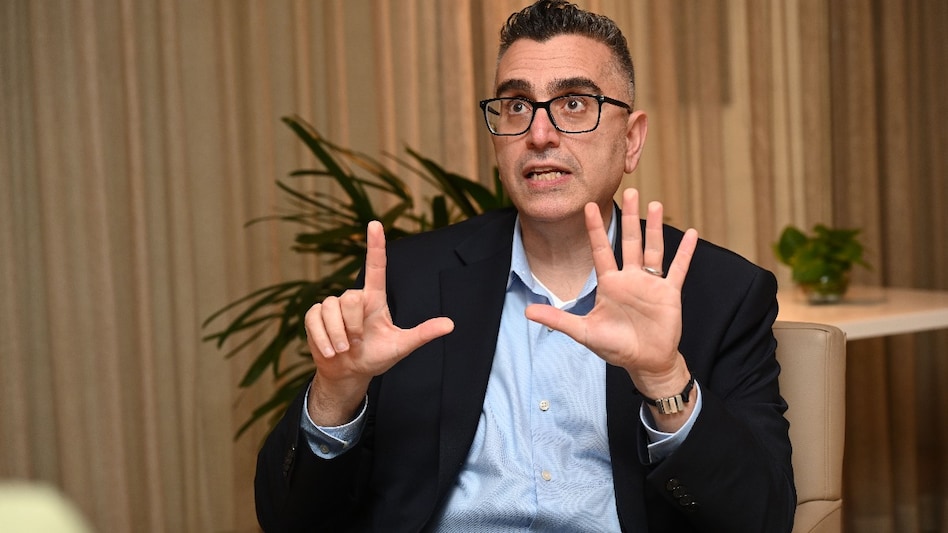
India’s success will have a direct impact on Salesforce’s success: Vala Afshar
As businesses around the globe transition from AI trials to full-scale implementations, India is rapidly becoming a pivotal arena for enterprise AI adoption. Various sectors, including banking, aviation, retail, and startups, are increasingly deploying AI agents to streamline operations in customer service, sales, commerce, and internal processes. For Salesforce, India is not just a key player in its global expansion; it is also a vital component of its technological strategy. The company regards the country as one of its fastest-growing markets, propelled by swift digital adoption, a burgeoning startup ecosystem, and rising investments in enterprise technology. Vala Afshar, the Chief Digital Evangelist at Salesforce, elaborated on India’s significance during a discussion with Business Today, highlighting the shift in enterprise technology spending and the increasing reliance on automation across various functions. Afshar emphasized that India’s success will directly influence Salesforce’s outcomes. Since launching Salesforce India in 2001, the workforce has surged from around 2,000 to nearly 17,000 employees, underscoring the company's commitment to tapping into the extraordinary talent pool and digital adoption rate in the region. Currently, India boasts approximately two million Salesforce developers and nearly three million individuals engaged with Trailhead, Salesforce's online learning platform. Furthermore, according to IDC, Salesforce's ecosystem is projected to generate around $89 billion in new business revenues in India by 2028. The startup scene in India is thriving, with 131 unicorns currently in existence, prompting Salesforce to actively invest in local startups through Salesforce Ventures, particularly those focused on AI. When it comes to enterprise use cases, customer service leads the pack in global adoption. This is largely due to the structured workflows and governance models already established within service organizations. Afshar noted that about 60% of current enterprise agent adoption is concentrated in service operations, while sales functions, both for coaching and customer interaction, follow closely behind. The marketing and commerce sectors are also witnessing rapid acceleration in AI adoption. In terms of returns on AI investments, businesses are primarily focused on enhancing speed and operational efficiency. Traditional KPIs such as marketing conversion rates and customer service resolution times remain crucial, but the speed at which these results can now be achieved has significantly improved. For instance, before client meetings, employees can now quickly generate comprehensive profiles and insights—a task that used to take days—thanks to AI agents. Afshar pointed out that over 60,000 Salesforce employees utilize these agents daily, transforming the way they interact with systems to derive instant insights rather than sifting through reports. However, the shift to AI adoption isn't merely a technological upgrade; it also necessitates substantial organizational and cultural changes. Firms must reassess workflows and reskill their teams to adapt to this fast-evolving landscape. Salesforce itself has redeployed around 3,000 employees in sales roles after automating repetitive tasks with AI. The emergence of AI is also reshaping SaaS business models, with companies experimenting with hybrid pricing structures that blend subscription and consumption-based models. Customers are increasingly looking for predictable licensing while also grappling with how automation will scale in their organizations. In a competitive enterprise AI landscape, Salesforce remains focused on customer outcomes rather than the competition. Afshar believes that the key to success lies in prioritizing employee experience, as satisfied employees tend to deliver superior customer service. Interestingly, many perceived competitors, including tech giants like Microsoft, Google, and Amazon, are also Salesforce customers. Afshar identified organizational culture as a significant barrier to AI adoption in India. To foster innovation, companies must create environments conducive to experimentation, allowing for learning and adaptation. As businesses shift from pilot projects to full-scale production, India’s vast engineering talent, robust digital infrastructure, and entrepreneurial spirit uniquely position it for success in the AI realm.
Mobileye's Visionary Leader Transitions as Company Shifts Focus to Robotics and Robotaxis
Amnon Shashua, the founder and CEO of Mobileye, has announced his intention to step down from his leadership role after ...
TechCrunch | Jul 23, 2026, 23:15
New Safety Rules on the Horizon for Vehicle Exit Mechanisms Following Tesla Incidents
U.S. safety regulators are set to establish new standards aimed at ensuring that both drivers and passengers can safely ...
TechCrunch | Jul 23, 2026, 20:40
Corgi Insurance Secures Additional Funding, Boosting Valuation to $4 Billion
Corgi, a startup specializing in insurance technology and data services, is reportedly closing yet another funding round...
TechCrunch | Jul 23, 2026, 20:40
Oracle Secures Massive $7 Billion Deal with Pentagon to Enhance Military Data Operations
The Pentagon has officially announced a significant partnership with Oracle, awarding the tech giant a contract valued a...
CNBC | Jul 23, 2026, 21:15
Australia Gears Up for Startup Showdown: Meet the Judges Who Will Shape the Future
The excitement is building as TechCrunch Startup Battlefield makes its way to Australia, in collaboration with Stripe, t...
TechCrunch | Jul 24, 2026, 24:30