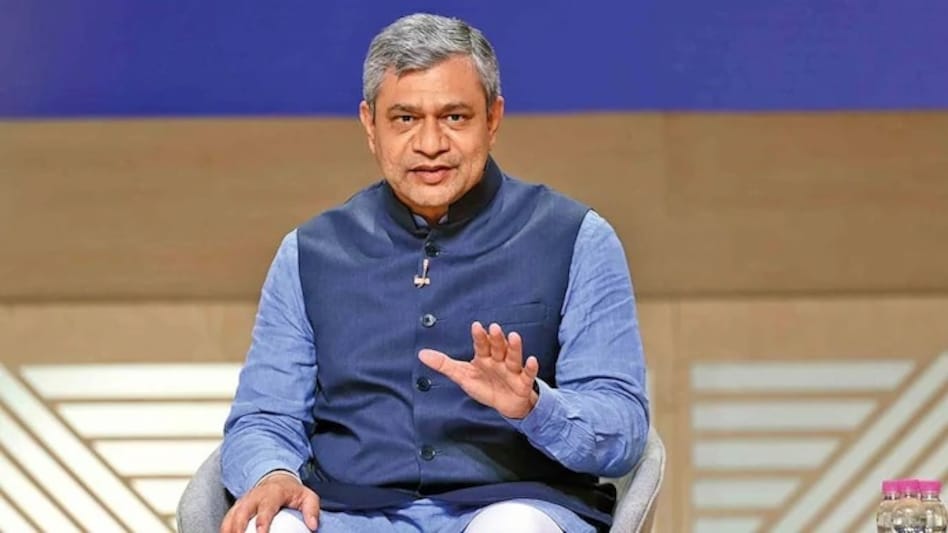
'Government aims to manufacture 3-nanometer chips by 2032,' says Ashwini Vaishnaw
On January 27, Union IT and Electronics Minister Ashwini Vaishnaw announced a bold initiative for India to begin manufacturing 3-nanometer (3nm) chips within the next decade. These advanced chips, crucial for powering cutting-edge smartphones and high-performance computers, represent a significant leap in the country’s technological capabilities. While India is already recognized for its chip design expertise, the government's new focus emphasizes the need to develop the intricate manufacturing processes necessary for producing these miniature components domestically by 2032. This initiative is part of the second phase of the Design-Linked Incentive (DLI) Scheme, which aims to enhance technological sovereignty by achieving domestic control over 70-75% of the technology used in various products. Vaishnaw outlined this timeline after discussions with 24 selected chip design firms involved in the DLI scheme. He stated, “The target for 2032 is to reach 3-nanometer chip manufacturing and design. While we are currently engaged in design, our manufacturing capabilities must also advance to 3-nanometer.” To ensure a sustainable growth trajectory, the government has pinpointed six critical chip categories that will receive prioritized development: computing, radio frequency (RF), networking, power, sensors, and memory. These categories are essential components in nearly every modern electronic application. An intermediate target has also been set for 2029, where the government anticipates establishing strong capabilities in both design and manufacturing, meeting the majority of the nation’s chip requirements. Vaishnaw emphasized the importance of collaboration between academia and industry, encouraging innovative ideas and solutions in these core areas. “By 2029, we aim to have a significant manufacturing and designing capability for approximately 70-75% of all applications in our country,” he noted. The minister stressed that by concentrating on these six key systems, India can cultivate a self-sufficient ecosystem where industry and academia collaborate on forward-thinking solutions. This strategic focus is critical as every sector, from telecommunications to automotive, depends on various combinations of these chip technologies.
Navigating the Earnings Season: Jim Cramer's Strategies for Investors
As the earnings season unfolds, CNBC's Jim Cramer warns investors to resist the urge to react impulsively to market fluc...
CNBC | Jul 22, 2026, 22:35
SoundCloud Expands Horizons with Acquisition of Nina Protocol
On Wednesday, SoundCloud revealed its acquisition of Nina Protocol, a decentralized music platform that empowered indepe...
TechCrunch | Jul 22, 2026, 19:50
Florida Teen Withdraws Lawsuit Against Meta, Shifting Focus to Recovery
In a significant turn of events, a Florida teenager has decided to withdraw his lawsuit against Meta, just days before w...
CNN | Jul 22, 2026, 21:35
OpenAI Seeks Community Support for Controversial Data Center Project in Georgia
In an effort to garner local approval and address concerns surrounding data centers, OpenAI has unveiled its ambitious p...
Business Insider | Jul 22, 2026, 19:00Travis Kalanick's Atoms Secures $1.7 Billion Investment to Revolutionize Robotics
Travis Kalanick's robotics venture, Atoms, has successfully raised $1.7 billion in a funding round primarily backed by v...
TechCrunch | Jul 22, 2026, 19:15