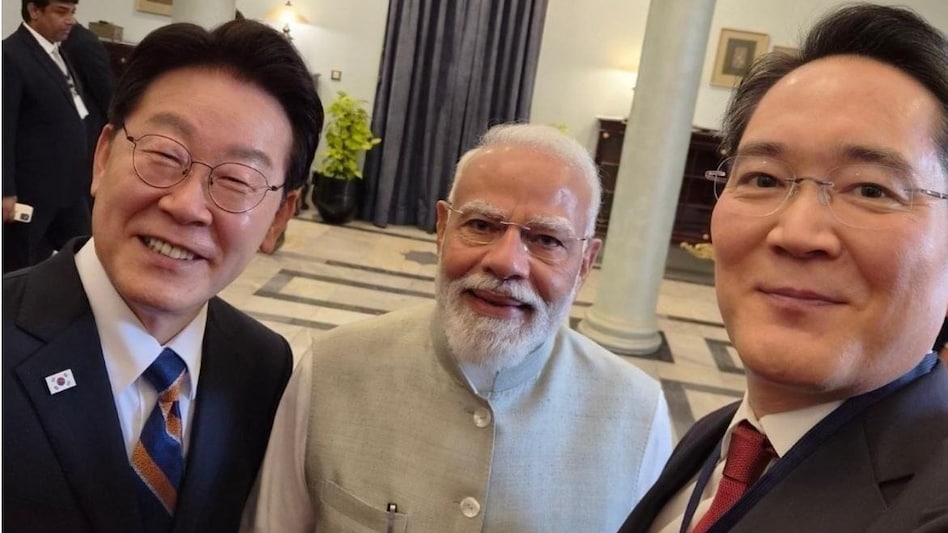
India, South Korea launch ‘Digital Bridge’ to deepen AI, semiconductor push
On April 20, India and South Korea announced a significant technological partnership aimed at enhancing collaboration in the fields of artificial intelligence (AI) and semiconductors. This initiative, launched by Prime Minister Narendra Modi and South Korean President Lee Jae-myung, marks a pivotal moment in the strategic alignment of the two nations amidst evolving global supply chain dynamics. During a joint press briefing, PM Modi emphasized that the "India-Korea Digital Bridge" would serve as a foundational initiative for advancing cooperation in cutting-edge technologies. He remarked, "In this period of global tensions, India and Korea together send a message of peace and stability. Through our shared efforts, we will continue to contribute towards a peaceful, progressive, and inclusive Indo-Pacific." The newly proposed Digital Bridge is intended to be a long-term framework that fosters deeper partnerships in AI, semiconductors, and information technology—key areas deemed essential for economic and strategic resilience. Modi elaborated, "From chips to ships, talent to technology, entertainment to energy, we will realize new opportunities for cooperation in every sector." South Korea's robust semiconductor industry, bolstered by giants like Samsung Electronics and SK Hynix, is poised to complement India's goal of establishing a self-sufficient chip ecosystem. The Indian government is actively pursuing the development of a comprehensive semiconductor value chain through various incentives, while South Korea advances its “K-Semiconductor Belt” strategy to achieve leadership in next-generation chip technology. This collaboration comes at a crucial time as both nations aim to minimize reliance on centralized supply chains and enhance resilience in key technologies, particularly in chips and AI infrastructure. In tandem with their technological partnership, the two countries also announced plans to nearly double bilateral trade to $50 billion by 2030, up from approximately $25.7 billion currently, with discussions underway to strengthen the Comprehensive Economic Partnership Agreement. "Today, bilateral trade between India and Korea has reached $27 billion. We have taken significant steps to increase this to $50 billion by 2030," Modi stated during the conference. Several agreements were also signed across various sectors, including shipbuilding, sustainability, steel, and ports, highlighting a comprehensive industrial cooperation agenda that aligns with their technological ambitions. In a related effort to bolster digital infrastructure connections, NPCI International Payments Limited and the Korean Financial Telecommunications & Clearings Institute signed a Memorandum of Understanding (MoU), indicating a move toward deeper integration of digital payment systems. This initiative aims to enhance cross-border innovation in fintech and AI-driven services. The renewed engagement between India and South Korea occurs against a backdrop of escalating geopolitical tensions and supply chain vulnerabilities, prompting both nations to diversify their sourcing of critical minerals and semiconductor components while simultaneously building domestic capabilities in advanced technologies like AI.
Nvidia's Jensen Huang Sparks AI Revolution at GTC Berlin Amidst Market Turbulence
During the recent GTC event in Berlin, Nvidia's CEO Jensen Huang showcased the company's ambitious vision for the future...
CNBC | Oct 23, 2026, 11:15
Samsung Reclaims Dominance in India's Smartphone Market Amid Declining Shipments
India's smartphone industry is facing significant challenges, with shipments plummeting to their lowest levels in a deca...
Business Today | Oct 23, 2026, 11:50
The Mathematical Revolution: Embracing AI's Role in the Future of Math
The influence of artificial intelligence on the field of mathematics is becoming increasingly complex and contentious. R...
Business Insider | Oct 23, 2026, 11:35Unlocking Savings: How AI Agents Help You Slash Subscription Costs
Managing subscriptions can be a silent drain on your finances, particularly when automatic renewals slip under the radar...
Business Today | Oct 23, 2026, 10:25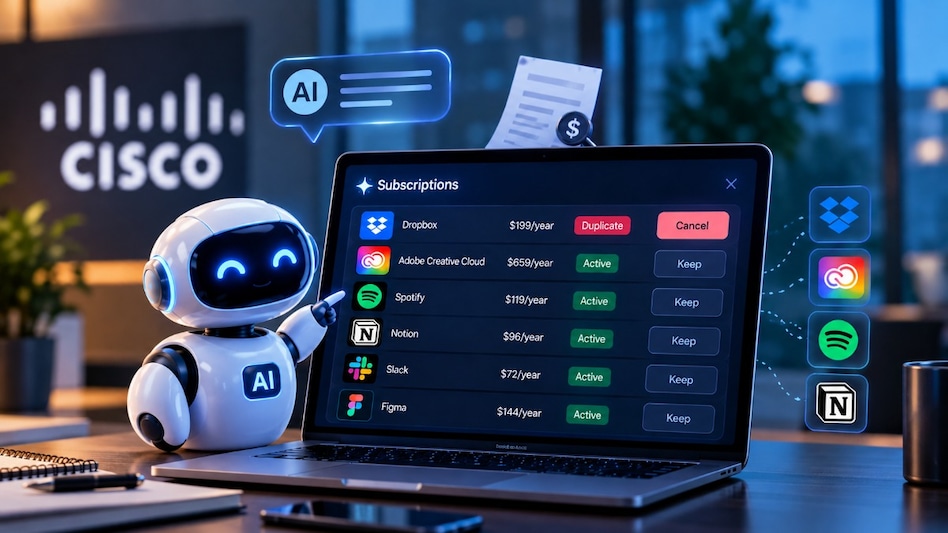
Musk Hints at SpaceX-Tesla Merger Amidst Investor Concerns
During a recent call with Tesla shareholders, Elon Musk expressed that he has already shared all relevant information re...
CNBC | Oct 23, 2026, 11:15