Not fabs, but fundamentals: Why India–Germany’s chip pact could reshape New Delhi’s semiconductor ambitions
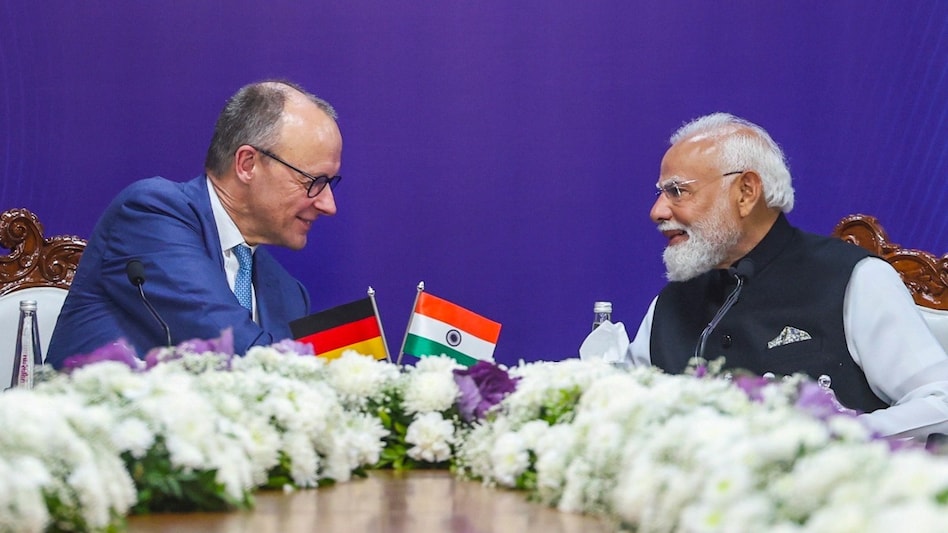
In a significant shift towards collaborative technology engagement, India and Germany have entered into a strategic partnership to enhance semiconductor capabilities. This partnership was formalized during a recent visit by German Chancellor Friedrich Merz, where both nations signed a Joint Declaration of Intent to establish the India–Germany Semiconductor Ecosystem Partnership. Unlike traditional trade agreements, this pact aims to integrate the robust industrial expertise of Germany with India's aspirations to develop a sustainable semiconductor manufacturing ecosystem. As the global demand for semiconductors surges—driven by factors such as economic competitiveness, national security, and advancements in artificial intelligence—this partnership underscores the understanding that establishing a chip industry involves more than just investing in high-cost fabrication plants. While the global semiconductor landscape is often dominated by players like Taiwan, China, and the United States, Germany has carved out a vital niche in the industry. Although it may not lead in chip production, Germany excels in crucial areas like manufacturing equipment and precision engineering, which are essential for semiconductor production. Devroop Dhar, CEO of Primus Partners, emphasizes that while Germany is not at the forefront of chip fabrication, it possesses the expertise where India currently faces challenges. India is strategically choosing not to leap straight into advanced fabrication but is instead building its semiconductor ecosystem incrementally. The partnership leverages German expertise in design, testing, and packaging—areas that align perfectly with India's current developmental needs. Germany is home to major semiconductor firms, including Infineon Technologies AG, a leader in power semiconductors. However, the partnership has yet to yield major funding commitments or fabrication plant announcements, which experts believe is a deliberate approach. Building a semiconductor ecosystem requires a comprehensive understanding of various processes beyond just having a fabrication facility. The real potential of the India-Germany collaboration lies in Germany's established strengths in industrial semiconductors and precision manufacturing. This cooperation could enable India to develop stable production processes rather than merely expanding its theoretical capacity. Danish Faruqui, CEO of Fab Economics, notes that India’s existing semiconductor projects have faced challenges in securing technology partnerships, often relying on Asian firms for legacy technologies. The new alliance may provide the necessary support for next-generation semiconductor technologies. India's current strength is in semiconductor design, with about 20% of the global design workforce located in the country. However, it still lacks in manufacturing expertise, an area where Germany's skilled workforce could make a significant impact. Early signs of this collaboration are evident, with Infineon Technologies partnering with Indian educational institutions to enhance workforce training in semiconductor skills. This partnership is also a response to shifting geopolitical landscapes that are reshaping the global semiconductor industry. G7 nations, including Germany, have recognized their heavy reliance on non-G7 countries for semiconductor manufacturing, a situation highlighted during the 2020 global chip shortage that led to significant economic losses across various sectors. As nations look to diversify their supply chains and build alternative manufacturing centers, the India-Germany partnership could position India as a key player in the global semiconductor landscape—especially under the G7's $600 billion Partnership for Global Infrastructure and Investment program. Despite the absence of immediate, high-profile announcements, the India-Germany Semiconductor Ecosystem Partnership could serve as a foundational step towards establishing a resilient domestic semiconductor industry focused on talent, technology, and industrial expertise.
Market Turbulence: Four Key Factors Impacting Stocks This Week
This past week has been challenging for the stock market, driven by several significant forces that have created turbule...
CNBC | Jul 25, 2026, 20:05
The Boring Company Eyes $4 Billion Funding Boost Amid Expanding Tunnel Ventures
Elon Musk's tunneling enterprise, The Boring Company, is reportedly negotiating a substantial funding round of $4 billio...
TechCrunch | Jul 25, 2026, 19:50
Warner Bros. Takes Legal Action Against Amazon Over Executive Poaching Allegations
Warner Bros. Discovery has initiated legal proceedings against Amazon, accusing the tech giant of unlawful interference ...
TechCrunch | Jul 25, 2026, 21:25
Vision Breakthrough: US Startup Launches Groundbreaking Retina Chip in Europe
Science Corp is poised to introduce a revolutionary retina chip in Europe, designed to restore partial vision for indivi...
Business Today | Jul 25, 2026, 01:00
The Shift in Human Cognition: Embracing AI as a Collaborative Tool
As technology continues to evolve, a notable shift is occurring in the relationship between humans and artificial intell...
Business Insider | Jul 25, 2026, 09:50