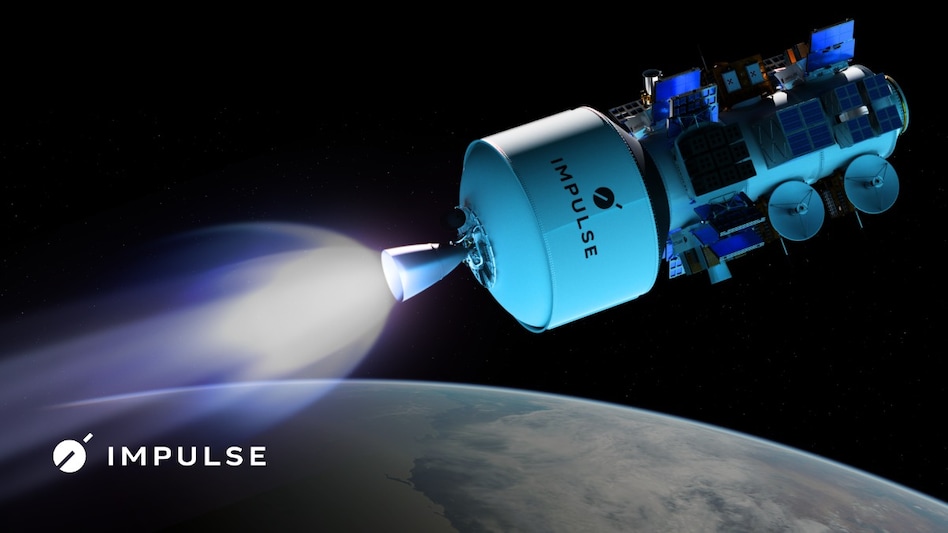
Impulse Space unveils 'same-day delivery' for satellites with Helios kick stage
Impulse Space, an emerging player in in-space transport, has unveiled groundbreaking agreements aimed at transforming satellite deployment to geostationary orbit (GEO). Utilizing its Helios methane-oxygen kick stage, the company seeks to reduce delivery times from months to less than 24 hours, positioning itself as the 'courier service' of the cosmos. Founded in 2021 by Tom Mueller, who previously led propulsion efforts at SpaceX, Impulse is dedicated to optimizing last-mile delivery in low Earth orbit (LEO) and facilitating rapid transfers to GEO. In a significant announcement, the company detailed three key partnerships that promise to enhance satellite accessibility and operational efficiency. The first agreement is a 2026 demonstration mission in collaboration with defense contractor Anduril, designed to showcase rendezvous and proximity operations vital for space domain awareness. Following this, a transportation deal with GEO communications startup Astranis is set for 2027, where Helios will transport MicroGEO satellites from LEO to GEO in under a day. Additionally, Impulse has initiated a multi-launch contract with France’s Infinite Orbits, commencing in 2027. This partnership, utilizing a ride-share program named Caravan, will enable satellite-servicing spacecraft to be launched alongside other payloads. Helios functions as a kick stage attached to a larger rocket, igniting its Deneb engine once in orbit to deliver its payloads efficiently. The advantages of Helios are clear: it promises immediate repositioning, a crucial benefit for commercial operators and the US Department of Defense alike. The collaborative effort with Anduril will involve the development of a demo satellite equipped with advanced sensors, enabling it to inspect and track other space objects autonomously after Helios carries it to GEO. Operating in GEO presents unique challenges, including navigating high-radiation Van Allen belts and managing communication delays, but the region is immensely valuable for applications in telecommunications, defense, and Earth observation. Faster access to GEO could significantly enhance satellite broadband services for global users, as demonstrated by Astranis’ expedited activation timeline. The Caravan program will also create opportunities for smaller satellite operators to benefit from shared costs, akin to SpaceX's successful ride-share initiatives. Although the space industry has predominantly focused on LEO in recent years, Impulse Space is setting its sights on GEO as the next frontier. If Helios performs as anticipated, it could revolutionize satellite deployment timelines and provide a competitive advantage to both commercial enterprises and military operations.
TSMC Doubles Down on Arizona Expansion Amid Booming AI Demand
Taiwan Semiconductor Manufacturing Company (TSMC) is ramping up its operations in Arizona, responding to what its Chief ...
CNBC | Jul 19, 2026, 23:15
Experts Warn of Cyber Threats from Over-the-Air Updates in Vehicles
The rising adoption of over-the-air (OTA) technology in the automotive industry is raising alarms about potential cyber ...
CNBC | Jul 18, 2026, 23:15
The Evolution of Team Dynamics in the Age of AI
Silicon Valley is experiencing a significant transformation in team structures as the influence of artificial intelligen...
Business Insider | Jul 19, 2026, 10:05Netflix Invests Heavily in Ben Affleck's AI-Powered Filmmaking Venture
Netflix has officially disclosed a staggering $587 million cash acquisition of InterPositive, a filmmaking startup co-fo...
TechCrunch | Jul 19, 2026, 22:10
EU Pushes for Fair Play in AI Assistants, Sparking Tensions with Google and Apple
In a bold move, the European Commission is challenging tech giants Google and Apple over their dominance in the AI assis...
CNN | Jul 19, 2026, 10:40