
Imperagen raises £5 million to use quantum physics, AI on enzyme engineering
Imperagen, a biotech startup, has successfully raised £5 million ($6.7 million) in a seed funding round, led by PXN Ventures, alongside contributions from IQ Capital and Northern Gritstone. Established in 2021 by Dr. Andrew Currin, Dr. Tim Eyes, and Dr. Andy Almond from the Manchester Institute of Biotechnology, the company is on a mission to transform the field of enzyme engineering. The startup aims to enhance the enzyme engineering process, making it quicker, more efficient, and less expensive than traditional trial-and-error methods. By leveraging quantum physics-based simulations, Imperagen can predict how enzyme variants will behave, examining millions of potential mutations through advanced modeling techniques. This innovative approach enables the company to transition valuable insights into customized AI models tailored to specific enzyme challenges. In addition to its simulation technologies, Imperagen employs robotics and automation to gather experimental data, feeding this information back into its AI systems through a method known as closed-loop simulation. Enzymes play a crucial role in various industries, notably in pharmaceuticals for drug development. The advancements made by startups like Imperagen could significantly accelerate enzyme engineering, leading to faster drug discovery and improved efficiency across sectors such as food production, biofuels, and agriculture. Sustainability experts are increasingly focusing on enzymes and the associated AI technologies to promote greener industrial practices. Other companies in this innovative space include Biomatter, Cradle Bio, and Absci. On the same day as the funding announcement, Imperagen appointed Guy Levy-Yurista as its new CEO. In an interview with TechCrunch, he acknowledged the current limitations of enzyme engineering, where many emerging AI solutions may succeed in trials but falter during large-scale industrial applications. Levy-Yurista expressed confidence that Imperagen's technology will enhance the reliability and accessibility of enzyme development, enabling companies to introduce superior bio-based products to market without the lengthy timelines and uncertainties that have historically plagued the industry. With a rich background in AI and life sciences, he is tasked with expanding the startup's technological capabilities, including developing a vertical AI infrastructure for biocatalysis and scaling its AI strategy and industrial partnerships. To date, Imperagen has garnered a total of £8.5 million ($11.42 million) in funding, and the latest investment will be allocated toward hiring additional AI experts, advancing research and development, enhancing laboratory capabilities, and establishing a market entry strategy within the next two years. "Our ultimate goal is to ensure that the widespread application of engineered enzymes leads to the production of cleaner, safer, and more sustainable products, while also being commercially viable for adopting companies," Levy-Yurista concluded.
Behind the Magic: Creating the Enchanting World of Wildwood
Prepare to be captivated by the artistry behind Wildwood, the upcoming stop-motion animated fantasy film directed by Tra...
Ars Technica | Jun 29, 2026, 15:50
QuEra's Ambitious Plan: 10,000 Qubits by 2028 and Beyond
Recently, QuEra announced an exciting roadmap that outlines its goal to revolutionize quantum computing. The company is ...
Ars Technica | Jun 29, 2026, 18:05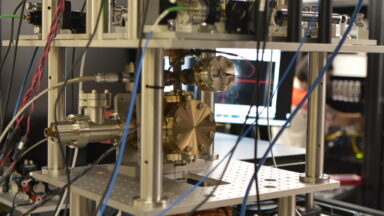
TIDAL Takes Stand Against AI Music Monetization to Protect Artists
The music streaming service TIDAL has unveiled a new policy aimed at curbing the monetization of AI-generated music on i...
TechCrunch | Jun 29, 2026, 16:40
WhatsApp Introduces Username Feature to Enhance Privacy
WhatsApp has unveiled a long-anticipated feature that allows users to reserve unique usernames, enabling profile sharing...
TechCrunch | Jun 29, 2026, 16:15
Waymo and Uber End Collaboration in Phoenix: A New Era for Autonomous Rides
In a significant shift within the autonomous vehicle landscape, Waymo's robotaxis have been removed from Uber’s ride-hai...
TechCrunch | Jun 29, 2026, 18:55