Scientists couldn’t solve these problems for years. Now an IIT Madras startup is offering $1 million to anyone who can
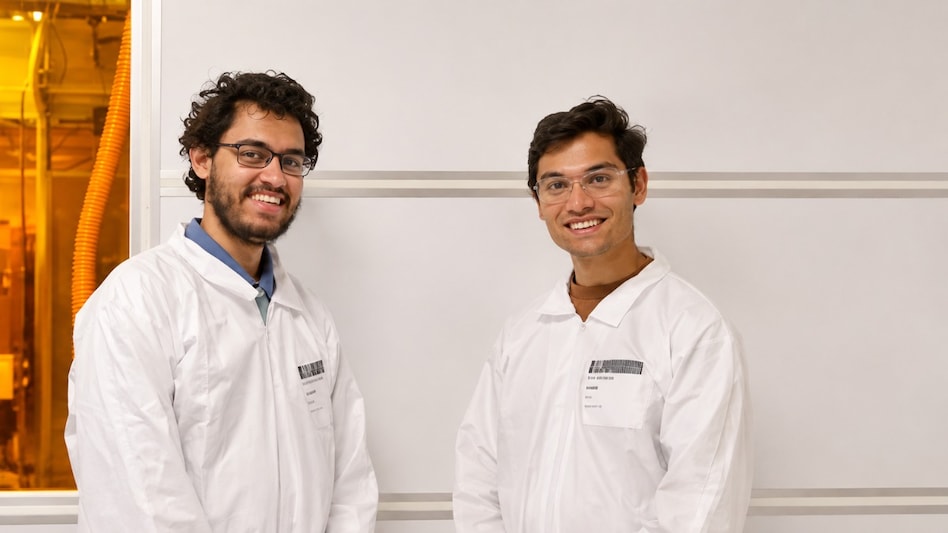
Two alumni from IIT Madras have placed a remarkable $1 million bounty on solving five enduring challenges in the realm of materials science. This initiative is designed to explore the capabilities of artificial intelligence and human researchers in advancing scientific understanding, as reported by TechCrunch. Advaith Sridhar and Akash Ramdas, who forged their partnership over a decade ago at IIT Madras, have co-founded Discovered Materials, a startup based in San Francisco. Their focus lies on utilizing AI to innovate new materials for semiconductor chips. Following their participation in Y Combinator's spring 2026 program, they have now initiated this prize challenge in collaboration with top academic institutions to identify five pivotal scientific issues that have eluded resolution for years. The five identified challenges represent some of the most complex questions in materials science. They include deciphering the mysteries of cuprate superconductivity, accurately predicting the electrical properties of semiconductor interfaces, and developing quicker, more precise methods for quantum chemistry calculations. The other two challenges aim to elucidate how light influences material behavior and to predict thermal conduction across solid material interfaces. The implications of finding solutions extend beyond theoretical interest; breakthroughs could lead to the creation of more efficient electronic devices, enhancements in semiconductor manufacturing, and advancements in energy technologies. The most substantial reward of $400,000 is earmarked for successfully addressing the cuprate superconductivity issue, with two additional challenges offering $200,000 each, while the remaining two provide $100,000 each. This competition is open to individuals, teams, and organizations that meet eligibility criteria, with no set deadline for submissions. Prizes will be awarded only when a solution satisfies the scientific standards outlined for the challenge. Prior to launching this competition, Discovered Materials evaluated advanced AI models on these five challenges, allowing them to operate as autonomous agents with access to the internet and various research tools. However, the results revealed that these complex questions remain formidable, as the AI made minimal headway even after extended periods of independent work. Sridhar emphasized the need for a framework to assess whether AI and researchers are genuinely advancing in tackling these scientific enigmas rather than merely generating answers. Stanford professor Felipe Jornada, who assisted in formulating the challenges, noted that there are numerous observable phenomena in materials science that remain unexplained. Discovered Materials has already secured $9 million in seed funding as of August, aimed at propelling its research into semiconductor materials.
Nvidia's CEO Jensen Huang Returns Amid Scandal and Government Intervention
In a surprising turn of events, Nvidia's board has reinstated Jensen Huang as CEO and president just two weeks after his...
TechCrunch | Nov 24, 2026, 13:45
realme P4x 5G vs vivo Y31t 5G: Which Smartphone Offers the Best Bang for Your Buck?
When it comes to choosing between the realme P4x 5G and the vivo Y31t 5G, potential buyers are faced with distinct advan...
Business Today | Nov 24, 2026, 01:50
Jio Unveils Exciting New Plans with Unlimited 5G Data for the New Year
Reliance Jio has rolled out its latest prepaid recharge offerings, dubbed 'Happy New Year 2.0', featuring unlimited 4G a...
Business Today | Nov 24, 2026, 10:20
UK Government Sounds Alarm on Surge of AI-Enhanced Cyber Threats
The United Kingdom's cybersecurity agency has reported a significant increase in cyberattacks driven by artificial intel...
TechCrunch | Nov 24, 2026, 18:30
Pinterest Empowers Parents with New Controls Over AI Content for Teens
This week, Pinterest unveiled an enhancement to its parental controls, introducing a feature that allows parents to regu...
TechCrunch | Nov 24, 2026, 16:25