
Icarus raises $6.1M to take on space’s “warehouse work” with embodied-AI robots
Icarus Robotics, co-founded by Ethan Barajas and Jamie Palmer, has embarked on a groundbreaking journey to enhance the efficiency of astronauts' work in space. After extensive interviews with space travelers, the duo discovered that much of an astronaut's time is consumed by logistics rather than scientific exploration. One astronaut poignantly described their experience, saying, "We’re Amazon warehouse workers with PhDs." This insight revealed that out of a two-hour experiment, a staggering ninety minutes is often spent on organizing cargo and preparing equipment, a clear misallocation of highly trained talent. Barajas emphasized that these astronauts, who undergo rigorous training for two years and come from elite military backgrounds, frequently spend 14 days merely moving and repacking supplies. The logistical complexities stem from the need for cargo resupply, with approximately three-and-a-half tons of goods arriving at the International Space Station (ISS) every 60 days, all of which requires unpacking and storage. Determined to find a solution, Barajas and Palmer, who first connected at Entrepreneurs First, proposed the use of intelligent robots to handle these tedious tasks. Rather than starting with humanoid robots, Icarus is opting for a more incremental approach, developing a fan-powered robot equipped with two robotic arms featuring jaw grippers. Recently, the startup raised $6.1 million in a seed funding round led by Soma Capital and Xtal, with additional investments from Nebular and Massive Tech Ventures. The design of their initial robot has been tailored specifically for cargo handling tasks. Palmer, who brings valuable robotics expertise to the team, noted that using two robotic arms can achieve approximately 80% of the necessary dexterity with simple gripping mechanisms rather than complex human-like hands. Many scientific tasks on the ISS, such as replacing cartridges, could greatly benefit from a robotic workforce. In a recent demonstration, Icarus showcased a long-distance teleoperation of their bimanual system, successfully unzipping and repacking an ISS cargo bag. Palmer stated, "We demonstrated that meaningful dexterity can be achieved at a distance without needing fully functional hands." Looking ahead, Icarus plans to conduct flight testing with a parabolic campaign in the upcoming year, followed by a year-long demonstration on the ISS through Voyager Space, which operates the commercial Bishop airlock. The objective is to mitigate risks associated with cargo operations before advancing to more intricate tasks related to station maintenance, like filter inspections. Initially, the robots will be teleoperated, as the ISS is one of the few environments justifying constant human oversight. Barajas highlighted the significant labor cost advantages, allowing them to employ a skilled operator for a year. In the long run, Icarus aims to develop autonomous capabilities using “embodied AI,” aligning with terrestrial robotics advancements while considering the unique challenges of microgravity. The plan includes collecting microgravity data with human oversight to create foundational models for robotic operation in space. Eventually, Icarus envisions a system where robots can perform tasks autonomously in deep space, enhancing human efforts rather than replacing them. Barajas, who began his journey with NASA at just 17, emphasized, "We want to augment astronauts and maximize their research potential during their time on the station."
Rapido Secures $240 Million Investment to Boost Mobility Services Across India
Rapido, the ride-hailing and mobility platform, has successfully secured $240 million in a funding round led by Prosus, ...
Business Today | May 15, 2026, 07:55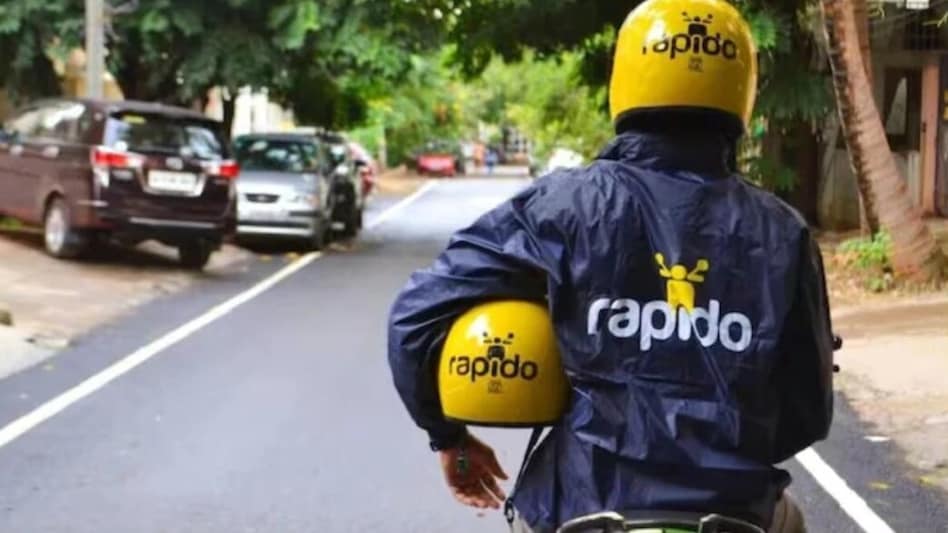
US Urged to Act Swiftly to Maintain AI Edge Over China
Anthropic has emphasized the urgent need for the United States to reinforce its position in artificial intelligence, sug...
Business Insider | May 15, 2026, 05:05Jury Set to Deliberate in High-Stakes Musk vs. OpenAI Trial
The Musk v. Altman trial reached a pivotal moment as closing arguments were presented in a federal courtroom in Oakland,...
CNBC | May 15, 2026, 01:15
Cerebras Systems Soars After IPO: Cramer's Cautionary Take on Valuation
In a recent analysis, Jim Cramer of CNBC advised investors to exercise caution regarding shares of Cerebras Systems foll...
CNBC | May 14, 2026, 22:45
Revolutionizing Hardware Creation: Lovable Invests in Atech's Innovative 'Vibe Coding'
Lovable, known for its AI-driven app development platform, has made a significant investment in Atech, a Danish startup ...
TechCrunch | May 14, 2026, 20:55