From UPI to stock markets: How the Strait of Hormuz crisis could hit your wallet
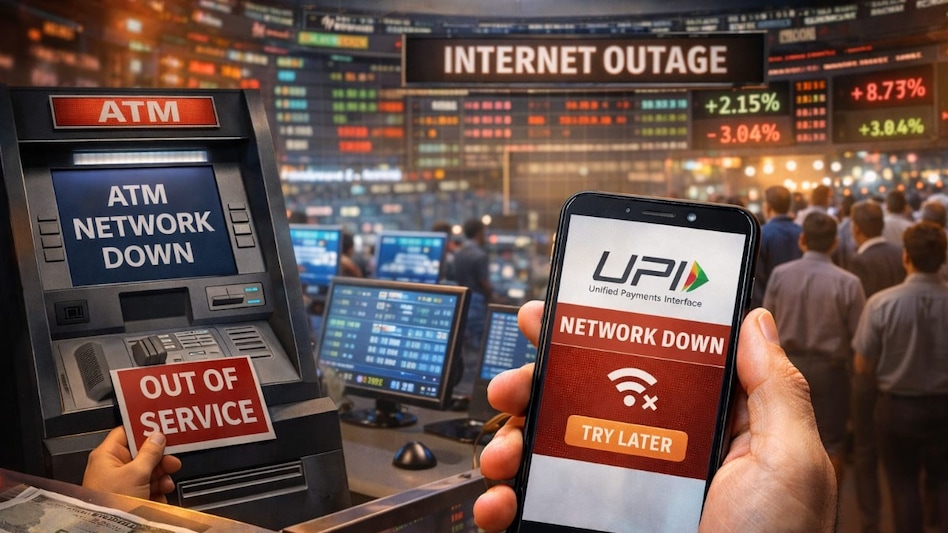
Have you ever imagined the consequences of a complete internet blackout, not caused by cyberattacks but by the severing of crucial undersea cables? As geopolitical tensions rise in West Asia, the Strait of Hormuz is emerging as a potential hotspot not just for oil but for global internet connectivity. Located between Iran and Oman, the Strait of Hormuz is responsible for transporting nearly 20% of the world’s oil supply. However, its significance extends beyond energy; it also serves as a vital passage for major undersea fibre optic cables. Approximately 16 key submarine cables traverse or are situated near this region, handling about a quarter of global data traffic, including a significant portion of India’s international bandwidth. In 2024, connectivity disruptions in the Red Sea due to regional conflicts have already demonstrated the fragility of this digital infrastructure, impacting numerous countries in West Asia. If the undersea cables in the Strait of Hormuz were to be compromised, the repercussions would likely be immediate and far-reaching, starting with financial markets. Financial institutions heavily rely on uninterrupted internet access for real-time data, trading, and risk management. Any disruptions, even brief ones, could lead to delays in order execution, increased volatility, and diminished investor confidence, particularly in a market where speed is paramount. The impact would not stop at the stock markets; the banking system would also feel the strain. Today’s financial infrastructure in India is heavily digital, with core banking systems and mobile applications depending on stable network connectivity. A breakdown could lead to slow or failed transactions, hampering ATM withdrawals and delaying routine financial operations like salary credits and vendor payments. Moreover, the UPI (Unified Payments Interface) ecosystem, which supports billions of transactions monthly and is crucial for both small vendors and large retailers, could face severe disruptions. Such a scenario might force a sudden return to cash transactions, leaving gig workers unpaid, small businesses struggling, and consumers unable to complete everyday purchases. Transportation and logistics sectors would also be affected. Systems like the Indian Railway Catering and Tourism Corporation (IRCTC), which rely on constant internet access for operations, could see online ticketing come to a standstill. This would push millions of users to offline counters that are ill-equipped to manage the resulting surge in demand. The ripple effects could extend to logistics networks, disrupting freight movement and impacting supply chains that depend on digital platforms.
Unlocking the Secrets of Quantum Gravity: Can AI Help Physics Make a Leap?
The realm of scientific research is undergoing a profound transformation, fueled by the rapid advancements in artificial...
Business Today | Jul 25, 2026, 24:30
Reclaiming Control: Librarians Host Workshops to Help People Navigate AI Tools
In a lively library setting in South Philadelphia, Charlie Bailey, a local librarian, humorously noted, "Everybody’s on ...
TechCrunch | Jul 25, 2026, 16:20
The Rise of AI Distillation: A Controversial Technique Sparks Debate in Tech and Government
In recent discussions, a once-obscure topic in artificial intelligence has surged to the forefront of debates among tech...
CNBC | Jul 25, 2026, 12:15
Prentis: Ambitious New AI Lab Eyes $100 Million Funding with Innovative Automation Goals
Prentis, a cutting-edge AI research laboratory co-founded by Ritankar Das, Reid Hoffman, and Marc Pincus, is currently i...
TechCrunch | Jul 24, 2026, 22:45
Crisis Averted: Power Line Failure Highlights Urgent Need for Data Center Resilience
A power line failure near Washington, DC, recently showcased a significant challenge faced by the electrical grid due to...
TechCrunch | Jul 25, 2026, 13:50