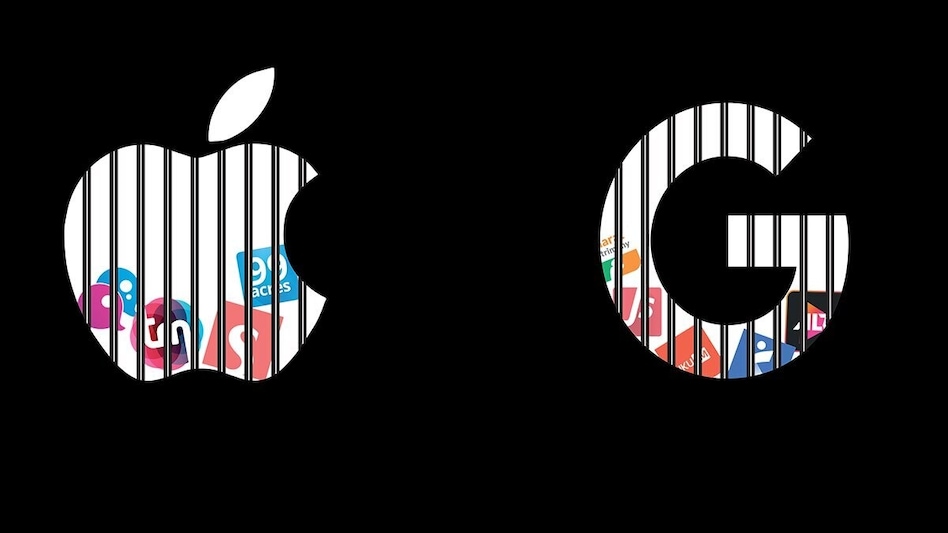
Banned but booming: Apple, Google still show ‘nudify’ apps in search results
Despite being officially banned, applications that utilize artificial intelligence to create non-consensual intimate images remain readily accessible on both Apple's App Store and Google Play, as revealed by a report from the Tech Transparency Project (TTP). This discrepancy underscores a concerning divide between platform policies and the reality of enforcement, particularly as governments around the globe intensify their scrutiny of deepfake technology and the misuse of AI. The report highlights that searches for terms like "nudify," "undress," and "deepnude" yield numerous apps that can digitally manipulate images of women. Approximately 40% of the apps identified in these searches have the capability to render women nude or in revealing attire. Specifically, the TTP found 46 apps in the Apple App Store linked to such searches, with 18 offering nudifying features, while Google Play displayed 49 apps, including 20 with similar functionalities. Adding to the concern, some of these apps are marketed as suitable for everyone, including children, being rated as "E" for Everyone. The usage statistics are alarming, with nudify apps collectively achieving around 483 million downloads and generating over $122 million in revenue. Both Apple and Google enforce strict policies against sexually explicit and exploitative content. Apple's App Review Guidelines explicitly ban content that is offensive or sexually explicit, while Google similarly prohibits apps that contain or promote sexual content or profanity. However, Google does provide limited exceptions for content deemed educational, documentary, scientific, or artistic. In light of these findings, Google has stated that it has already acted on several flagged applications, with spokesperson Dan Jackson noting that many have been suspended as part of ongoing investigations. Meanwhile, Apple has reportedly removed 15 apps from its platform following the TTP report, while Google has taken down seven. The issue is not confined to standalone apps; it also extends to AI chatbots and integrated tools. One such example is the app "Uncensored AI — No Filter Chat," which was initially presented as a general AI chat and photo editing tool but was later found to generate manipulated images. The developer, Masaki Matsushita, has since rebranded the app to "Chat AI - Simple AI" and raised its age rating from 16+ to 18+. As AI capabilities rapidly evolve, the TTP report raises significant questions about how these problematic apps continue to evade detection amidst clear guidelines against non-consensual content. With the potential for widespread misuse, platforms are under increasing pressure to enhance their detection and enforcement measures to protect vulnerable users.
Threads Expands to iPad with New Cashtag Feature to Rival X
Meta's Threads app has officially launched a dedicated version for iPad, marking a significant milestone in its developm...
TechCrunch | Nov 24, 2026, 18:00
UK Government Sounds Alarm on Surge of AI-Enhanced Cyber Threats
The United Kingdom's cybersecurity agency has reported a significant increase in cyberattacks driven by artificial intel...
TechCrunch | Nov 24, 2026, 18:30
Anthropic's Stock Plummets, Raising Concerns for the AI Sector
Shares of Anthropic have dipped below their initial public offering (IPO) price of $83, reaching a low of $76 by midday ...
TechCrunch | Nov 24, 2026, 18:45
Walmart Partners with Meta's Muse for a Smarter Black Friday Shopping Experience
The future of shopping is now, as Walmart embraces the integration of artificial intelligence into its retail strategy. ...
TechCrunch | Nov 24, 2026, 21:45
Nvidia's Board Shake-Up: The High-Stakes Return of Jensen Huang
Nvidia's CEO Jensen Huang has received unwavering support from longtime board members Tench Coxe, Mark Stevens, and Harv...
CNN | Nov 24, 2026, 23:00